Oem 1 4 Inch Stainless Steel Wire Mesh
This product refers to welded or woven wire mesh with a nominal opening size of 1/4 inch (6.35 mm), manufactured from stainless steel wire for OEM integration into industrial equipment, filtration
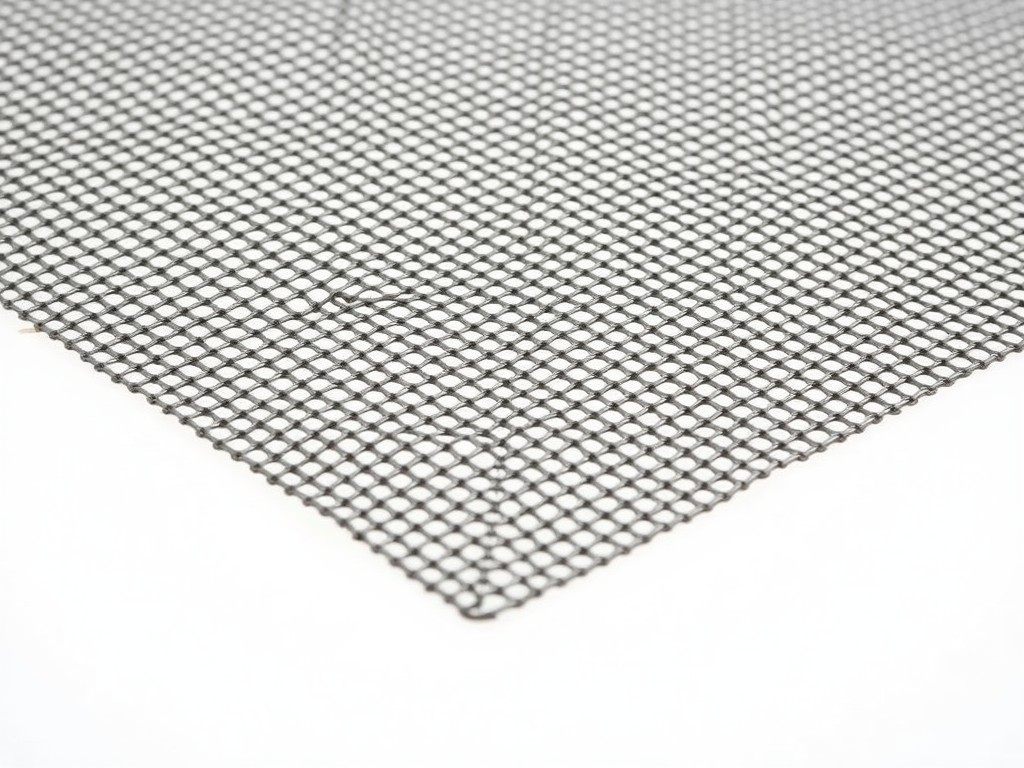
OEM 1/4 Inch Stainless Steel Wire Mesh
This product refers to welded or woven wire mesh with a nominal opening size of 1/4 inch (6.35 mm), manufactured from stainless steel wire for OEM integration into industrial equipment, filtration systems, and protective barriers. The term “OEM” indicates suitability for incorporation into larger assemblies where dimensional consistency, material traceability, and repeatable performance are critical.
Material Specifications and Wire Characteristics
The wire mesh is produced using austenitic stainless steel grades, most commonly AISI 304 or 316L, selected based on corrosion resistance requirements. Wire diameter typically ranges from 0.020 inch (0.51 mm) to 0.047 inch (1.2 mm), influencing both open area and structural rigidity. The 1/4 inch opening is measured as the clear distance between adjacent wires, not center-to-center, ensuring consistent flow or particle retention characteristics.
Stainless steel wire used in this mesh undergoes cold drawing to achieve tensile strength between 800 and 2000 MPa, depending on grade and temper. Surface finish is typically bright annealed or lightly oxidized, with no coatings applied that could contaminate downstream processes. Chemical composition adheres to ASTM A240 or EN 10088-2 standards, with controlled carbon, chromium, and nickel content to prevent sensitization during welding or forming.
Manufacturing Process and Structural Integrity
Two primary construction methods are employed: welded mesh, where perpendicular wires are joined at intersections via resistance welding, and woven mesh, where wires are interlaced in a plain Dutch or twill pattern. Welded mesh provides uniform opening dimensions and higher shear resistance at joints, while woven mesh offers greater flexibility and fatigue resistance under cyclic loading.
For OEM applications, dimensional stability is critical. Mesh sheets are typically produced in widths up to 48 inches and lengths up to 120 inches, with edge treatments such as folded, welded, or fringed ends to prevent unraveling. Tolerance on opening size is generally ±0.01 inch (±0.25 mm) for welded mesh and ±0.02 inch (±0.5 mm) for woven mesh, depending on wire diameter and process controls.
Performance Characteristics in Industrial Use
The open area percentage for 1/4 inch mesh varies with wire diameter: approximately 63% for 0.020" wire, 49% for 0.030" wire, and 36% for 0.047" wire in a square grid configuration. This directly impacts flow rate in filtration applications and visibility in shielding or guard applications. Pressure drop across the mesh can be estimated using the Darcy-Weisbach equation, with correction factors for Reynolds number and mesh geometry.
Mechanical properties include tensile strength per wire and burst strength of the mesh sheet. A 0.030" diameter 304 SS welded mesh with 1/4" openings typically exhibits a burst strength exceeding 250 psi under uniform load. Fatigue life is influenced by wire diameter, surface finish, and vibration frequency; finer wires may fail earlier under resonant conditions despite higher open area.
Typical Industrial Applications
In food processing equipment, 1/4 inch stainless steel wire mesh is used as a conveyor belt support or drying tray where hygiene, corrosion resistance, and ease of cleaning are required. The opening size allows small particulates to pass while retaining larger food items or debris, and the smooth surface minimizes bacterial harborage.
In industrial filtration, it serves as a pre-filter or support medium for finer filter media in liquid or gas streams. The stainless construction withstands exposure to cleaning agents, steam, and mild acids, while the 1/4 inch opening prevents premature clogging by protecting downstream micron-rated filters from large contaminants.
For machine guarding and safety enclosures, the mesh provides visibility and airflow while meeting OSHA 1910.217 requirements for point-of-operation guarding. The rigid welded variant resists deformation from impact, and the stainless finish maintains appearance in harsh environments without painting or coating.
Customization Options for OEM Integration
OEM buyers can specify wire diameter, stainless steel grade (304, 316L, 321, or 430), mesh width, length, and edge treatment. Common edge configurations include folded hem (for safety and strength), welded fringe (for attachment points), or unfinished cut edges (for downstream processing). Mesh can be supplied as flat sheets, rolled coils, or cut-to-size blanks.
Additional options include surface passivation (ASTM A967) to enhance corrosion resistance, stress-relief annealing to reduce distortion during forming, or laser cutting for complex geometries. Tolerance tightening to ±0.005 inch is available for precision applications such as optical encoder masks or fluidic channels.
Quality Control and Testing Protocols
Dimensional inspection is performed using calibrated optical comparators or vision systems to verify opening size, wire diameter, and squareness. Each batch undergoes chemical spot testing to confirm stainless steel grade via XRF or spark testing. Mechanical properties are validated through tensile testing of wire samples and burst testing of full mesh sheets per internal test methods derived from ASTM E8 and F1306.
Visual inspection checks for weld integrity (in welded mesh), uniform tension (in woven mesh), and absence of defects such as skipped wires, burns, or inclusions. Surface cleanliness is evaluated per ASTM A380 for passivated parts. Documentation including material certificates (EN 10204 3.1), inspection reports, and conformance statements is available upon request.
| Parameter | Typical Range | Notes |
|---|---|---|
| Wire Diameter | 0.020" – 0.047" (0.51 – 1.2 mm) | Affects open area and strength |
| Opening Size | 0.250" ±0.010" (6.35 ±0.25 mm) | Clear opening, welded mesh |
| Open Area | 36% – 63% | Dependent on wire diameter |
| Material | AISI 304, 316L | Other grades available |
| Burst Strength (0.030" wire) | >250 psi | Uniform load, welded mesh |
Ordering Information and Lead Times
Standard 1/4 inch stainless steel wire mesh is available from stock in common widths (24", 36", 48") and lengths (60", 120") for immediate shipment. Custom sizes, alloys, or edge treatments require consultation with technical sales to confirm feasibility and tooling requirements. Typical lead time for custom orders is 2–4 weeks, depending on complexity and material availability.
Minimum order quantities vary: stock items may be ordered in single sheets, while custom rolls or slit widths often require a minimum of 50 linear feet. Packaging options include flat pallets, coiled in crush-resistant tubes, or vacuum-sealed for cleanroom applications. All shipments include corrosion-inhibiting interleaving paper and are labeled with heat numbers for traceability.
To request a quotation, provide the required dimensions, wire diameter, stainless grade, quantity, and any special requirements such as edge finish, tolerances, or documentation needs. Technical support is available to assist with material selection based on operating environment, temperature, and chemical exposure.
Product Categories


Send Inquiry
If you are interested in our products, leave your information here and we will be in touch shortly.