Oem Wire Mesh For Rodent Control
Rodent intrusion in industrial, agricultural, and commercial facilities causes structural damage, product contamination, and safety hazards. Physical exclusion using wire mesh remains one of the most
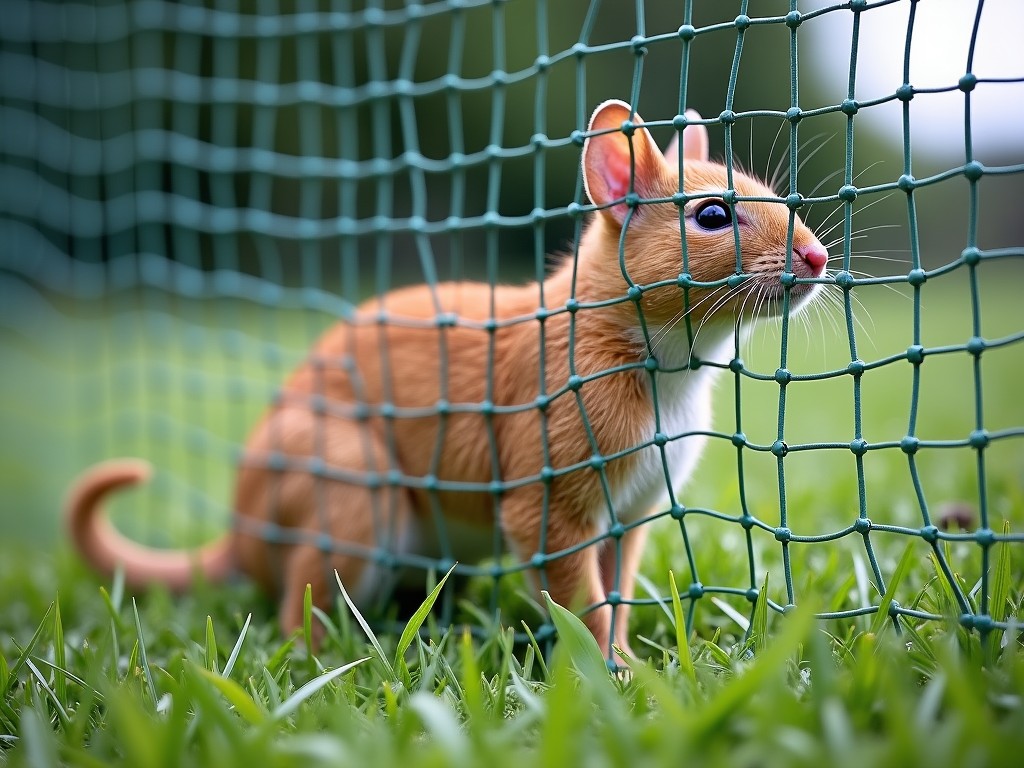
OEM Wire Mesh for Rodent Control
Rodent intrusion in industrial, agricultural, and commercial facilities causes structural damage, product contamination, and safety hazards. Physical exclusion using wire mesh remains one of the most reliable, low-maintenance methods for preventing access through vents, utility penetrations, and structural gaps. Effective rodent-proofing requires mesh with specific aperture sizes, material durability, and corrosion resistance tailored to the environment and target species.
Material Selection and Corrosion Resistance
The longevity of rodent exclusion systems depends on material performance under environmental exposure. Stainless steel grades 304 and 316 are commonly selected for their resistance to rust, UV degradation, and chemical exposure. Grade 304 suffices for most indoor and mild outdoor applications, while 316 offers superior protection in coastal, industrial, or high-moisture environments due to its molybdenum content. Galvanized steel provides a cost-effective alternative for dry, interior settings but is unsuitable for prolonged outdoor use where zinc coating may degrade within 2–5 years.
Wire diameter directly impacts tensile strength and resistance to gnawing. Rats and mice can deform or break thinner wires; therefore, exclusion mesh typically uses wires ≥0.5 mm for stainless steel and ≥0.8 mm for galvanized steel to ensure mechanical integrity. These dimensions are determined through biomechanical modeling of rodent incisor force, which averages 12–18 N for rats and 6–10 N for mice.
Aperture Size and Exclusion Efficacy
Aperture size is the most critical factor in preventing rodent entry. Mice can squeeze through gaps as small as 6 mm, while juvenile rats require approximately 12 mm. To ensure reliable exclusion, mesh apertures must be smaller than the smallest potential intruder. Standard rodent control mesh uses 6 mm × 6 mm or 8 mm × 8 mm square openings, which block both species while maintaining adequate airflow for ventilation applications.
In high-risk zones such as food processing lines or grain storage, 4 mm × 4 mm mesh may be specified to exclude even smaller pests like shrews or young voles. However, finer apertures increase airflow resistance and may require larger duct cross-sections or powered ventilation to maintain design flow rates. Engineers must balance exclusion efficacy with HVAC performance when selecting mesh density.
Weave Patterns and Structural Stability
Two primary weave patterns are used: welded and woven. Welded mesh features pre-formed wires fused at every intersection, providing rigid panel stability ideal for framing into grilles or access covers. Woven mesh, produced by interlacing wires in a plain or twill pattern, offers greater flexibility for conforming to irregular surfaces or retrofitting around conduits and pipes. Both patterns maintain aperture integrity under load, but welded variants resist sagging better in vertical installations.
Edge treatment affects installation safety and durability. Unfinished wires can protrude and pose laceration risks during handling. Standard options include folded edges, welded border wires, or extruded PVC encapsulants that cover raw ends while preserving aperture dimensions. PVC coating adds minimal thickness (<0.2 mm) but improves grip during installation and reduces corrosion creep at edges in humid conditions.
Customization for OEM Integration
OEM specifications often require precise dimensions, hole patterns, and attachment features to integrate mesh directly into equipment housings, wall panels, or ventilation systems. Custom laser cutting, stamping, or CNC punching enables exact hole placement for screws, rivets, or adhesives without compromising aperture consistency. Tolerances are typically held to ±0.5 mm for hole position and ±1 mm for overall dimensions, depending on material thickness and processing method.
Surface treatments can be added to meet specific regulatory or operational needs. Black oxide or passivation finishes reduce glare in optical sensor zones, while antimicrobial coatings (e.g., silver-ion infused polymers) may be applied in food or healthcare environments to inhibit biofilm growth on mesh surfaces. These treatments are applied post-forming to avoid damaging the coating during fabrication.
Quality Control and Testing Protocols
Dimensional verification occurs at multiple stages: raw wire inspection, in-process weaving/welding checks, and final product audits. Aperture uniformity is measured using calibrated optical gauges or digital microscopes, with acceptance criteria based on ISO 9044 standards for wire cloth. Tensile strength is validated via pull-test sampling per ASTM A370, ensuring wire and weld joints meet minimum load requirements.
Corrosion resistance is assessed through salt spray testing (ASTM B117) for coated or stainless variants, with typical acceptance thresholds of 500+ hours for grade 304 and 1000+ hours for grade 316 before red rust appears. Visual and tactile inspections confirm edge safety, coating adhesion, and absence of burrs or sharp filaments. All test records are retained for traceability and supplied upon request.
Typical Specifications Table
| Parameter | Typical Range | Notes |
|---|---|---|
| Material | Stainless Steel 304/316, Galvanized Steel | 316 for coastal/industrial; 304 for general use |
| Wire Diameter | 0.5–1.2 mm (SS), 0.8–1.5 mm (GS) | Based on rodent species and load |
| Aperture Size | 4 mm, 6 mm, 8 mm square | 6 mm standard for mice/rats |
| Weave Type | Welded, Woven (Plain/Twill) | Welded for rigidity; woven for flexibility |
| Width Availability | 100 mm – 1500 mm | Custom slit widths available |
| Length Options | Rolls: 10–50 m; Panels: cut-to-size | Panel tolerance ±1 mm |
| Surface Treatment | None, Passivated, Black Oxide, PVC Coat | PVC adds <0.2 mm thickness |
Applications in Industrial and Commercial Settings
Wire mesh is integrated into building exteriors to seal gaps around HVAC penetrations, conduit sleeves, and foundation vents—common entry points rodents exploit during seasonal migrations. In food processing plants, it protects product lines by covering drain outlets, exhaust fans, and access panels without impeding sanitation workflows. Agricultural facilities use mesh to safeguard feed storage silos and egg collection systems, where contamination risks are highest.
Transportation and logistics sectors install mesh in truck trailer undercarriages, railcar ventilation gaps, and container floor drains to prevent infestation during transit. Telecommunications and data centers apply mesh to outdoor unit enclosures and cable trays to protect sensitive equipment from nesting damage while maintaining thermal dissipation. Each application requires matching mesh properties to environmental exposure, mechanical stress, and cleaning protocols.
Unlike chemical baits or traps, which require ongoing maintenance and pose contamination risks, properly installed wire mesh provides passive, long-term exclusion with zero operational overhead. Its effectiveness is not diminished by rodent bait shyness or trap avoidance behaviors, making it a foundational component of integrated pest management (IPM) strategies in regulated industries.
Installation Considerations and Best Practices
Mesh must be installed with continuous contact against substrates to eliminate gaps rodents can exploit. Overlapping edges by at least 10 mm and securing with stainless steel fasteners or compatible adhesives prevents displacement. In high-vibration environments, such as near motors or compressors, mechanical clamping or U-channel framing is preferred over adhesive-only bonds to maintain long-term seal integrity.
When used in outdoor or exposed locations, UV-stable fasteners and sealants should accompany the mesh to prevent premature degradation of ancillary materials. Regular visual inspections—recommended quarterly in high-risk zones—help identify damage from impact, corrosion, or rodent gnawing attempts before breaches occur. Documentation of installation details supports audit compliance and maintenance planning.
For OEMs integrating mesh into manufactured equipment, providing clear installation guidelines, including fastener torque specs and edge clearance requirements, reduces field failure risks. Pre-assembly of mesh panels into frames or gaskets streamlines production and ensures consistent quality. Collaborative design reviews during early development help avoid costly redesigns due to inadequate exclusion planning.
Cost Efficiency and Lifecycle Value
While initial material costs for stainless steel mesh exceed those of galvanized or plastic alternatives, the total cost of ownership favors durable options in harsh environments. A properly specified 316 stainless steel mesh installation may remain functional for 15–20 years with minimal maintenance, whereas galvanized equivalents in outdoor settings often require replacement every 3–5 years due to rust-induced aperture enlargement or structural weakening.
Labor savings from reduced inspection frequency, repair visits, and contamination incident response further improve long-term economics. In regulated industries, avoiding a single product recall or shutdown due to rodent contamination can justify the premium upfront investment many times over. Engineers should evaluate lifecycle costs rather than initial price when specifying exclusion systems for critical infrastructure.
Recyclability also contributes to sustainability goals. Both stainless and galvanized steel mesh are fully recyclable at end-of-life, supporting corporate environmental reporting and reducing landfill burden compared to disposable plastic barriers. This end-of-life value should be factored into total ownership calculations, particularly for OEMs with extended producer responsibility obligations.
To discuss your specific rodent exclusion requirements, including material selection, aperture sizing, or integration into OEM designs, contact our technical team. We provide detailed drawings, sample panels, and application guidance to ensure your solution meets performance, durability, and regulatory expectations.
Request Technical Consultation

Product Categories


Send Inquiry
If you are interested in our products, leave your information here and we will be in touch shortly.