Quarter Inch Wire Mesh Hardware Cloth
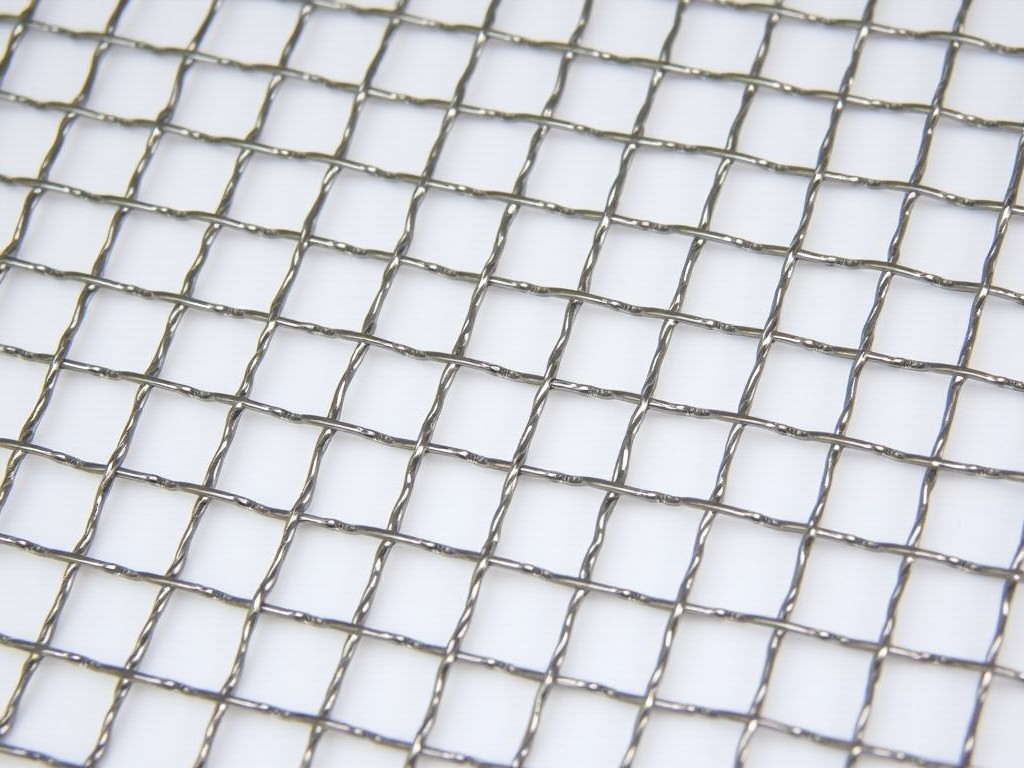
Quarter inch wire mesh hardware cloth is a woven or welded grid fabricated from steel wire with a nominal opening size of 0.25 inches between parallel strands. It is specified by wire diameter, mesh
Quarter Inch Wire Mesh Hardware Cloth
Quarter inch wire mesh hardware cloth is a woven or welded grid fabricated from steel wire with a nominal opening size of 0.25 inches between parallel strands. It is specified by wire diameter, mesh count, and material grade to meet functional requirements in filtration, containment, shielding, and structural reinforcement applications. The term “hardware cloth” distinguishes it from finer meshes used in screens or finer filtration, emphasizing its use in industrial, agricultural, and construction contexts where mechanical durability and precise aperture control are critical.
Material Composition and Mechanical Properties
The base material is typically low-carbon steel wire, though stainless steel (grades 304, 316) and galvanized steel are common alternatives for corrosion resistance. Wire diameter for quarter inch mesh commonly ranges from 0.020" to 0.041", depending on the required tensile strength and openness ratio. Tensile strength of the base wire ranges from 50,000 to 100,000 psi for carbon steel and 75,000 to 125,000 psi for stainless steel, directly influencing the mesh’s load-bearing capacity and resistance to deformation under stress. The nominal 0.25" opening corresponds to a mesh count of 4 wires per inch (4x4), though actual open area varies with wire diameter—e.g., 0.020" wire yields approximately 64% open area, while 0.041" wire reduces it to about 36%.
Manufacturing Methods: Woven vs. Welded
Quarter inch hardware cloth is produced either by weaving or welding. Woven mesh is created by interlacing warp and weft wires on a loom, resulting in a flexible sheet with crimped intersections that resist unraveling. Welded mesh is formed by electrically fusing wires at each intersection, producing a rigid panel with uniform tensile strength in both directions. Woven variants are preferred for applications requiring conformability to curved surfaces or vibration resistance, while welded versions are selected for flat-panel installations where dimensional stability under load is essential, such as machine guards or concrete reinforcement.
Typical Applications and Functional Rationale
In agricultural settings, quarter inch mesh is used for rodent exclusion in poultry houses and greenhouse vents, where the aperture excludes pests while allowing adequate airflow—smaller openings restrict ventilation excessively, larger ones fail to deter animals. In industrial filtration, it serves as a pre-filter or support layer for finer media, preventing large particulates from damaging downstream equipment; the 0.25" opening balances flow rate with particle retention efficiency for coarse debris like wood chips or gravel. In construction, it reinforces stucco and plaster substrates, providing tensile reinforcement to mitigate cracking; the mesh size aligns with standard trowel techniques and aggregate embedment depth. For machine guarding, it offers visibility and containment—smaller openings increase material cost and reduce sightlines, larger ones compromise safety compliance.
Comparison Table: Material and Configuration Options
| Attribute | Carbon Steel (Galvanized) | Stainless Steel 304 | Stainless Steel 316 |
|---|---|---|---|
| Corrosion Resistance | Moderate (zinc coating) | Good (urban/industrial) | Excellent (marine/chemical) |
| Typical Wire Diameter Range | 0.020"–0.041" | 0.020"–0.041" | 0.020"–0.041" |
| Tensile Strength (Wire Base) | 50,000–100,000 psi | 75,000–125,000 psi | 75,000–125,000 psi |
| Maximum Service Temperature | ~200°C (coating limit) | ~870°C | ~925°C |
| Relative Cost Factor | 1.0 (baseline) | 2.5–3.0 | 3.0–3.5 |
Customization and Ordering Considerations
Standard roll widths range from 24" to 60", with lengths typically 50' or 100' for woven mesh and 4'x8' or 5'x10' panels for welded configurations. Custom slit widths, edge treatments (hemmed, selvedge, or raw), and wire diameters are available upon request, though non-standard specifications may affect lead time and minimum order quantity. Buyers should specify aperture tolerance requirements—while nominal opening is 0.25", manufacturing tolerances typically hold ±0.01" for woven and ±0.005" for welded mesh due to process differences. For load-bearing applications, provide expected static and dynamic loads to confirm wire diameter adequacy; for filtration, detail particle size distribution and flow rate to validate open area and pressure drop characteristics.
Quality Control and Testing Protocols
Dimensional verification includes aperture measurement via optical comparators or gauge pins at multiple points across the sheet width and length to ensure uniformity. Wire diameter is checked with micrometers or calipers, and tensile strength is validated through sample testing per ASTM A370 for steel wire. Visual inspection identifies weld defects (in welded mesh), skipped weaves, or coating imperfections. Galvanized coatings are assessed for weight and adherence using ASTM A90/A123 methods, while stainless steel passivation is verified via water break or copper sulfate testing. Documentation of mill test reports for base wire and in-house inspection records are available for critical applications.

Product Categories


Send Inquiry
If you are interested in our products, leave your information here and we will be in touch shortly.