Slotted Hole Perforated Sheet Metal
Slotted hole perforated sheet metal is a precision-engineered material featuring elongated apertures arranged in specific patterns to achieve controlled airflow, filtration, or light transmission
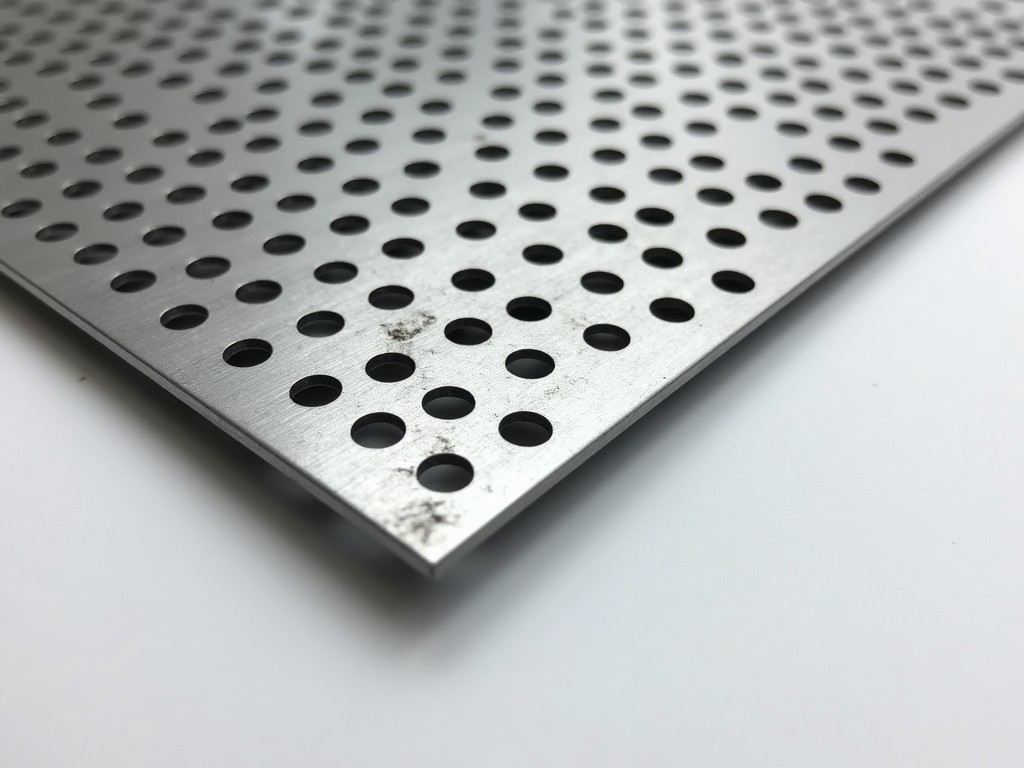
Slotted Hole Perforated Sheet Metal
Slotted hole perforated sheet metal is a precision-engineered material featuring elongated apertures arranged in specific patterns to achieve controlled airflow, filtration, or light transmission while maintaining structural integrity. Unlike round or square perforations, slotted holes offer directional performance characteristics, making them suitable for applications requiring targeted fluid dynamics or acoustic management. The geometry of the slots—defined by length, width, end shape, and pitch—directly influences pressure drop, open area percentage, and mechanical strength. Engineers select slotted perforations when linear flow control or directional screening is critical, such as in HVAC diffusers, screening equipment, or protective guards where particle size separation along one axis is required.
Manufacturing slotted hole perforations involves CNC turret presses or laser cutting systems that follow programmed tool paths to ensure dimensional accuracy and edge quality. The process begins with flat sheet metal stock, typically ranging from 0.5 mm to 6.0 mm in thickness, depending on the material and application. Tooling wear, sheet flatness, and punch-to-die clearance are monitored to maintain slot width tolerance within ±0.1 mm and length tolerance within ±0.2 mm for standard production. Post-processing steps such as deburring or edge rolling may be applied to eliminate sharp edges, particularly when the product is intended for human contact or repeated assembly cycles.
Material Selection and Performance Characteristics
Material choice directly affects corrosion resistance, strength-to-weight ratio, formability, and suitability for environmental conditions. Common substrates include cold-rolled steel (SPCC), hot-rolled pickled and oiled (HRPO), stainless steel grades 304 and 316, aluminum alloys 3003 and 5052, and galvanized steel (SGCC). Each material brings distinct properties: 304 stainless steel offers excellent oxidation resistance in humid or mildly corrosive environments, while 316 adds molybdenum for enhanced chloride resistance in marine or chemical processing settings. Aluminum provides lightweight performance with natural oxide layer protection, ideal for weight-sensitive enclosures or outdoor architectural elements.
Mechanical properties such as tensile strength, yield point, and elongation determine how the material behaves during perforation and in-service loading. For example, 304 stainless steel typically exhibits a tensile strength of 500–700 MPa and elongation of 40–60%, allowing it to withstand forming stresses without cracking. In contrast, HRPO steel has higher yield strength (~340 MPa) but lower ductility, requiring careful tooling design to prevent tearing during high-density slotting. Open area percentage—the ratio of slot area to total sheet area—is calculated based on slot dimensions and pitch; typical values range from 15% to 45%, depending on the pattern, and directly impacts airflow capacity and pressure loss in ventilation systems.
Standard Slot Patterns and Geometric Parameters
Slotted hole patterns are defined by three primary parameters: slot length (L), slot width (W), and pitch (P)—the center-to-center distance between adjacent slots in both longitudinal and transverse directions. End shapes vary and include rectangular, rounded, or chamfered finishes, each affecting stress concentration and flow dynamics. Rectangular ends provide maximum open area but may create higher turbulence; rounded ends reduce stress risers and are preferred in cyclic loading applications. The orientation of slots—whether aligned in straight rows, staggered, or diagonal—further influences directional permeability and visual appearance.
Common configurations include longitudinal slots (aligned with sheet length) for linear airflow guidance, transverse slots (across width) for cross-flow distribution, and staggered patterns to balance open area with structural continuity. For instance, a pattern with 20 mm long × 3 mm wide slots, 8 mm longitudinal pitch, and 12 mm transverse pitch yields approximately 25% open area and is frequently used in equipment guarding where visibility and medium airflow are required. Custom patterns are developed based on computational fluid dynamics (CFD) analysis or empirical testing when standard geometries do not meet performance targets.
| Parameter | Typical Range | Notes |
|---|---|---|
| Slot Length (L) | 5 mm – 50 mm | Custom lengths available; longer slots may require intermediate support |
| Slot Width (W) | 1.5 mm – 8 mm | Limited by material thickness and tooling strength |
| Longitudinal Pitch | 3 mm – 25 mm | Affects slot overlap and structural ligament width |
| Transverse Pitch | 4 mm – 30 mm | Controls inter-row spacing and load distribution |
| Open Area Percentage | 10% – 50% | Calculated from slot dimensions and pitch; varies by pattern |
| Material Thickness | 0.5 mm – 6.0 mm | Dependent on material; thicker gauges require higher tonnage presses |
Industrial Applications and Functional Benefits
Slotted hole perforated sheet metal is selected when directional flow control, particle sieving, or acoustic attenuation is required. In HVAC systems, longitudinal slots guide air movement along diffusers or plenums, reducing turbulence and noise compared to isotropic perforation patterns. The aspect ratio of the slots enables laminar flow recovery in ventilation ducts, contributing to energy efficiency in large-scale building systems. Similarly, in industrial screening equipment, slotted perforations allow fine particles to pass lengthwise while retaining larger agglomerates, improving separation efficiency in food processing, pharmaceuticals, or powder metallurgy.
Acoustic applications benefit from the resistive and reactive properties of slotted perforations when backed by absorbent materials. The slots act as Helmholtz resonators tuned to specific frequency bands, making them effective in noise barriers, enclosure linings, or machinery housings where mid-frequency sound suppression is needed. Unlike round holes, slotted geometries provide broader bandwidth absorption when arranged in varying lengths or orientations. Protective guards on rotating machinery use slotted patterns to maintain visibility and light transmission while preventing ingress of objects above a certain width threshold—e.g., a 4 mm slot width stops tools or fingers but allows visibility and coolant spray.
Architectural and decorative uses leverage the linear aesthetic of slotted perforations for sun shading, facade panels, or interior partitions. The directional nature of the slots creates variable transparency depending on viewing angle, enabling dynamic light filtration and privacy control. Aluminum or stainless steel variants are preferred here for durability and finish retention. In food processing, slotted trays or belts made from perforated sheet facilitate drainage and air circulation during drying, washing, or cooling cycles, with slot dimensions chosen to prevent product loss while maximizing liquid runoff.
Customization Options and Engineering Support
Customization begins with application analysis—defining required open area, flow direction, mechanical load, environmental exposure, and aesthetic preferences. Engineers work with clients to translate performance goals into slot geometry, material selection, and sheet dimensions. For example, a client needing high-pressure air distribution might specify narrow, long slots in a staggered pattern to minimize pressure drop while maintaining structural integrity under cyclic loading. Material thickness is adjusted based on span, support conditions, and deflection limits, often verified through finite element analysis (FEA) for critical installations.
Secondary operations such as bending, rolling, welding, or edge finishing are integrated into the production process to deliver application-ready components. Flanges, holes, or cutouts can be added during CNC punching to avoid secondary machining. Surface treatments include powder coating, anodizing (for aluminum), passivation (for stainless steel), or galvanizing to enhance corrosion resistance or achieve specific color requirements. Tolerances on overall flatness, squareness, and slot positional accuracy are controlled to meet DIN 7168 or ISO 2768-mK standards unless tighter specifications are requested.
Prototyping services allow validation of performance before full-scale production. Sample sheets are produced using the same tooling and processes as production runs to ensure consistency. Flow testing, acoustic measurement, or particle retention analysis can be conducted on samples to confirm design suitability. This reduces risk for OEMs integrating the perforated sheet into larger assemblies, where rework due to poor performance could delay timelines or increase costs.
Quality Control and Inspection Protocols
Quality assurance starts with incoming material verification, including mill test certificates for chemical composition and mechanical properties. Dimensional checks on thickness, width, and length are performed using calibrated calipers or laser gauges. During perforation, tooling alignment and punch wear are monitored via statistical process control (SPC), with periodic inspection of first-off and in-process samples. Slot dimensions are measured using optical comparators or vision systems to verify length, width, and positional accuracy against CAD models.
Visual inspection identifies burrs, edge deformation, or surface defects that could affect function or safety. For applications requiring high cleanliness—such as food or medical equipment—additional cleaning and passivation steps are applied, followed by particulate testing if needed. Flatness is assessed using dial indicators or coordinate measuring machines (CMM) to ensure the sheet meets specified deviation limits, typically within 0.5 mm/m for standard flatness requirements. Packaging includes protective interleaving and edge guards to prevent scratching or deformation during transit.
Final verification includes open area verification through image analysis or air flow testing when specified. Documentation such as inspection reports, material certifications, and conformance statements are provided upon request. Traceability is maintained through batch numbers or job tags linking raw material to finished product. These procedures ensure that each sheet meets the agreed-upon specifications and performs reliably in its intended application, minimizing field failures and supporting long-term operational value.


Product Categories


Send Inquiry
If you are interested in our products, leave your information here and we will be in touch shortly.