Stainless Steel Welded Mesh Panels Suppliers
Stainless steel welded mesh panels are engineered barriers formed by electrically resistance welding longitudinal and transverse wires at their intersection points. This process creates a rigid,
Stainless Steel Welded Mesh Panels Suppliers
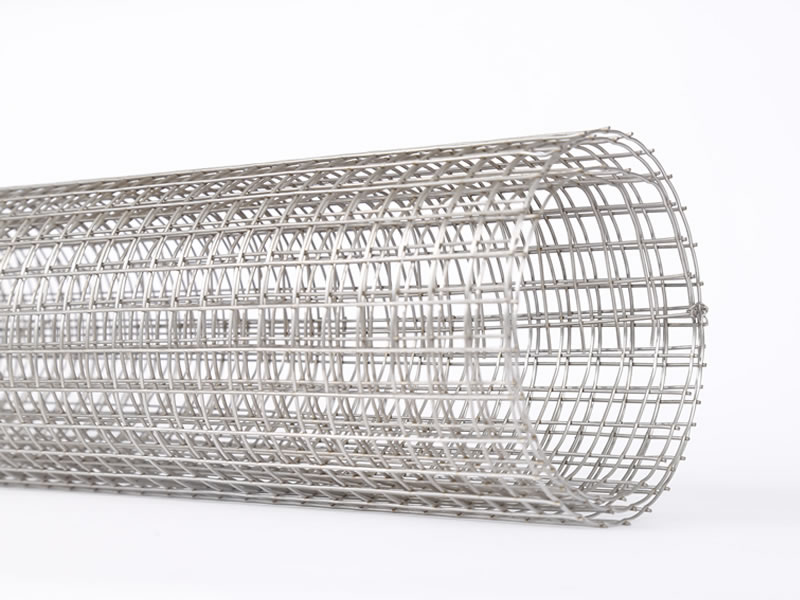
Stainless steel welded mesh panels are engineered barriers formed by electrically resistance welding longitudinal and transverse wires at their intersection points. This process creates a rigid, grid-like structure where the welds provide primary mechanical integrity, eliminating reliance on weaving or knotting for load distribution. The resulting panel exhibits uniform strength across its surface, with performance dictated by wire diameter, opening size, alloy composition, and weld penetration depth.
Industrial buyers select these panels for applications requiring consistent aperture control, corrosion resistance, and structural predictability—such as machine guarding, filtration systems, architectural infill, and concrete reinforcement. Unlike woven or expanded mesh, welded construction maintains opening dimensions under stress, critical for precision separation or safety barriers where deformation could compromise function.
Material Selection and Alloy Characteristics
The base material for welded mesh panels is typically austenitic stainless steel, chosen for its combination of corrosion resistance, formability, and weldability. Grade 304 (UNS S30400) is common for general industrial environments, offering resistance to oxidation and many organic/inorganic chemicals at ambient temperatures. For enhanced resistance to chlorides or acidic conditions, Grade 316 (UNS S31600) incorporates molybdenum, improving pitting and crevice corrosion performance in marine or chemical processing settings.
Wire diameter directly influences panel stiffness and open area percentage. Common ranges span from 0.8 mm for fine filtration or architectural detailing to 6.0 mm for heavy-duty security or load-bearing applications. The alloy’s yield strength—typically 205–515 MPa for cold-worked 304/316—combined with weld efficiency (often 60–80% of base wire strength) determines the panel’s resistance to sag, impact, and long-term creep under sustained load.
Manufacturing Process and Weld Integrity
Production begins with straightened, cut-to-length wires fed into a resistance welding machine. Electrodes apply precise pressure and current to fuse wires at cross-points, forming a homogeneous metallurgical bond without filler material. The heat-affected zone (HAZ) is minimized through short pulse durations, preserving the base alloy’s corrosion-resistant passive layer. Post-weld, panels may undergo stress-relief annealing to reduce residual stresses that could contribute to stress corrosion cracking in aggressive environments.
Weld quality is non-negotiable in structural or safety-critical uses. Suppliers typically verify penetration depth (targeting 50–70% of wire diameter) and tensile strength via destructive testing on sample coupons. Visual inspection checks for spatter, undercut, or incomplete fusion—defects that act as stress concentrators and corrosion initiation points. Consistent weld geometry ensures predictable performance across large panels, avoiding weak links that could compromise system integrity.
Standard and Customizable Dimensions
While suppliers maintain stock dimensions for common applications, industrial projects frequently require non-standard sizes to match equipment envelopes or structural grids. Panel width and height are limited only by handling and transportation logistics—typically up to 2.4 m × 3.0 m for single-piece units, with larger areas achieved through modular splicing. Opening sizes (clearance between wires) range from 3 mm for fine particle retention to 100 mm or more for ventilation, machine access, or decorative infill.
Wire spacing is specified as center-to-center distance, directly determining open area percentage—a key parameter for airflow, light transmission, or fluid flow calculations. For example, a 50 mm opening with 3 mm wire yields approximately 79% open area, while the same opening with 6 mm wire drops to 56%. Suppliers provide open area calculators or charts to help engineers model performance early in design, avoiding costly late-stage revisions.
Surface Finishes and Post-Treatment Options
As-welded stainless steel mesh exhibits a slightly dull, oxidized finish at weld points due to localized heating and chromium depletion. For applications requiring uniform appearance or enhanced cleanability—such as food processing, pharmaceutical, or architectural finishes—post-weld treatments are standard. Passivation (citric or nitric acid bath) removes free iron and restores the chromium-rich oxide layer, improving corrosion resistance without altering dimensions.
Mechanical finishes like brushing (No. 4) or electropolishing further refine surface texture. Electropolishing dissolves microscopic peaks, yielding a smooth, passive surface that resists bacterial adhesion and simplifies cleaning—increasingly important in hygienic zones. Some suppliers offer dual-finish panels: welded areas passivated for corrosion resistance, while visible surfaces receive a brushed finish for aesthetics. These treatments add cost but are often justified by lifecycle maintenance savings or regulatory compliance.
Applications Driven by Engineering Requirements
In concrete reinforcement, welded mesh replaces traditional rebar grids in slabs, walls, and precast elements. The uniform wire spacing ensures consistent concrete cover and crack control, while the rigid panel format accelerates placement—reducing labor by up to 40% compared to manual rebar tying. Engineers specify wire size and spacing based on tensile and crack-width calculations per ACI 318, with mesh often serving as primary shrinkage and temperature reinforcement in non-structural slabs.
For machine guarding, panels act as physical barriers where opening size must prevent access to moving parts per ISO 13857. A 40 mm square opening, for instance, stops finger penetration but may allow tool entry—requiring smaller apertures (e.g., 10 mm) for higher-risk zones. The panel’s rigidity ensures it maintains shape under impact, unlike flexible mesh that could deform and create gaps. Welded construction also resists unraveling if a wire is severed, enhancing fail-safe behavior.
In filtration and screening, aperture precision governs particle separation efficiency. Unlike perforated plate, which has tapered holes, welded mesh offers uniform, parallel-sided openings ideal for consistent sizing. Open area percentage directly affects pressure drop and throughput—critical in HVAC pre-filters, pulp and paper screens, or mining scalpers. Engineers model flow dynamics using open area and hydraulic diameter to predict performance before prototyping.
Quality Control and Inspection Protocols
Dimensional verification occurs at multiple stages: wire diameter before feeding, opening size during welding, and final panel dimensions. Optical comparators or calibrated gauges check hole uniformity—critical for filtration apps where ±0.5 mm tolerance may be required. Diagonal measurements confirm squareness; deviations >3 mm per meter indicate potential welding tension issues requiring process adjustment.
Non-destructive evaluation includes magnetic particle inspection for surface-breaking defects in ferritic grades (less common) or dye penetrant for austenitic types to detect micro-cracks at welds. Tensile testing of welded coupons validates joint strength, while salt spray or humidity chamber tests assess corrosion resistance for grades 304/316 under simulated service conditions. Suppliers provide mill test reports (MTRs) and, upon request, third-party inspection certificates (e.g., EN 10204 3.1) for regulated industries.
Packaging, Handling, and Logistics Considerations
Panels are typically bundled flat or on edge, protected by corner guards and stretch film to prevent bending or surface abrasion during transit. For thin-gauge or large-format panels, wooden crates or steel frames prevent buckling. Edge protection is essential—impact to wires or welds can create stress risers that propagate under load. Bundles are labeled with grade, size, heat number, and inspection status for traceability.
Export shipments often include desiccant packs and vapor corrosion inhibitors (VCI) in packaging to mitigate chloride-induced staining during sea transit. Handling equipment must accommodate panel rigidity—for example, using vacuum lifts or parallel-jaw grips rather than point-loaded hooks that could dent wires. Suppliers advise on maximum stack height and orientation to avoid permanent deformation, especially for panels under 1.5 mm wire diameter.
Comparison: Welded Mesh vs. Alternatives
| Parameter | Welded Mesh | Woven Mesh | Expanded Metal |
|---|---|---|---|
| Opening Consistency Under Load | High – rigid joints resist deformation | Low – wires can shift, altering apertures | Medium – ligaments bend but openings remain |
| Edge Security | Welds prevent unraveling if wire breaks | Requires binding or framing to prevent fraying | Inherently secure – no loose ends |
| Open Area Precision | High – uniform, predictable geometry | Medium – affected by weave tension | Low – diamond openings vary with expansion ratio |
| Typical Use Case Fit | Guarding, filtration, reinforcement where precision matters | Flexible screens, low-stress barriers | Walkways, catwalks, heavy-duty screens |
The table above highlights why welded mesh is selected when aperture stability and structural predictability are non-negotiable. Woven mesh offers flexibility but lacks dimensional fidelity under load—unsuitable for machine guarding where a 2 mm shift could create a pinch point. Expanded metal provides excellent strength-to-weight but has inherently inconsistent opening shapes, complicating flow modeling or particle retention specifications. Welded mesh bridges the gap: it delivers the rigidity of perforated plate with the open area flexibility of mesh, minus the tooling costs of stamping.
Customization Logic and Supplier Collaboration
Industrial buyers initiate customization by providing functional requirements—not just dimensions. For example, specifying “a panel to retain 5 mm particles in a slurry flow at 2 m/s” enables the supplier to recommend wire size, opening, and alloy based on erosion models and clogging risk, rather than simply cutting stock to size. This approach reduces iteration cycles and ensures the panel performs as intended in its operational context.
Key inputs for quotation include: wire diameter (mm), opening size (clearance, mm), panel width and height (mm), alloy grade (304/316/other), edge treatment (flush, framed, bent), quantity, and delivery timeline. Suppliers may ask about exposure environment (indoor/outdoor, chemical contact, temperature) to advise on passivation needs or suggest higher alloys like 316L or duplex grades if chloride levels exceed 304’s limits.
Lead times vary: stock items ship in 3–5 business days; custom panels typically require 2–4 weeks, depending on complexity and current capacity. Prototypes or first-article inspections are available upon request to validate dimensional accuracy and weld quality before full production. Clear communication of acceptance criteria—such as maximum allowable weld spatter or edge flatness—prevents misunderstandings and ensures the final product meets both functional and quality expectations.
To discuss your specific application requirements for stainless steel welded mesh panels—including material selection, aperture design, or integration into existing systems—contact our technical team. Provide your operational parameters, and we will respond with a detailed feasibility assessment and quotation.
Request Technical Consultation
Product Categories


Send Inquiry
If you are interested in our products, leave your information here and we will be in touch shortly.