Stainless Steel Welded Mesh Manufacturer
Industrial buyers require welded mesh that maintains dimensional stability under load, resists environmental degradation, and integrates precisely into structural or filtration systems. This page

Stainless Steel Welded Mesh Manufacturer
Industrial buyers require welded mesh that maintains dimensional stability under load, resists environmental degradation, and integrates precisely into structural or filtration systems. This page explains the technical considerations behind specifying stainless steel welded mesh, from alloy selection to weld integrity, to support informed procurement decisions.
Material Composition and Corrosion Resistance
The base alloy determines long-term performance in corrosive environments. Type 304 stainless steel offers adequate resistance to atmospheric oxidation and mild chemicals, suitable for indoor architectural screens or dry food processing areas. For exposure to chlorides, such as in marine environments or chemical washdown zones, Type 316 provides superior pitting resistance due to its 2-3% molybdenum content. Low-carbon variants like 304L and 316L minimize sensitization during welding, preserving corrosion resistance in the heat-affected zone.
Wire diameter and tensile strength directly influence load-bearing capacity. Typical diameters range from 0.8mm for lightweight filtration to 6.0mm for machine guards or concrete reinforcement. Tensile strength of annealed 304 wire averages 500-700 MPa; cold-drawn wire can exceed 1000 MPa, increasing rigidity but reducing ductility. Buyers should specify temper condition based on whether the mesh will undergo post-weld bending or require high impact resistance.
Welding Process and Joint Integrity
Resistance spot welding is the standard method for joining stainless steel wires, where precise control of current, pressure, and time ensures fusion without excessive oxidation or burn-through. Proper weld nugget size—typically 0.4 to 0.6 times the wire diameter—is critical for shear strength. Inadequate welding leads to joint failure under tensile or vibrational loads, while excessive heat causes sensitization and local corrosion.
Post-weld cleaning removes heat tint and restores the passive chromium oxide layer. Electrolytic pickling or passivation treatments are commonly applied after welding to ensure uniform corrosion resistance across the mesh surface. Mechanical brushing alone is insufficient for stainless steel, as it may embed carbon steel particles that initiate rust staining.
Mesh Geometry and Dimensional Tolerances
Aperture size and wire spacing define functional characteristics such as flow rate, particle retention, or open area percentage. Square apertures from 3mmx3mm to 100mmx100mm are standard, with rectangular options available for directional screening. Tolerances on wire spacing typically range from ±0.5mm for precision applications to ±2.0mm for general industrial use, depending on welding equipment calibration and wire feed consistency.
Flatness and roll curvature affect installation and mating with frames or conveyor systems. Mesh is usually supplied in flat sheets or rolls with a maximum deviation of 5mm over 1 meter for precision grades. Custom flattening or leveling passes can be specified for applications requiring tight tolerances, such as in precision sieving or optical encoder guards.
Surface Finish and Secondary Treatments
Surface finish influences both aesthetics and functionality. A 2B mill finish provides a smooth, reflective surface suitable for food contact or architectural use. For enhanced grip in walkway applications, a brushed or abrasive-blasted finish increases surface roughness without compromising corrosion resistance. Some manufacturers offer electropolishing for ultra-clean surfaces in pharmaceutical or semiconductor environments.
Additional treatments such as PVC coating or polyurethane lining can be applied to isolate the stainless steel from abrasive materials or to provide color coding. However, coatings introduce potential failure points at edges or welds and require validation for long-term adhesion in the intended environment. Uncoated stainless steel remains the preferred choice where maintenance access is limited or where coating degradation could contaminate process streams.
Quality Control and Testing Protocols
Reliable manufacturers implement inline monitoring of weld parameters, including current, voltage, and weld time, to detect deviations in real time. Destructive testing of sample coupons verifies tensile and shear strength of welds, while non-destructive methods like ultrasonic or eddy current scanning identify lack of fusion or cracks. Visual inspection under 10x magnification checks for weld porosity, spatter, or wire misalignment.
Material certification is essential for traceability. Mill test reports (MTRs) confirming chemical composition and mechanical properties should be available for each wire batch. For regulated industries, additional documentation such as EN 10204 3.1 certificates or FDA compliance statements may be required. Buyers should verify that testing frequency aligns with their risk tolerance—lot testing offers higher assurance than periodic audits.
Applications Driven by Engineering Requirements
In concrete reinforcement, welded mesh provides distributed crack control where rebar spacing would be impractical. The grid pattern ensures uniform stress distribution, and stainless steel selection prevents chloride-induced corrosion in marine structures or deicing-exposed pavements. Wire size and aperture are chosen based on concrete cover depth and expected tensile loads, not merely availability.
For industrial filtration, aperture size must match particle retention targets while maintaining sufficient open area to minimize pressure drop. Stainless steel withstands repeated cleaning cycles, backflushing, and exposure to hot liquids or solvents where polymeric meshes would deform or degrade. Food-grade applications require smooth welds and crevice-free designs to prevent bacterial harborage, often necessitating electropolished finishes and validated cleaning procedures.
Machine guards and safety barriers rely on impact resistance and structural stiffness. Here, larger wire diameters and tighter apertures increase resistance to penetration by tools or fragments. The mesh must retain integrity after impact, which depends on both wire strength and weld quality. Deflection limits are often specified to prevent contact with moving parts, requiring calculations based on mesh span and support conditions.
Customization Logic and Ordering Considerations
Custom specifications begin with defining the operational environment: temperature range, chemical exposure, mechanical loads, and cleaning methods. From there, alloy selection follows corrosion charts; wire diameter is calculated from load requirements; aperture size is determined by functional needs (e.g., particle size, flow rate); and weld density is adjusted for stiffness versus open area trade-offs.
Length and width dimensions are often constrained by material yield and handling limits. Standard roll widths rarely exceed 2.4 meters due to coil weight and welding machine constraints. Custom lengths beyond standard rolls may require splicing, which introduces potential weak points and should be evaluated for structural continuity. Flat sheets are typically limited to 3x1.2 meters for safe handling.
Lead times depend on material availability, alloy specificity, and current production scheduling. Common alloys like 304 and 316 are usually in stock, while specialty grades such as duplex 2205 or super austenitics may require mill lead times. Buyers should provide complete specifications early to allow for material sourcing and avoid rush premiums. Sampling is recommended for critical applications to validate weld quality and surface finish before full production.
| Parameter | Typical Range | Notes |
|---|---|---|
| Wire Diameter | 0.8mm - 6.0mm | Selected based on load and deflection requirements |
| Aperture Size | 3mmx3mm - 100mmx100mm | Square or rectangular; tolerance ±0.5mm to ±2.0mm |
| Alloy Options | 304, 304L, 316, 316L, Duplex 2205 | 316L preferred for chloride environments |
| Tensile Strength (Wire) | 500 - 1000+ MPa | Depends on temper and cold work level |
| Standard Roll Width | Up to 2.4m | Wider widths require special equipment |
Procurement teams benefit from clear communication of technical requirements early in the quoting process. Providing environmental data, load expectations, and functional goals enables manufacturers to recommend appropriate alloys, wire sizes, and welding parameters rather than guessing at suitability. This reduces iteration cycles and minimizes the risk of receiving mesh that fails prematurely or requires costly rework.
For technical consultation, material selection guidance, or to request a quotation based on your specific application, please contact our engineering team. We provide detailed responses including material test reports, weld procedure specifications, and sample availability based on your project timeline and quality requirements.
Contact Engineering Team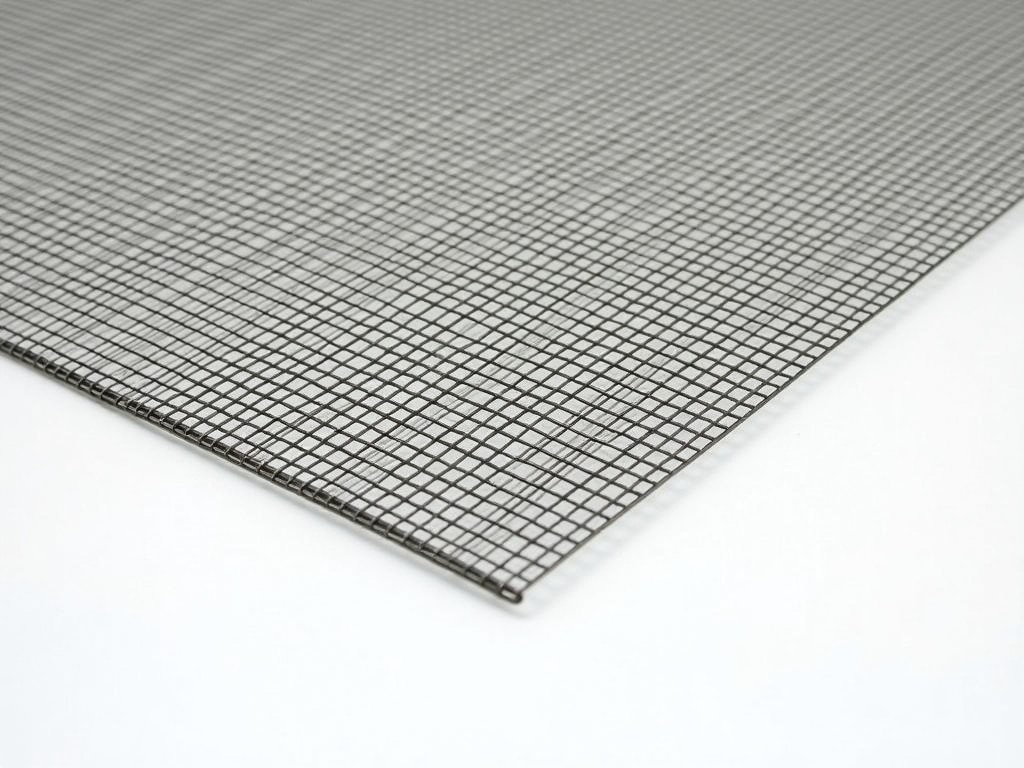
Product Categories


Send Inquiry
If you are interested in our products, leave your information here and we will be in touch shortly.