Stainless Steel Weld Mesh Suppliers
Stainless steel weld mesh is a structural reinforcement material formed by joining perpendicular wires at their intersections through resistance welding. The process creates a grid pattern where
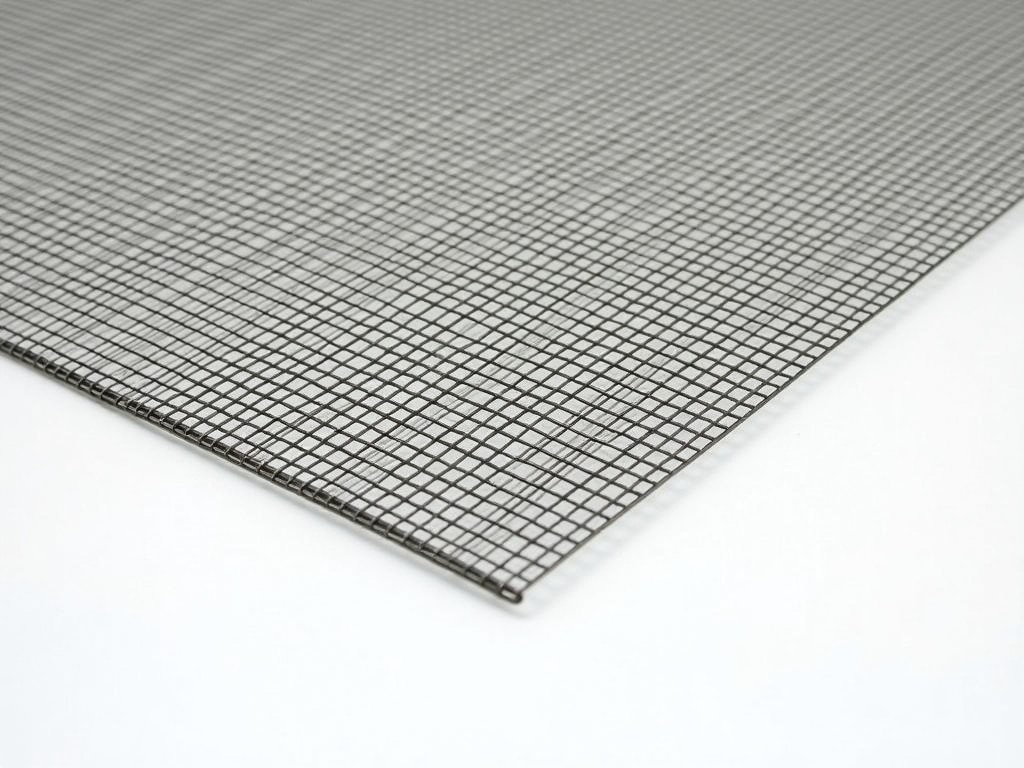
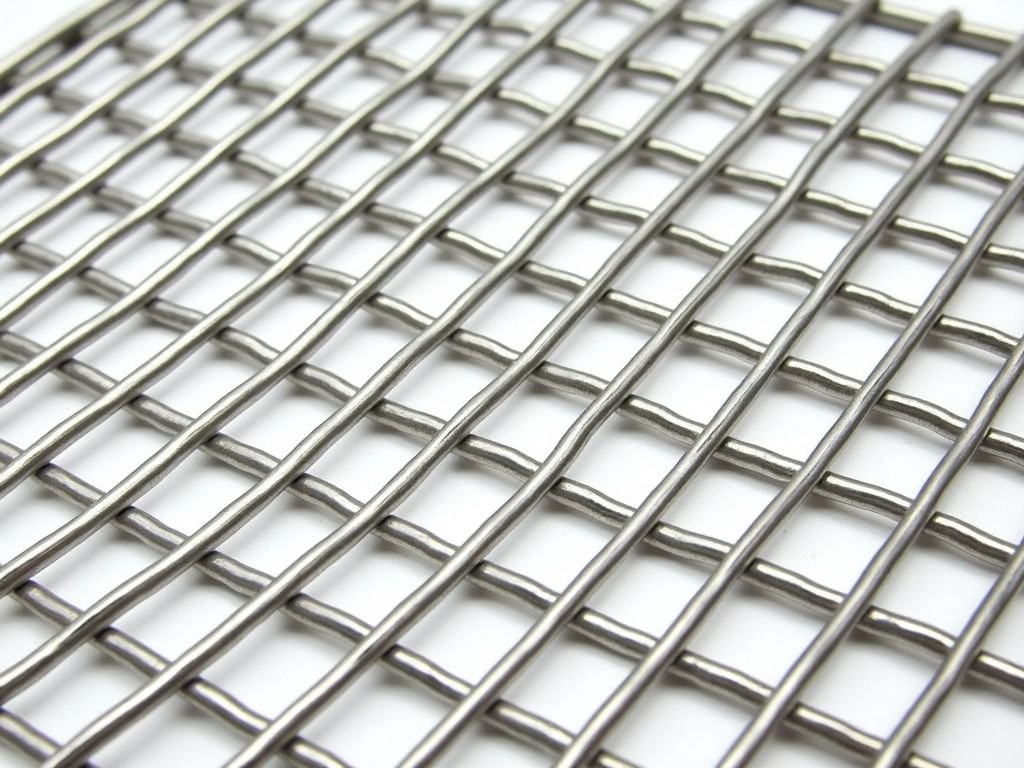
Stainless steel weld mesh is a structural reinforcement material formed by joining perpendicular wires at their intersections through resistance welding. The process creates a grid pattern where longitudinal and transverse wires are fused permanently, resulting in a product with uniform opening sizes and consistent tensile strength across the entire sheet. Unlike woven or knitted mesh, weld mesh offers superior dimensional stability under load due to the elimination of wire movement at crossover points.
Common base materials include austenitic grades such as 304 and 316L, selected for their corrosion resistance in specific environmental conditions. Wire diameters typically range from 0.5mm to 6.0mm, with opening sizes varying from 6mm x 6mm to 150mm x 150mm, depending on the intended application. The welding process affects the heat-affected zone near each joint, which must be considered when specifying mesh for high-temperature or cryogenic service.
Material Selection and Mechanical Properties
Grade 304 stainless steel contains approximately 18% chromium and 8% nickel, providing adequate resistance to atmospheric corrosion, mild chemicals, and intermittent exposure to moisture. Its yield strength typically ranges from 205 to 515 MPa depending on wire diameter and cold work history, making it suitable for general-purpose industrial enclosures, architectural screens, and food processing equipment where exposure to chlorides is limited.
Grade 316L incorporates 2-3% molybdenum, significantly enhancing resistance to pitting and crevice corrosion in chloride-containing environments such as marine applications, chemical processing plants, and wastewater treatment facilities. The lower carbon content (max 0.03%) minimizes sensitization during welding, preserving corrosion resistance in the heat-affected zones. For high-temperature applications exceeding 400°C, heat-resistant grades like 309 or 310 may be specified, though these require specialized welding parameters to avoid cracking.
Manufacturing Process and Quality Considerations
The production of stainless steel weld mesh begins with straightening and cutting longitudinal and transverse wires to precise lengths. These wires are then fed into a resistance welding machine where electrodes apply pressure and electrical current at each intersection point. The weld nugget forms through localized melting, typically reaching 60-80% of the wire diameter in thickness. Proper welding parameters are critical: insufficient current results in weak joints, while excessive current causes burn-through or distortion, particularly in finer wires.
Post-welding processes may include stress relieving to reduce residual stresses from the welding operation, especially for applications involving cyclic loading or tight forming tolerances. Surface treatments such as passivation (using nitric or citric acid solutions) remove free iron and enhance the passive oxide layer, improving long-term corrosion resistance. Mesh sheets are typically supplied in flat panels or rolls, with edge conditions ranging from raw cut to folded or welded edges for safety and ease of handling.
Typical Industrial Applications
In chemical processing plants, stainless steel weld mesh serves as catalyst retainers, filter supports, and vessel internals where resistance to both chemical attack and mechanical vibration is required. The uniform opening size ensures consistent flow distribution, while the welded joints prevent wire displacement under pulsating flow conditions. For example, 316L mesh with 2mm wire and 20mm x 20mm openings is commonly used in fixed-bed reactors handling acidic mixtures at elevated temperatures.
Architectural applications include facade cladding, sun shading systems, and interior partitions where aesthetic consistency and long-term durability are priorities. The weld mesh provides a rigid, transparent barrier that maintains its shape under wind load without sagging. In food and beverage production, mesh is used for conveyor belts, drying trays, and sieving equipment, where hygiene standards require smooth surfaces that resist bacterial harborage and withstand frequent cleaning with aggressive detergents.
Infrastructure projects utilize weld mesh for concrete reinforcement in precast elements, tunnel linings, and architectural concrete panels. Unlike rebar grids, weld mesh offers faster installation and more uniform crack control due to the consistent spacing of wires. In mining and mineral processing, the mesh functions as screen media for ore classification, where abrasion resistance and open area percentage directly impact efficiency.
Customization Options and Dimensional Specifications
Wire diameter selection directly influences the mesh’s structural performance and open area percentage. Thicker wires increase load-bearing capacity but reduce open area, affecting flow rates in filtration applications. For instance, doubling the wire diameter from 1mm to 2mm increases the cross-sectional area by four times but decreases the open area in a 20mm x 20mm grid from approximately 75% to 56%. Engineers must balance mechanical requirements with process efficiency when specifying dimensions.
Opening size is determined by the application’s functional needs: smaller openings prevent particle passage in sieving or containment roles, while larger openings reduce pressure drop in fluid distribution systems. Standard opening sizes follow metric increments (e.g., 6, 10, 12, 15, 20, 25, 30, 40, 50, 75, 100, 150mm), though intermediate dimensions are available upon request. Sheet dimensions are typically limited by handling and transportation constraints, with common widths ranging from 0.5m to 2.4m and lengths up to 6m for flat panels or continuous rolls.
Quality Assurance and Testing Methods
Dimensional verification includes checking wire diameter using micrometers or laser gauges, measuring opening sizes with calibrated templates or vision systems, and confirming sheet squareness and flatness. Tolerances for wire diameter are typically ±0.05mm for precision applications, while opening size tolerances may range from ±2% to ±5% depending on the welding equipment and process control. Visual inspection identifies surface defects such as weld spatter, cracks, or incomplete fusion at joints.
Mechanical testing involves tensile strength tests on welded joints to ensure they meet or exceed the parent wire’s strength. Bend tests assess ductility and weld integrity under deformation. For corrosion-critical applications, supplementary testing may include salt spray exposure (ASTM B117) or electrochemical potency reactivation (EPR) tests to evaluate sensitization risk. Mill test reports documenting chemical composition and mechanical properties of the base wire are typically available upon request.
| Parameter | Typical Range | Notes |
|---|---|---|
| Wire Diameter | 0.5mm – 6.0mm | Selected based on load requirements and open area needs |
| Opening Size | 6mm x 6mm – 150mm x 150mm | Custom sizes available; affects flow rate and particle retention |
| Sheet Width | 0.5m – 2.4m | Limited by handling and transportation constraints |
| Sheet Length | Up to 6m (flat); continuous rolls available | Roll length depends on wire diameter and mesh weight |
| Material Grades | 304, 316L, 309, 310, others upon request | Grade selected per environmental and temperature conditions |
Environmental and Operational Factors
Temperature extremes affect both the mechanical properties of stainless steel and the integrity of welded joints. At cryogenic temperatures below -196°C, austenitic grades like 304 and 316L retain ductility, but the weld zones may become more susceptible to cracking under thermal cycling due to differences in thermal expansion coefficients between the weld metal and base wire. Prolonged exposure above 425°C risks sensitization in standard grades, where chromium carbides form at grain boundaries, reducing corrosion resistance—low-carbon grades like 316L mitigate this risk.
In environments with alternating wet and dry cycles, such as coastal structures or industrial washdown areas, the accumulation of chlorides on the mesh surface can initiate pitting if not periodically cleaned. The smooth, non-porous nature of welded joints reduces crevice formation compared to woven mesh, but regular inspection is still recommended in aggressive conditions. For submerged applications, flow velocity influences erosion rates, particularly at weld protrusions, necessitating velocity limits based on wire diameter and material grade.
For technical inquiries regarding material selection, dimensional specifications, or application-specific recommendations, contact our engineering team to discuss your project requirements. Detailed datasheets, sample arrangements, and lead time information are available upon request.

Product Categories


Send Inquiry
If you are interested in our products, leave your information here and we will be in touch shortly.