Stainless Steel Wedge Wire Screen Suppliers
Stainless steel wedge wire screens are precision-engineered filtration components formed by welding V-shaped profile wires to longitudinal support rods. This construction creates continuous slot
Stainless Steel Wedge Wire Screen Suppliers
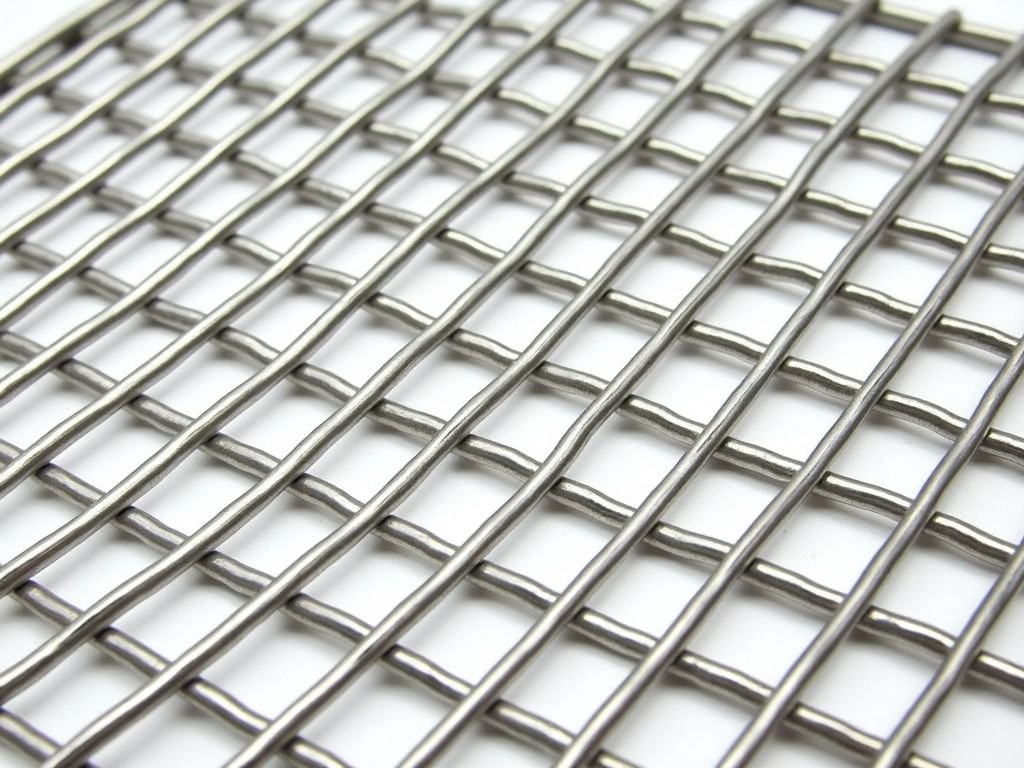
Stainless steel wedge wire screens are precision-engineered filtration components formed by welding V-shaped profile wires to longitudinal support rods. This construction creates continuous slot openings that resist blinding and allow high open area for efficient solid-liquid separation. Unlike perforated or woven mesh alternatives, wedge wire maintains structural integrity under high differential pressure while providing consistent flow distribution across the screen surface.
Material Selection and Corrosion Resistance
The base material for wedge wire screens is selected based on the chemical composition, temperature, and abrasive nature of the process fluid. Austenitic stainless steels such as 304L and 316L are commonly used due to their chromium-nickel content, which forms a passive oxide layer resistant to oxidation and pitting. For chloride-rich environments or elevated temperatures, duplex grades like 2205 offer superior resistance to stress corrosion cracking while maintaining high tensile strength.
Material thickness and profile dimensions are engineered to balance hydraulic performance with mechanical load capacity. Typical wire thicknesses range from 0.8 mm to 3.0 mm, with support rods sized according to screen length and expected pressure differentials. Suppliers provide material test reports (MTRs) verifying chemical composition and mechanical properties for each production batch, ensuring traceability to industry standards such as ASTM A240 or EN 10088.
Screen Geometry and Open Area Optimization
The V-profile wire creates a tapered slot that widens toward the effluent side, minimizing particle trapping and enabling self-cleaning action during backwashing. Slot openings are precisely controlled during manufacturing, typically ranging from 0.1 mm to 3.0 mm, with tolerance held to ±0.02 mm for fine filtration applications. Open area percentage is calculated based on wire profile, slot width, and support rod spacing, often exceeding 40% in standard configurations — significantly higher than perforated plate of equivalent strength.
Support rod spacing is determined by the screen’s unsupported length and the maximum anticipated pressure drop. Closer rod spacing increases stiffness but reduces open area; wider spacing improves flow capacity but may require thicker profiles to prevent deflection. Engineers use finite analysis models to optimize this trade-off, ensuring the screen maintains dimensional stability under operational loads without sacrificing filtration efficiency.
Manufacturing Process and Quality Control
Wedge wire screens are fabricated using resistance welding, where each profile wire is fused to the support rods under precise electrical current and pressure. This method creates a homogeneous joint without filler material, preserving corrosion resistance and eliminating crevices where contaminants could accumulate. Weld penetration is monitored via non-destructive testing, with visual and dimensional inspections conducted at multiple stages — wire feeding, welding, and final assembly.
Critical dimensions such as slot width, screen length, and diameter (for cylindrical screens) are verified using calibrated gauges and coordinate measuring machines (CMMs). Surface finish is inspected for weld spatter, sharp edges, or deformation that could affect performance or safety. Suppliers adhering to ISO 9001 quality management systems document all inspection results, providing customers with traceable records for audit purposes.
Customization Options for Industrial Applications
Wedge wire screens are rarely supplied as standard off-the-shelf items; instead, they are engineered to match specific process conditions. Customization begins with defining the required filtration rating, flow rate, and pressure drop limits. Based on these parameters, suppliers determine the optimal wire profile, slot size, support rod spacing, and overall dimensions. For curved or cylindrical screens, the radius of curvature is specified to ensure proper fit within housings such as pressure vessels or centrifuge baskets.
End fittings, flanges, and mounting features are designed according to installation requirements. Options include NPT threads, ANSI flanges, sanitary tri-clamp connections, or custom weld pads. Surface treatments such as electropolishing or passivation may be applied to enhance corrosion resistance in hygienic or pharmaceutical environments. All modifications are reviewed for compatibility with the base material to avoid galvanic coupling or heat-affected zone degradation.
Typical Applications Across Industries
In municipal water treatment, wedge wire screens serve as intake pre-filters to protect pumps from debris and as underdrains in rapid sand filters where uniform backwash distribution is critical. The high open area minimizes head loss, reducing energy consumption in large-scale systems. Their resistance to clogging from biological growth or suspended solids makes them preferable to perforated plates in continuous operation.
Food and beverage processors use wedge wire screens in juice extraction, spent grain dewatering, and syrup filtration, where sanitary design and smooth surfaces prevent product buildup and facilitate cleaning-in-place (CIP). The absence of crevices and the use of food-grade stainless steel (e.g., 316L) comply with FDA and 3-A Sanitary Standards. In brewing, lauter tun false bottoms made from wedge wire ensure even wort drainage during sparging, improving yield and clarity.
Chemical and petrochemical industries employ these screens in catalyst recovery, polymer filtration, and solvent reclamation processes. Their ability to withstand corrosive media, high temperatures, and mechanical vibration makes them suitable for demanding environments such as ethylene glycol purification or titanium dioxide production. Custom alloys like 904L or Hastelloy equivalents are available upon request for extreme chemical exposure.
Quality Assurance and Testing Protocols
Beyond dimensional verification, suppliers conduct performance validation to confirm hydraulic characteristics. Bubble point testing measures the maximum pore size by determining the air pressure required to force liquid through the wetted screen, providing a direct correlation to filtration efficiency. Flow capacity tests quantify the volumetric throughput at specified pressure drops, allowing engineers to predict system behavior under real-world conditions.
Mechanical strength is assessed through burst pressure and collapse resistance trials, particularly for screens used in high-pressure filtration vessels. Fatigue testing may be performed for applications involving cyclic loading, such as pulsating pump feeds or vibratory dewatering units. All test results are compiled into a quality dossier, enabling buyers to evaluate long-term reliability and maintenance expectations before installation.
Comparison Table: Material Grades and Environmental Suitability
| Material Grade | Chromium/Nickel Content | Typical Use Case | Limiting Factor |
|---|---|---|---|
| 304L | 18% Cr, 8% Ni | General water treatment, food processing (non-chloride) | Susceptible to pitting in chloride >200 ppm |
| 316L | 16% Cr, 10% Ni, 2% Mo | Chemical processing, marine environments, pharmaceutical | Limited in reducing acids or >60°C chlorides |
| 2205 Duplex | 22% Cr, 5% Ni, 3% Mo | High-chloride brines, oil & gas separators, desalination pre-treatment | Reduced formability; requires specialized welding |
| 904L | 20% Cr, 25% Ni, 4.5% Mo, 1.5% Cu | Sulfuric acid, phosphoric acid, aggressive organic solvents | Higher cost; limited availability in wire profiles |
The table above illustrates how material selection directly impacts service life and maintenance frequency. While 316L offers broad suitability for many industrial fluids, duplex grades provide a cost-effective alternative for high-salinity applications where 316L would require frequent replacement. Engineers should consult corrosion charts and consider fluid temperature, pH, and velocity when specifying materials — factors that suppliers evaluate during technical review.
For technical inquiries, material selection assistance, or to request a quotation based on your process specifications, contact our engineering team. Provide details such as fluid composition, operating temperature, pressure drop limits, required filtration rating, and screen geometry to receive a customized solution engineered for your application.
Request Technical Consultation
Product Categories


Send Inquiry
If you are interested in our products, leave your information here and we will be in touch shortly.