Stainless Steel Welded Wire Mesh Panels
Stainless steel welded wire mesh panels are fabricated by resistance welding intersecting wires at every intersection point, creating a rigid, grid-like structure. This process eliminates the need

Stainless Steel Welded Wire Mesh Panels
Stainless steel welded wire mesh panels are fabricated by resistance welding intersecting wires at every intersection point, creating a rigid, grid-like structure. This process eliminates the need for weaving or knotting, resulting in uniform opening sizes and consistent tensile strength across the entire panel. The panels are commonly used where dimensional stability, corrosion resistance, and mechanical integrity are critical over extended service life.
Material Composition and Grade Selection
The base material for these panels is typically austenitic stainless steel, selected for its combination of corrosion resistance, formability, and weldability. Grade 304 is the most frequently specified due to its excellent resistance to atmospheric oxidation and mild chemical exposure, suitable for indoor and sheltered outdoor environments. For environments with higher chloride exposure, such as coastal areas or chemical processing zones, Grade 316 is preferred due to the addition of molybdenum, which enhances resistance to pitting and crevice corrosion. Wire diameters range from 0.8 mm to 6.0 mm, depending on load requirements and opening size, with tensile strength typically between 500–750 MPa after cold drawing and welding.
Manufacturing Process and Structural Integrity
Production begins with straightening and cutting stainless steel wire to precise lengths. The wires are then laid in orthogonal patterns—warp (longitudinal) and weft (transverse)—and fed into a resistance welding machine where electrodes apply localized heat and pressure at each crossover. This creates a fusion bond without adding filler material, preserving the metallurgical properties of the base wire. Post-welding, panels may undergo stress-relief annealing to reduce residual stresses from welding, improving dimensional stability. The resulting mesh exhibits high shear resistance and minimal deformation under load due to the continuous wire paths and uniform weld distribution.
Standard and Customizable Dimensions
Panel dimensions are tailored to application-specific framing, support spacing, or installation constraints. Standard widths range from 600 mm to 2400 mm, while lengths can extend up to 6000 mm for single-piece handling, though longer panels are often segmented for logistics. Opening sizes (apertures) vary from 6 mm × 6 mm for fine filtration or rodent exclusion to 100 mm × 100 mm for architectural infill or machine guarding. Wire spacing is held to ±0.5 mm tolerance through precision feeding and welding controls, ensuring repeatability across batches. Custom hole patterns, tapered edges, or notched corners are available upon request to accommodate mounting hardware or structural interfaces.
Surface Finish and Post-Treatment Options
As-welded panels retain a natural mill finish, which may exhibit slight discoloration at weld points due to localized oxidation. For applications requiring aesthetic consistency or enhanced corrosion resistance, post-weld treatments are available. Passivation in nitric or citric acid baths removes free iron and promotes chromium oxide layer formation. Electropolishing further smooths the surface, reducing micro-crevices where contaminants can accumulate—beneficial in food, pharmaceutical, or semiconductor environments. Some panels are supplied with a PVC or powder coating over the stainless steel for additional barrier protection or color coding, though this is less common when the base alloy’s inherent resistance suffices.
Typical Applications Across Industries
In industrial facilities, these panels serve as machine guards, conveyor belt supports, and protective barriers around rotating equipment, where their rigidity prevents deformation under impact and maintains consistent opening size to prevent entanglement. In architectural contexts, they are used as infill panels for balustrades, sun screens, and façade cladding—offering visibility, airflow, and light diffusion while meeting safety load requirements. In environmental engineering, they function as filter media in wastewater pretreatment screens or as support structures for geotextiles in erosion control systems. Agricultural applications include livestock enclosure fencing and crop protection barriers, where resistance to UV degradation and chemical fertilizers extends service life beyond galvanized alternatives.
Quality Control and Inspection Protocols
Dimensional verification includes checking overall panel size, wire diameter, and aperture uniformity using calibrated gauges and optical comparators. Weld integrity is assessed via visual inspection for completeness and absence of cracks or undercut, supplemented by bend tests on sample coupons to ensure ductility and bond strength. Material composition is confirmed through mill certificates or portable XRF screening for critical grades. Surface cleanliness is evaluated for passivated parts using copper sulfate or ferroxyl tests to detect residual iron. Panels are typically inspected to ISO 9041 or equivalent standards for welded wire mesh, with test reports available upon request.
Packaging and Handling Considerations
Panels are stacked flat on pallets with interleaving layers of polyethylene or cardboard to prevent surface abrasion during transit. Edge protectors are applied to vulnerable corners, and the entire unit is secured with polyester or steel strapping. For export shipments, moisture-barrier wrap and desiccant packs are included to mitigate condensation risks in tropical climates. Handling equipment should accommodate the panel’s full dimensions to avoid point loading that could cause permanent deformation. Custom crating or frame-mounted packaging is available for large-format or thin-gauge panels requiring extra rigidity.
| Parameter | Typical Range / Options |
|---|---|
| Stainless Steel Grade | 304, 316, 316L (custom grades available) |
| Wire Diameter | 0.8 mm – 6.0 mm |
| Opening Size (Aperture) | 6 mm × 6 mm – 100 mm × 100 mm |
| Panel Width | 600 mm – 2400 mm |
| Panel Length | Up to 6000 mm (segmented for longer) |
| Tensile Strength (Wire) | 500–750 MPa (cold-drawn) |
| Surface Finish | As-welded, Passivated, Electropolished, Coated |
| Tolerance (Wire Spacing) | ±0.5 mm |
Selecting the correct stainless steel welded wire mesh panel requires aligning material grade, wire diameter, aperture size, and panel dimensions with the environmental conditions, mechanical loads, and functional expectations of the installation. Engineers should consider not only initial cost but also lifecycle performance—particularly corrosion resistance and maintenance frequency—to avoid premature replacement or failure. For applications involving hygiene, structural safety, or long-term exposure, specifying certified material and verifying weld quality through documentation reduces risk and ensures compliance with industry standards.
To discuss your project requirements, request a quotation, or obtain technical datasheets and sample panels, contact our technical team. Provide details on operating environment, load conditions, dimensions, and any applicable standards to receive a tailored solution.
Request Technical Consultation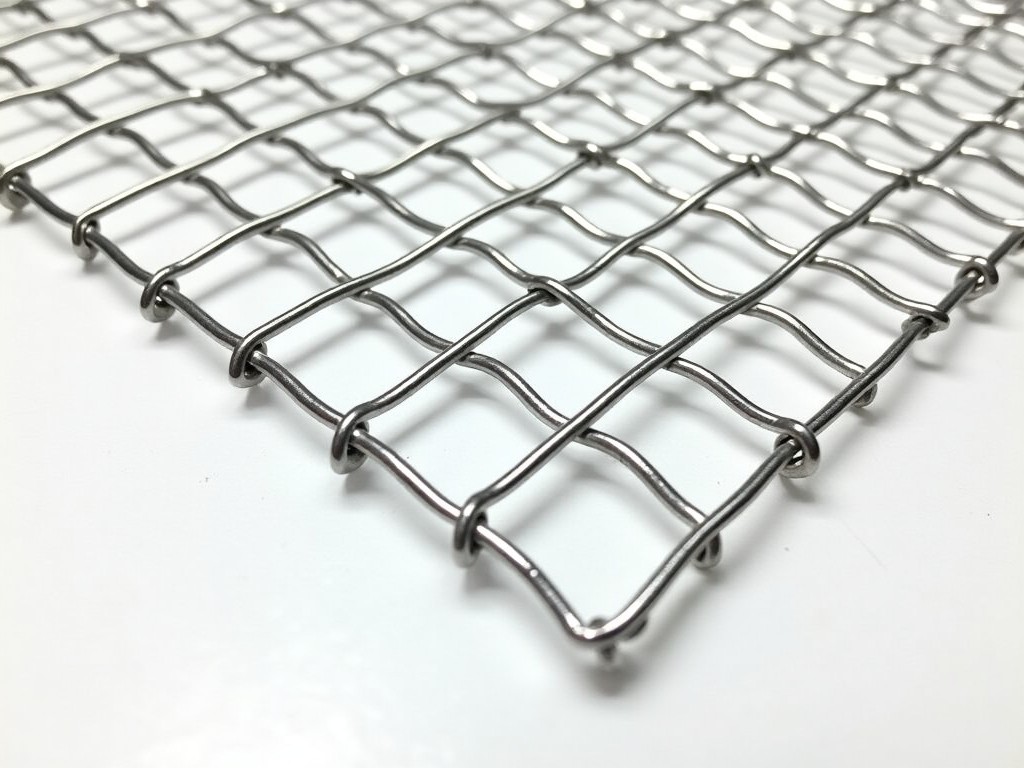
Product Categories


Send Inquiry
If you are interested in our products, leave your information here and we will be in touch shortly.