Wire Mesh Conveyor Belt Factory Price
Wire mesh conveyor belts are engineered for industrial applications requiring open-area airflow, drainage, or product visibility. Their construction from interlinked metal wires provides structural
Wire Mesh Conveyor Belt Factory Price
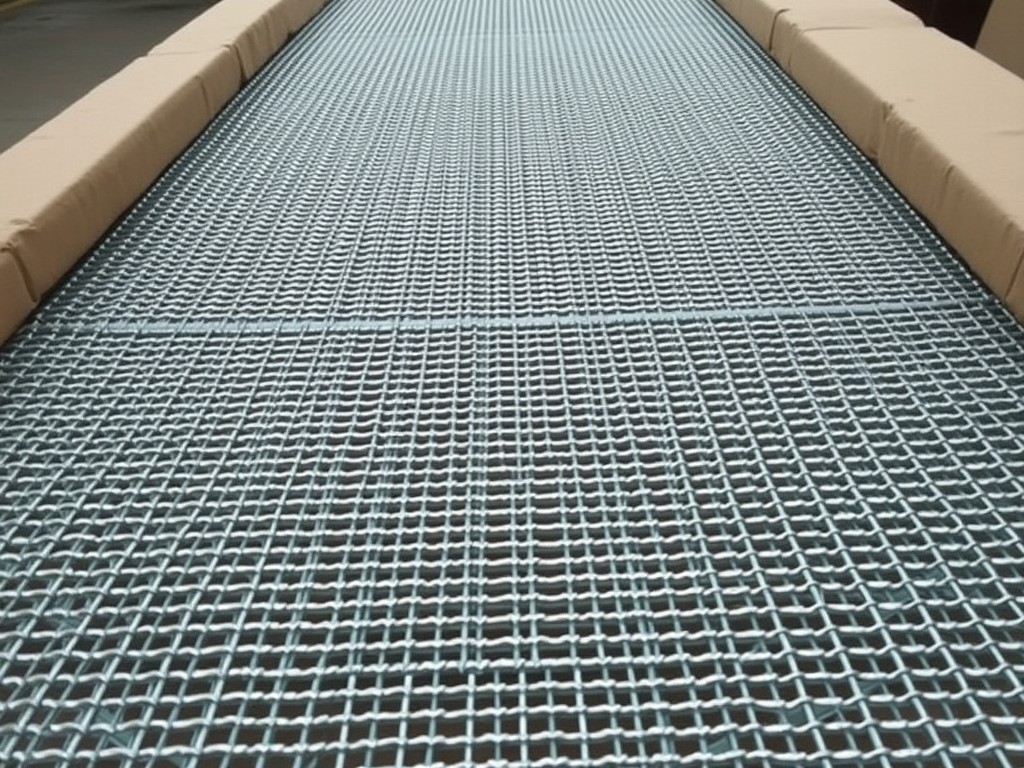
Wire mesh conveyor belts are engineered for industrial applications requiring open-area airflow, drainage, or product visibility. Their construction from interlinked metal wires provides structural integrity while minimizing material contact, making them suitable for processes where hygiene, thermal transfer, or liquid management is critical.
Factory pricing for wire mesh conveyor belts depends on material selection, wire diameter, mesh opening size, belt width, length, and edge treatment. Unlike solid-surface belts, mesh designs reduce weight and material usage, which directly influences cost—especially in stainless steel or alloy variants where raw material prices fluctuate.
Key Technical Factors Influencing Factory Price
The primary cost drivers in wire mesh conveyor belts are material grade and wire geometry. Stainless steel grades such as 304, 316, or 316L offer corrosion resistance but vary in nickel and molybdenum content, directly affecting raw material cost. Carbon steel options are less expensive but require protective coatings or are limited to dry, non-corrosive environments.
Wire diameter typically ranges from 0.8 mm to 3.0 mm, with thicker wires increasing tensile strength and belt weight. Mesh opening size—defined as the clear space between wires—impacts both airflow capacity and product retention. Finer meshes (e.g., 2 mm x 2 mm) require more wire per square meter, increasing material and weaving time, thus raising unit cost.
Belt width and length determine total material consumption. Standard widths range from 100 mm to 2000 mm; custom widths require specialized looms and may incur setup fees. Length is usually supplied in rolls or endless spliced configurations, with endless belts adding labor for welding or riveting.
Typical Price Ranges by Specification
| Specification | Material | Typical Factory Price Range (USD/m²) |
|---|---|---|
| 1.2 mm wire, 6 mm x 6 mm mesh, 500 mm width | Stainless Steel 304 | $18–$25 |
| 1.5 mm wire, 8 mm x 8 mm mesh, 800 mm width | Stainless Steel 316 | $22–$30 |
| 1.0 mm wire, 4 mm x 4 mm mesh, 300 mm width | Carbon Steel (galvanized) | $12–$16 |
| 2.0 mm wire, 10 mm x 10 mm mesh, 1000 mm width | Stainless Steel 304 | $20–$28 |
These prices are indicative EX-WORKS factory rates for standard configurations. Final pricing includes tooling, edge finishing (such as welded or curled edges), and any custom features like side guards, cleats, or specialized splices. Volume discounts apply for orders exceeding 50 m², and raw material surcharges may be adjusted monthly based on LME or SMM indices.
Applications Where Mesh Design Delivers Value
In food processing, wire mesh belts enable steam penetration during blanching or cooling, reducing cycle times compared to solid belts. The open structure allows water and debris to drain freely, minimizing contamination risk in washing or rinsing lines. For heat treatment, mesh belts facilitate uniform airflow in furnaces, ensuring consistent temperature exposure across the product surface—critical in annealing or sintering operations.
Chemical industries use mesh belts for drying granules or pellets where solvent evaporation requires maximum surface exposure. In recycling, the belt’s openness allows small particles to fall through for separation, while larger items are conveyed forward. Unlike modular plastic belts, wire mesh does not absorb contaminants or degrade under UV or high-temperature exposure, supporting longer service life in harsh environments.
Customization Options That Affect Cost
Edge treatments significantly influence both cost and durability. Welded edges provide the strongest seal but increase labor time. Curled or knuckled edges reduce fraying and are faster to produce, offering a cost-effective balance. Side guards, when added to prevent product spillover, increase material usage and require additional welding or clamping steps.
Belt permeability can be tailored by adjusting wire diameter and mesh count. Higher mesh counts (more wires per inch) improve product support for small items but reduce open area. Engineers specify mesh geometry based on product size, required drainage rate, and belt tension—factors that directly affect weaving complexity and, consequently, factory pricing.
Quality Control and Consistency in Production
Factory pricing reflects not just material and labor but also process control. Consistent wire tension during weaving ensures uniform mesh opening, preventing weak points or tracking issues. Post-weaving processes like stress relieving reduce residual deformation, improving belt straightness under load. Dimensional inspection—measuring width, length, and mesh accuracy—is performed per roll to meet tolerances typically within ±2 mm for width and ±5 mm per meter for length.
Material traceability is maintained for stainless steel grades, with mill certificates available upon request. Visual and magnetic inspections detect surface defects or carbon steel contamination in austenitic belts. These quality steps add to production time but reduce field failure risks, justifying the factory price through lower lifetime ownership cost.
Requesting an Accurate Factory Price Quote
To receive a precise factory price, provide the following: belt width and length, material grade (or environmental conditions), wire diameter, mesh opening size, edge type, and endless or rolled configuration. Indicate if the belt requires cleats, sidewalls, or special splices for modular installation. Environmental factors such as maximum operating temperature, exposure to chemicals, or washdown frequency help engineers recommend the optimal alloy and construction.
Factory lead times typically range from 2 to 4 weeks for standard specifications, depending on raw material availability and current production load. Custom alloys or non-standard mesh patterns may extend lead time to 6–8 weeks. Samples are available for validation, usually cut from production rolls and shipped at customer freight cost.
Product Categories


Send Inquiry
If you are interested in our products, leave your information here and we will be in touch shortly.