Wholesale Stainless Steel Wire Mesh Panels
Stainless steel wire mesh panels are engineered barriers formed by interlacing corrosion-resistant wire strands into precise grid patterns. These panels serve as structural filters, protective
Wholesale Stainless Steel Wire Mesh Panels
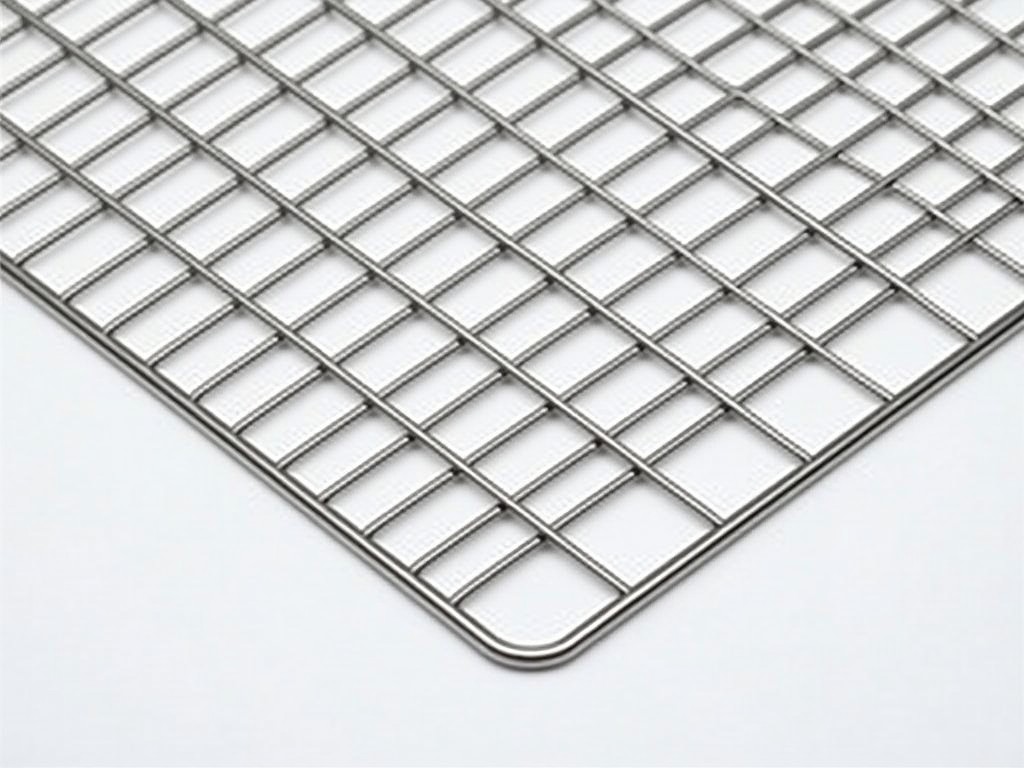
Stainless steel wire mesh panels are engineered barriers formed by interlacing corrosion-resistant wire strands into precise grid patterns. These panels serve as structural filters, protective guards, and separation media in environments where durability, hygiene, and load-bearing performance are critical. Unlike perforated sheets or expanded metal, wire mesh offers uniform open area with minimal material usage, reducing weight while maintaining strength. The woven or welded construction allows for consistent aperture sizes across large surface areas, enabling predictable flow dynamics and particle retention. For bulk procurement, understanding the relationship between wire diameter, aperture size, and alloy composition is essential to match panel performance to operational demands.
Material Composition and Corrosion Resistance
The primary alloys used in wholesale stainless steel wire mesh panels are AISI 304 and 316 grades, selected for their chromium-nickel content and resistance to oxidative and chemical degradation. Grade 304 contains approximately 18% chromium and 8% nickel, providing adequate protection in indoor environments or mild atmospheric exposure. Grade 316 adds 2-3% molybdenum, significantly enhancing resistance to chlorides and acidic solutions, making it suitable for marine, chemical processing, and food sanitation applications. Wire diameters typically range from 0.5 mm to 6.0 mm, with tensile strength increasing proportionally to diameter; a 2.0 mm 304 wire exhibits ~800 MPa tensile strength, while the same diameter in 316 maintains similar strength with superior pitting resistance. Surface finish options include mill finish, electropolished, or passivated layers to further reduce surface contamination risks in hygienic zones.
Weave and Weld Configurations
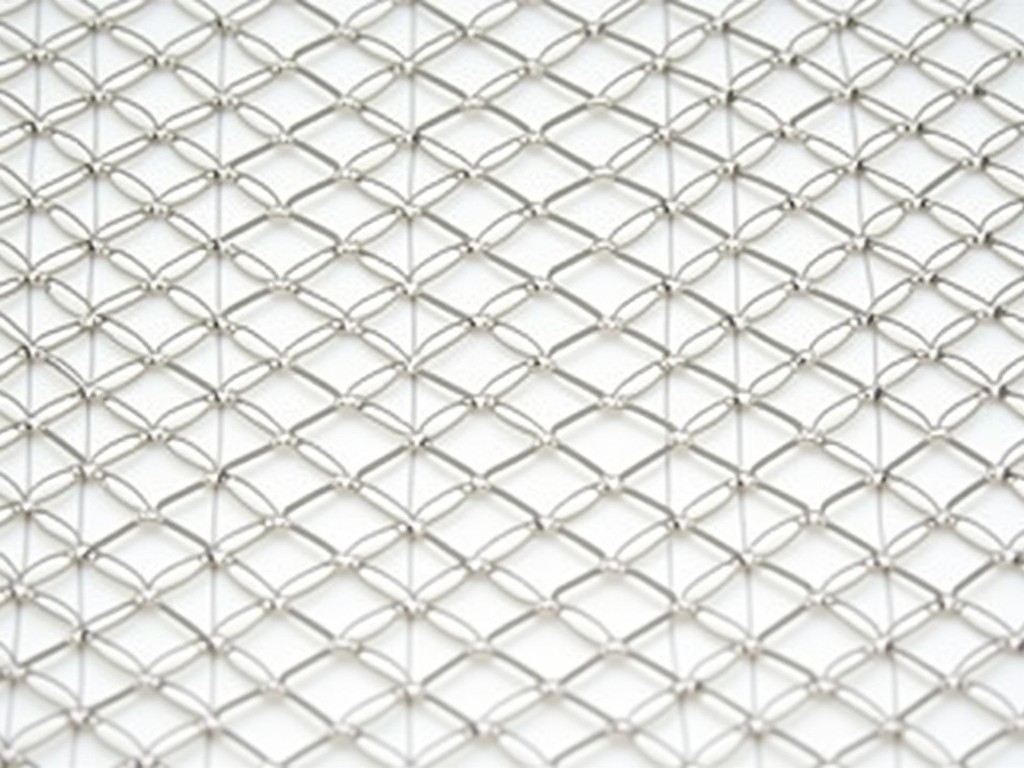
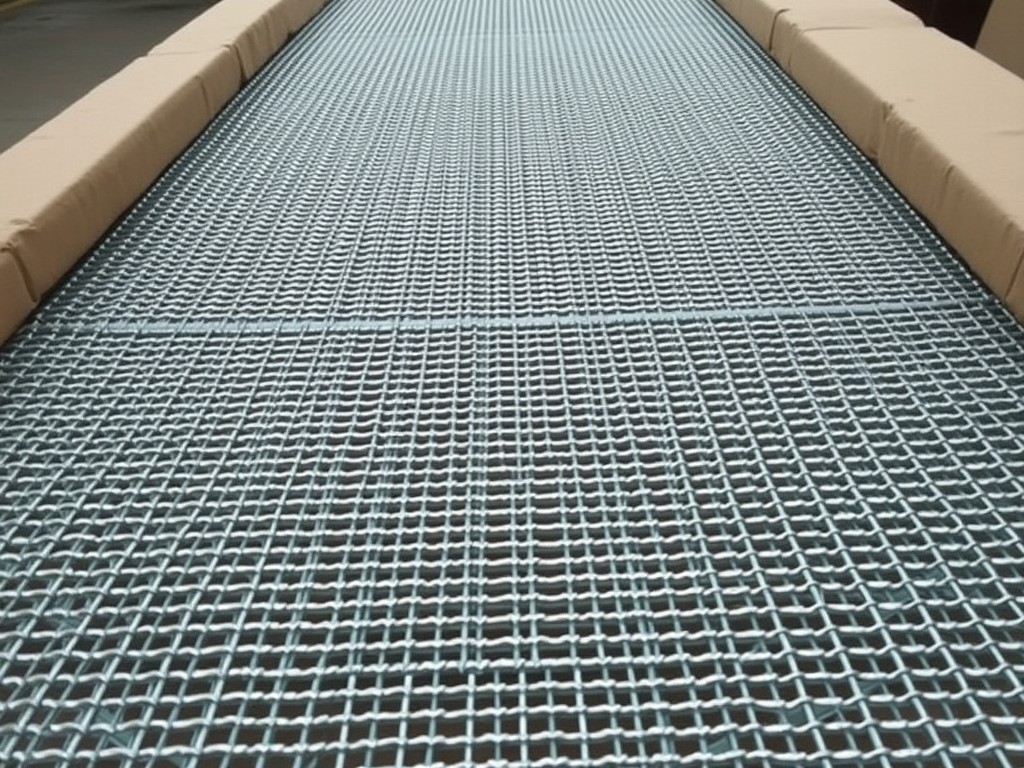
Two dominant fabrication methods define panel structure: woven mesh and welded mesh. Woven mesh is produced by alternately passing warp and weft wires over and under each other, creating a flexible, self-locking structure that distributes stress evenly across intersections—ideal for vibratory screening or impact-loaded applications. Welded mesh joins wires at every intersection via resistance welding, resulting in a rigid grid with minimal deflection under uniform load; this configuration is preferred for machine guards, security barriers, and structural infill where dimensional stability is paramount. Aperture tolerance in woven mesh typically holds within ±5% of nominal size due to wire elasticity, while welded mesh maintains ±2% tolerance due to fixed joint positioning. Panel edge treatments vary: woven edges may be selvedged to prevent unraveling, whereas welded edges are often trimmed and stress-relieved to avoid sharp protrusions.
Standard Dimensions and Customization Parameters
Wholesale suppliers commonly stock panels in rectangular formats ranging from 0.5 m × 0.5 m to 2.0 m × 3.0 m, though custom lengths and widths are achievable through precision cutting or modular joining. Thickness is determined by wire diameter and mesh count; for example, a 50 mm × 50 mm aperture with 3.0 mm wire yields a panel thickness of approximately 6.0 mm. Open area percentage—calculated as the ratio of void space to total surface—varies inversely with wire density: a 10 mm aperture with 1.5 mm wire provides ~56% open area, while the same aperture with 3.0 mm wire drops to ~31%. Customization extends to edge framing (using stainless steel angles or channels), surface coating (for non-stick or color-coded applications), and secondary operations like bending or perforating for specialized fixtures. Buyers should specify aperture orientation (square vs. rectangular) and wire alignment (straight vs. crimped) based on flow direction and cleaning requirements.
Typical Industrial Applications
In food processing, stainless steel wire mesh panels are used as drying trays, conveyor belts, and washdown guards where resistance to frequent cleaning with alkaline detergents and high-pressure steam is required; the smooth, crevice-free surface of electropolished 316 mesh minimizes bacterial retention. In chemical plants, these panels serve as catalyst supports, flame arrestors, and solvent filtration media, where pore size consistency and thermal stability (up to 870°C for 304, 925°C for 316) prevent catalyst loss or structural deformation. Architectural applications include balustrade infill, solar shading screens, and façade ventilation—here, the aesthetic uniformity of welded mesh combined with low maintenance needs supports long-term facade integrity. Mining and aggregate operations employ mesh panels as screen media in vibratory separators; the abrasion resistance of thicker wires (4.0 mm+) extends service life in high-impact, high-load sorting circuits processing quartzite or crushed granite.
Quality Control and Testing Protocols
Reliable wholesale suppliers implement multi-stage verification to ensure panel conformity. Incoming wire undergoes chemical analysis (via OES or XRF) to confirm chromium, nickel, and molybdenum content within ASTM A240/A240M tolerances. Dimensional inspection uses calibrated gauges or vision systems to measure aperture width and wire diameter at multiple points across each panel, with acceptance criteria typically set at ±10% for aperture and ±0.05 mm for wire diameter. Tensile strength is validated via pull-test on sample wires, while weld integrity in welded mesh is assessed through bend and shear tests per ISO 9044. Surface cleanliness is verified via water break test or wipe analysis for facilities requiring ISO 14644-1 cleanroom compliance. Packaging includes moisture-barrier wrapping and edge protection to prevent corrosion or mechanical damage during transit, with each bundle labeled with heat number, grade, aperture size, and wire diameter for traceability.
Comparison Table: 304 vs 316 Stainless Steel Wire Mesh
| Property | AISI 304 | AISI 316 |
|---|---|---|
| Chromium Content | 18% | 16-18% |
| Nickel Content | 8-10.5% | 10-14% |
| Molybdenum Content | None | 2-3% |
| Pitting Resistance Equivalent Number (PREN) | ~18 | ~24 |
| Typical Max Service Temp (Oxidizing) | 870°C | 925°C |
| Common Use Case | Indoor filtration, general-purpose guards | Marine, chemical, food sanitation |
Ordering Information and Lead Times
Wholesale orders require specification of grade (304/316), wire diameter (mm), aperture size (mm × mm), panel dimensions (width × height), mesh type (woven/welded), and edge finish. Minimum order quantities typically start at 10 panels for standard sizes, with volume pricing applicable beyond 50 units. Lead times for stock configurations (e.g., 304, 2.0 mm wire, 25 mm aperture, 1.0 m × 2.0 m) are usually 3-5 business days; custom apertures, non-standard dimensions, or 316 grade may extend lead time to 10-15 days due to wire sourcing and setup adjustments. Samples are available upon request, typically cut from production rolls and shipped within 48 hours. Export packaging includes corrosion-inhibiting vapor barriers, corner protectors, and ISPM-15 compliant pallets for international shipments. Payment terms are net 30 for established accounts, with proforma invoicing for new clients.
Product Categories


Send Inquiry
If you are interested in our products, leave your information here and we will be in touch shortly.