Wholesale Stainless Steel Wire Mesh 1 4 Inch
Stainless steel wire mesh with 1/4 inch (6.35 mm) aperture is a precision-engineered filtration and separation component widely used in industrial processing, material handling, and environmental
Wholesale Stainless Steel Wire Mesh 1/4 Inch
Stainless steel wire mesh with 1/4 inch (6.35 mm) aperture is a precision-engineered filtration and separation component widely used in industrial processing, material handling, and environmental control systems. This specification refers to the clear opening between parallel wires, not the wire diameter itself, which determines flow characteristics, particle retention, and structural integrity under load. Understanding the interplay between aperture size, wire gauge, and alloy composition is essential for selecting the correct mesh for demanding applications where contamination control, durability, and repeatable performance are non-negotiable.
Material Composition and Corrosion Resistance
The most common alloys for 1/4 inch stainless steel wire mesh are AISI 304 and 316L, chosen for their balanced chromium-nickel content and resistance to oxidation in ambient and mildly corrosive environments. Type 304 contains approximately 18% chromium and 8% nickel, providing adequate protection against atmospheric moisture and many food-grade chemicals. Type 316L adds 2-3% molybdenum, significantly enhancing resistance to chlorides, sulfides, and acidic solutions—making it suitable for marine exposure, chemical washdowns, and pharmaceutical clean-in-place (CIP) systems. Wire diameters typically range from 0.020" to 0.063" (0.5–1.6 mm), with tensile strength between 75,000–125,000 psi depending on cold work and annealing state.
Mesh Specifications and Open Area Calculation
For a 1/4 inch aperture mesh, the open area percentage depends directly on wire thickness. Using the formula: Open Area = [(Aperture)² / (Aperture + Wire Diameter)²] × 100, a mesh with 0.035" wire yields approximately 51% open area, while 0.050" wire reduces it to about 39%. This relationship is critical when calculating pressure drop across filters, airflow rates in ventilation screens, or liquid flux in separation tanks. Engineers must balance open area (for throughput) against wire diameter (for mechanical strength and abrasion resistance), particularly in high-vibration or high-solids-loading applications where wire fatigue becomes a failure mode.
Weave Patterns and Structural Performance
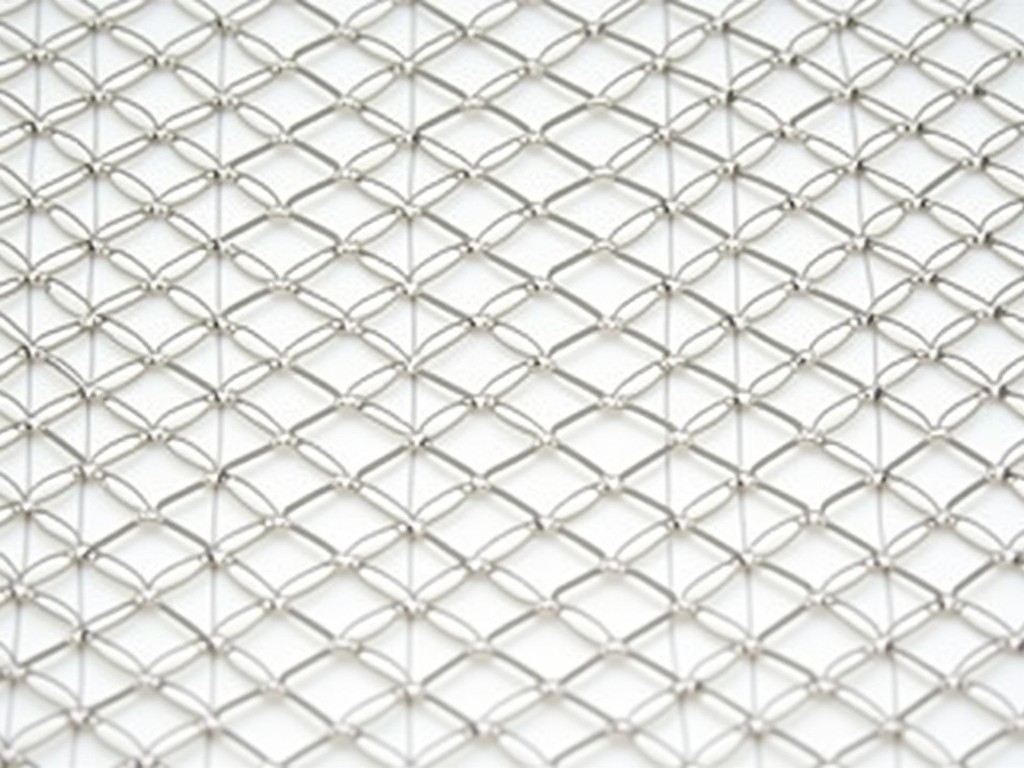
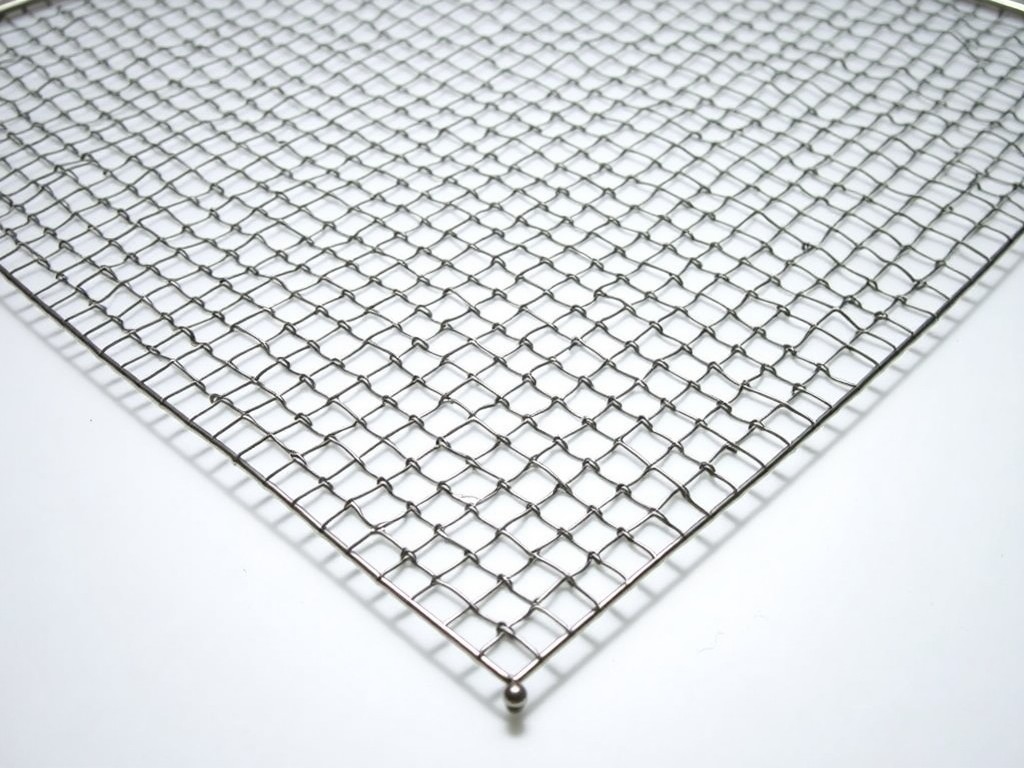
The two dominant weave types for 1/4 inch mesh are plain square weave and twill weave. Plain weave, where each warp wire alternates over and under each weft wire, provides symmetrical loading and is standard for general filtration. Twill weave, where wires pass over two and under two, allows for heavier wire diameters at the same aperture, increasing strength and rigidity without reducing open area—beneficial in vibratory screens or impact-prone environments. Lock crimp and interlock crimp variations further enhance wire-to-wire contact, minimizing migration under cyclic stress and maintaining aperture consistency over extended service life.
Typical Industrial Applications
In food processing, 1/4 inch stainless mesh is used in vibratory sieves for grading dried fruits, nuts, and granulated sugars, where hygiene and particle size consistency directly affect product quality. In wastewater treatment, it serves as a pre-filter screen to remove rags, plastics, and debris before pump stations, preventing clogging and reducing maintenance downtime. Architectural applications include infill panels for parking garages and pedestrian barriers, where the mesh provides fall protection while allowing visibility and airflow—requiring UV-stable alloys and edge treatments to prevent corrosion at cut ends. Chemical plants deploy it in catalyst retention baskets and solvent recovery units, where resistance to thermal cycling and solvent exposure is critical.
Customization Options and Fabrication Considerations
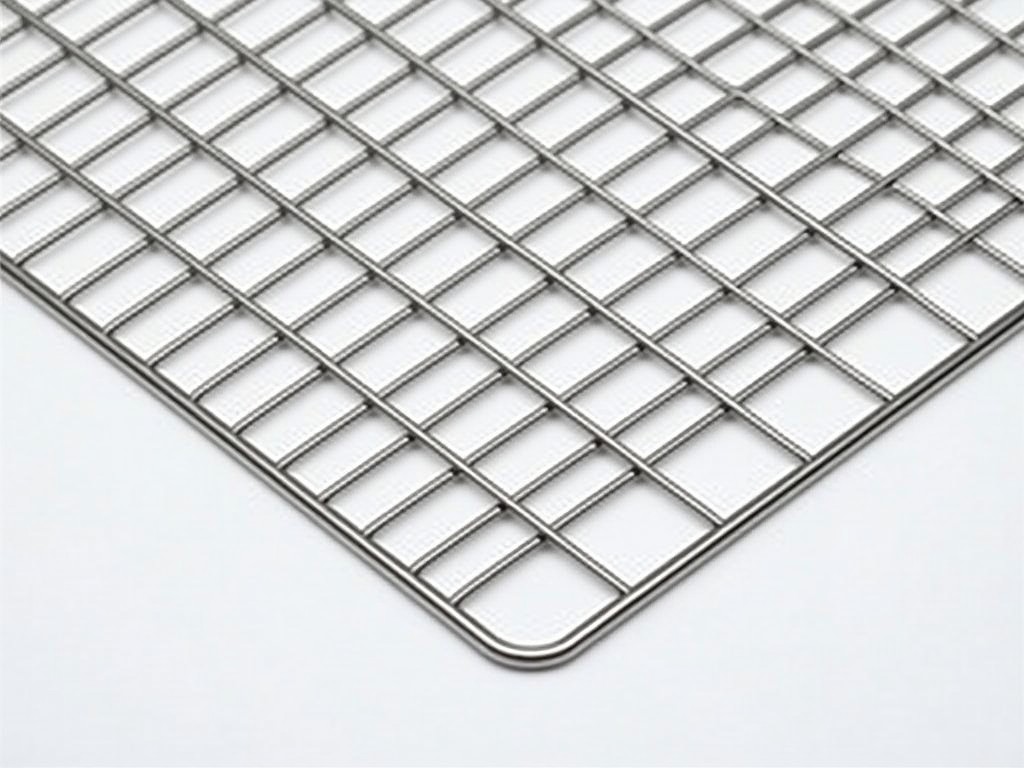
Wholesale suppliers typically offer mesh in roll widths from 3" to 120", with lengths customizable to 50, 100, or 200 linear feet per roll, depending on weight and handling constraints. Edge finishes include raw cut, hemmed, welded fringe, or framed with stainless steel angles for direct mounting. Secondary operations such as laser cutting, CNC punching, or hydraulic forming enable production of custom gaskets, tray inserts, or conical strainers. Surface treatments like passivation or electropolishing may be specified to enhance surface smoothness and reduce product adhesion in hygienic zones—though these do not alter bulk corrosion resistance and are applied post-fabrication.
Quality Control and Inspection Parameters
Industrial buyers should verify mesh specifications through measurable parameters: aperture width via calibrated optical comparators or laser gauges (±0.001" tolerance), wire diameter using micrometers (±0.0005"), and tensile strength via ASTM A370 tensile testing. Visual inspection under 10x magnification checks for weld defects, wire cross-section uniformity, and absence of surface pitting or embedding. For critical applications, suppliers may provide mill test reports (MTRs) confirming alloy chemistry and bend test results. Acceptance criteria are often defined by ISO 9044 or ANSI/BMC standards, which specify allowable deviations in open area, wire diameter, and weave consistency across batch lots.
Packaging, Handling, and Logistics
To prevent deformation during transit, 1/4 inch mesh rolls are typically wound on rigid cores (3" or 6" ID) with internal diameter supports and wrapped in polyethylene shrink film or corrugated cardboard. Heavier rolls (>50 lbs) are palletized with corner protectors and stretch-wrapped to resist shifting. For export shipments, VCI (vapor corrosion inhibitor) paper may be included inside the wrap to mitigate humidity-induced staining during ocean freight. Handling instructions emphasize avoiding sharp bends or kinks that could permanently distort apertures—especially in finer wire gauges—since such damage cannot be repaired and compromises filtration accuracy.
| Parameter | Typical Range / Value | Notes |
|---|---|---|
| Aperture Size | 0.250" (6.35 mm) | Nominal clear opening |
| Wire Diameter | 0.020" – 0.063" (0.5 – 1.6 mm) | Aperture-dependent; affects strength and open area |
| Open Area | 30% – 55% | Calculated per ISO 9044; varies with wire size |
| Alloy Options | AISI 304, 316L, 316Ti | 316L preferred for chloride exposure |
| Weave Types | Plain, Twill, Lock Crimp | Twill allows heavier wire at same aperture |
| Roll Width | 3" – 120" | Custom widths available upon request |
| Tensile Strength | 75,000 – 125,000 psi | Dependent on alloy and cold work level |
Product Categories


Send Inquiry
If you are interested in our products, leave your information here and we will be in touch shortly.