Oem Titanium Welding Wire Suppliers
Titanium welding wire is a critical filler material used in GTAW (TIG) and GMAW (MIG) processes for joining titanium and its alloys in aerospace, chemical processing, medical implants, and marine
OEM Titanium Welding Wire Suppliers
Titanium welding wire is a critical filler material used in GTAW (TIG) and GMAW (MIG) processes for joining titanium and its alloys in aerospace, chemical processing, medical implants, and marine engineering. Selecting an OEM supplier requires understanding material specifications, wire consistency, and traceability to ensure weld integrity meets industry standards such as AWS A5.16, ASTM F67, and ISO 24034.
OEM suppliers provide wire manufactured to exact chemical compositions and dimensional tolerances, often under certified quality management systems like ISO 9001 and AS9100. This level of control minimizes weld defects such as porosity, cracking, and oxygen contamination, which are particularly detrimental in titanium due to its high reactivity at elevated temperatures.
This page outlines key technical considerations when evaluating OEM titanium welding wire suppliers, including material grades, manufacturing controls, testing protocols, and logistical support—factors that directly impact production yield and long-term operational reliability.
Material Grades and Chemical Composition
Titanium welding wire is available in commercially pure (CP) grades and alloyed variants, each suited to specific service environments. CP grades (Grades 1–4) offer varying levels of strength and formability, with Grade 2 being the most commonly welded due to its balanced ductility and corrosion resistance. Alloyed grades such as Ti-6Al-4V (Grade 5) provide higher strength-to-weight ratios and are prevalent in aerospace and biomedical applications.
Chemical composition is tightly controlled, particularly for interstitial elements like oxygen, nitrogen, carbon, and hydrogen, which significantly affect weld ductility and toughness. For example, AWS A5.16 specifies maximum oxygen content of 0.20% for ERTi-2 wire and 0.13% for ERTi-5 (Ti-6Al-4V) to maintain weld toughness after thermal exposure.
Reputable OEM suppliers provide mill test reports (MTRs) for each batch, detailing actual chemical analysis against specification limits. This traceability allows engineers to verify material consistency and supports regulatory compliance in regulated industries.
Manufacturing Consistency and Diameter Control
Wire diameter tolerance directly influences arc stability, deposition rate, and bead geometry in automated and manual welding processes. OEM suppliers typically maintain diameter tolerances of ±0.025 mm (±0.001 in) for precision applications, ensuring consistent feedability through welding torches and wire feeders.
Surface finish is equally critical—oxide-free, smooth drawn wire minimizes feed friction and prevents contamination during welding. Suppliers often employ chemical cleaning and passivation processes post-drawing to remove residual lubricants and surface oxides that could introduce porosity or embrittlement.
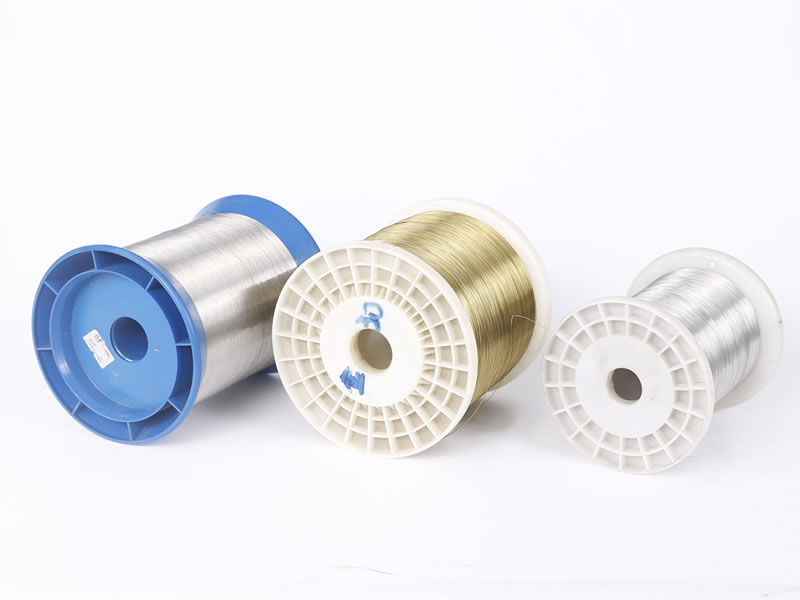
Spool design and wire winding tension are engineered to prevent tangling, bird-nesting, and premature decompression. Industrial-grade spools (e.g., 10 kg, 25 kg) feature anti-static liners and controlled pay-off resistance to support uninterrupted operation in robotic welding cells.
Quality Control and Testing Protocols
OEM suppliers implement multi-stage quality control to verify both raw material and finished wire integrity. Incoming titanium sponge or scrap is spectrochemically analyzed before melting, and ingots undergo ultrasonic and radiographic inspection to detect internal defects prior to processing.
During wire drawing, in-process monitoring includes diameter measurement via laser gauges and surface inspection using eddy current or visual systems. Final product testing typically comprises chemical re-analysis, tensile strength verification, bend testing for ductility, and hydrogen content analysis via inert gas fusion—methods aligned with AWS and ASTM requirements.
Many suppliers maintain accredited laboratories capable of third-party validation. Certifications such as NADCAP for materials testing or AWS SFA 5.16 compliance are available upon request, providing additional assurance for critical applications.
Comparison of Common Titanium Welding Wire Grades
| AWS Classification | Titanium Grade | Typical Use Case | Max Oxygen Content |
|---|---|---|---|
| ERTi-1 | Grade 1 | Chemical tanks, marine piping | 0.18% |
| ERTi-2 | Grade 2 | General fabrication, heat exchangers | 0.20% |
| ERTi-5 | Ti-6Al-4V (Grade 5) | Aerospace components, surgical implants | 0.13% |
| ERTi-23 | Ti-6Al-4V ELI | Medical implants, cryogenic vessels | 0.10% |
Values represent typical maxima per AWS A5.16; actual composition varies by heat and is documented in MTRs.
Customization and Logistics Support
OEM suppliers often accommodate custom requirements beyond standard catalog offerings. This includes non-standard diameters (e.g., 0.6 mm, 2.4 mm), specialized spool sizes (5 kg, 50 kg), or custom alloy modifications such as reduced-interstitial palladium-stabilized grades for enhanced corrosion resistance in reducing environments.
Packaging options are designed to prevent moisture absorption and contamination during transit and storage. Common methods include vacuum-sealed polyethylene bags with desiccant packs, placed inside corrosion-resistant cardboard or reusable plastic containers. For export shipments, additional barrier packaging and humidity indicators may be applied based on destination climate.
Lead times depend on alloy complexity and order volume but typically range from 2–4 weeks for standard grades. Technical support is frequently available to assist with parameter selection, troubleshooting weld defects, or validating material suitability for new applications.
For technical inquiries, material data sheets, or to request a quotation tailored to your welding process and material specifications, contact our engineering team.
Request Technical Consultation
More Products
Send Inquiry
If you are interested in our products, leave your information here and we will be in touch shortly.