Rebar Tie Wire Manufacturers
Rebar tie wire is a critical component in reinforced concrete construction, used to secure intersecting steel reinforcement bars (rebar) at lap splices, intersections, and corner joints. Its primary
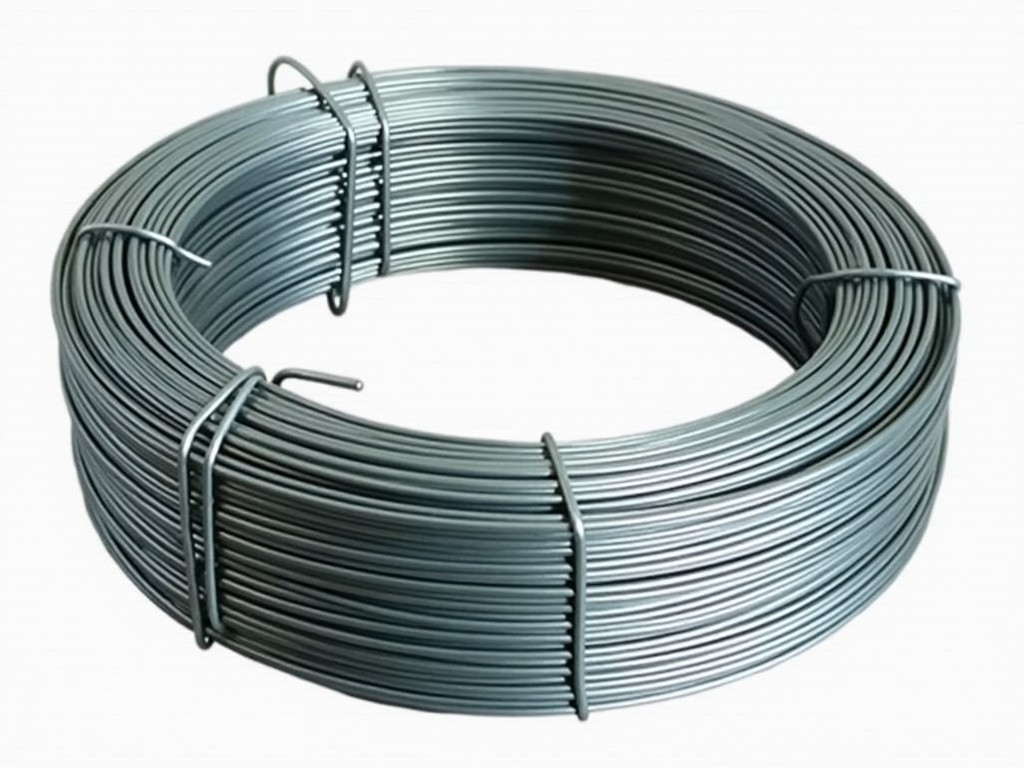
Rebar Tie Wire Manufacturers: Technical Specifications and Application Guide
Rebar tie wire is a critical component in reinforced concrete construction, used to secure intersecting steel reinforcement bars (rebar) at lap splices, intersections, and corner joints. Its primary function is to maintain the positional integrity of the rebar cage during concrete placement and vibration, ensuring structural load paths remain as designed. Unlike fastening methods that rely on mechanical deformation or welding, tie wire provides a flexible, non-destructive connection that accommodates minor dimensional tolerances in rebar placement while resisting loosening under vibratory forces.
The effectiveness of tie wire depends on its tensile strength, ductility, corrosion resistance, and consistent diameter. Manufacturers produce tie wire from low-carbon steel wire, typically cold-drawn to achieve a balance between strength and bendability. The wire is annealed to reduce hardness and improve ductility, allowing it to be twisted tightly by hand or power tools without fracturing. Surface treatments such as galvanization or polymer coating are applied to enhance resistance to alkaline concrete environments and chloride-induced corrosion, particularly in marine or de-icing salt exposure zones.
Material Composition and Mechanical Properties
Standard rebar tie wire is manufactured from SAE 1006 or SAE 1008 low-carbon steel, with carbon content typically ranging from 0.05% to 0.10%. This composition ensures sufficient tensile strength for secure tying while maintaining the ductility required for repeated twisting without fatigue failure. The wire undergoes a controlled annealing process after drawing to achieve a Rockwell B hardness of approximately 55–65, which allows for consistent performance under manual or mechanical tying tools.
Tensile strength typically ranges from 350 to 550 MPa, depending on diameter and processing. Elongation at break is generally between 15% and 25%, indicating adequate plasticity to absorb stress during installation and service. Diameter tolerances are held to ±0.02 mm for standard sizes, ensuring consistent feeding in automated tying systems and uniform twist tightness across large pours. These specifications are verified through inline diameter monitoring and periodic tensile testing per ASTM A641 or equivalent standards.
Diameter Options and Application Suitability
Rebar tie wire is available in standard diameters ranging from 0.8 mm to 1.6 mm, with selection based on rebar size, spacing, and project-specific tying requirements. Thinner wires (0.8–1.0 mm) are commonly used for #3 to #5 rebar (10–16 mm diameter) in light commercial or residential applications where congestion is low and manual tying is prevalent. These diameters offer ease of handling and reduced material cost but require more turns to achieve equivalent holding force.
For larger rebar sizes (#6 and above, 19 mm+) or high-congestion zones such as bridge decks, foundations, or seismic-resistant structures, 1.2 mm to 1.6 mm wire is preferred. The increased cross-sectional area provides higher tensile capacity per twist, reducing the number of turns needed to secure a joint and minimizing labor time. In automated tying systems, 1.1 mm and 1.3 mm diameters are often optimized for feed reliability and consistent knot formation.
Project engineers should consider not only rebar size but also the expected vibration intensity during concrete placement. Higher slump mixes or high-frequency vibrators generate greater lateral forces on the rebar cage, necessitating wire with sufficient diameter and tensile strength to resist loosening. In such cases, specifying a minimum tensile strength of 450 MPa and elongation >20% helps ensure long-term positional stability.
Corrosion Protection Methods
Uncoated low-carbon steel tie wire is susceptible to corrosion in the alkaline pore solution of concrete, particularly when exposed to chlorides from de-icing salts, marine environments, or contaminated aggregates. Corrosion of tie wire can lead to staining, reduced cross-sectional area, and potential loss of tying function over time, especially in thin concrete covers. To mitigate this, manufacturers apply protective coatings that act as barriers to moisture and ion penetration.
Hot-dip galvanization is the most common protective method, applying a zinc coating typically ranging from 20 to 50 g/m² (equivalent to 10–25 µm thickness). This provides sacrificial protection, where the zinc corrodes preferentially to protect the underlying steel. Electro-galvanized coatings are also available, offering thinner but more uniform layers (5–15 g/m²) suitable for applications where appearance or tight dimensional control is critical. For severe environments, polymer-coated wire (e.g., polyethylene or PVC) provides a physical barrier with excellent chloride resistance, though it may reduce flexibility slightly compared to metallic coatings.
The choice of coating should align with the concrete cover depth, exposure class (per ACI 318 or EN 206), and project design life. In environments with high chloride ingress risk, designers often specify double-galvanized or polymer-coated wire for the outer layers of the rebar cage, where cover is minimal and exposure is greatest. Manufacturers provide coating adhesion test data and salt spray resistance results (e.g., ASTM B117) upon request to support specification decisions.
Manufacturing Consistency and Quality Control
Consistency in wire diameter, tensile properties, and coating uniformity is essential for reliable performance in high-volume construction projects. Variations in diameter can lead to inconsistent twist tightness, with thinner sections prone to breakage and thicker sections causing tool jamming in automated tiers. To ensure uniformity, manufacturers use closed-loop laser diameter monitoring during drawing, with real-time feedback to maintain tolerances within ±0.015 mm for premium grades.
Mechanical properties are monitored through inline tensile testing of samples taken at regular intervals, with statistical process control (SPC) charts tracking yield strength, tensile strength, and elongation. Any deviation beyond ±10% from target triggers immediate process adjustment. Coating weight is verified using X-ray fluorescence (XRF) or gravimetric stripping methods, with sampling frequency adjusted based on line speed and coating type. For galvanized wire, coating adhesion is tested via bend test per ASTM A641, ensuring no flaking or cracking when bent around a mandrel equal to the wire diameter.
Packaging also plays a role in quality preservation. Wire is typically wound onto spools or coils with controlled tension to prevent deformation or scoring. Inner surfaces are protected with water-resistant liners, and outer packaging includes UV-stabilized film for outdoor storage. Each coil is labeled with batch number, diameter, tensile range, coating type, and production date, enabling full traceability. These controls ensure that the wire performs predictably from the first tie to the last, reducing the risk of field failures and rework.
Typical Values and Customization Options
| Property | Typical Range | Customizable? |
|---|---|---|
| Diameter | 0.8 mm – 1.6 mm | Yes, in 0.05 mm increments |
| Tensile Strength | 350 – 550 MPa | Yes, via annealing control |
| Elongation at Break | 15% – 25% | Yes, inversely related to strength |
| Zinc Coating Weight | 10 – 50 g/m² | Yes, hot-dip or electro-galvanized |
| Polymer Coating Thickness | 50 – 200 µm | Yes, PE, PVC, or nylon |
| Spool Weight | 5 kg – 25 kg | Yes, based on application |
| Packaging | Spools, coils, bulk reels | Yes, with corrosion inhibitors |
Note: Custom specifications are available upon request. Exact values depend on raw material grade, drawing reduction, and post-processing parameters. Manufacturers provide material test certificates (MTC) with each shipment.
Applications in Reinforced Concrete Construction
In flatwork applications such as floor slabs and pavements, rebar tie wire secures temperature and shrinkage reinforcement, as well as dowel bars at joints. The wire’s flexibility allows workers to tie intersecting bars quickly without damaging the epoxy coating on dowels or the rebar itself. For slab-on-grade applications with vapor barriers, the wire must be corrosion-resistant enough to withstand prolonged exposure to moisture from below, making galvanized or polymer-coated options preferable.
In vertical elements like columns and walls, tie wire maintains the vertical and horizontal alignment of longitudinal bars and ties, especially in congested zones where bar splicing occurs. High-rise construction often employs automated tying tools to increase speed and consistency, where wire feedability and consistent diameter are critical to prevent tool downtime. The wire must retain its twist integrity under the dynamic loads of pump placement and high-frequency vibration, which can generate cyclic stresses at the tie points.
For infrastructure projects such as bridges, tunnels, and retaining walls, tie wire is used in seismic hook assemblies, lap splices in thick sections, and stirrup reinforcement in caps and beams. These applications often require longer service life and exposure to de-icing salts or seawater, driving demand for dual-coated or stainless steel-clad wire in critical zones. In precast manufacturing, tie wire is used to assemble reinforcement cages before concrete pouring, where dimensional stability and resistance to handling stresses are essential to prevent cage distortion during lifting and transport.
For technical inquiries, custom specifications, or sample requests, contact our engineering team to discuss your project requirements.
Request Technical Consultation
More Products

Send Inquiry
If you are interested in our products, leave your information here and we will be in touch shortly.