B2B Perforated Brass Sheet Metal
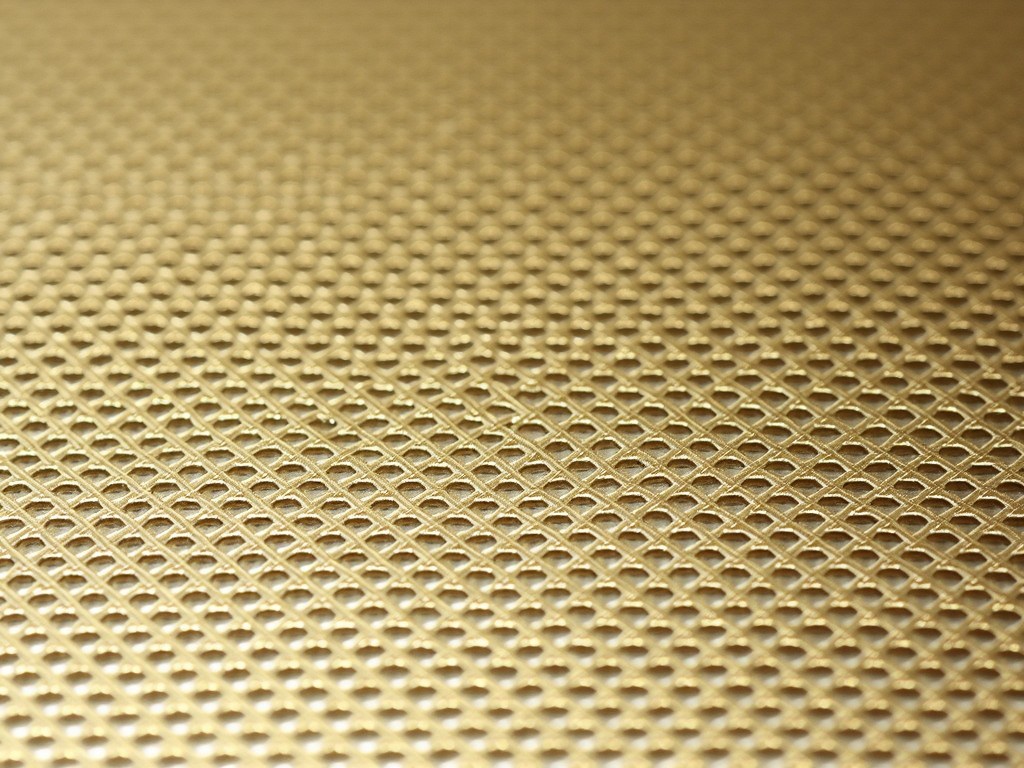
Perforated brass sheet metal combines the corrosion resistance and machinability of brass alloys with engineered hole patterns for functional applications in industrial, architectural, and mechanical
B2B Perforated Brass Sheet Metal
Perforated brass sheet metal combines the corrosion resistance and machinability of brass alloys with engineered hole patterns for functional applications in industrial, architectural, and mechanical systems. The base material is typically C36000 (free-cutting brass) or C26000 (cartridge brass), selected based on required formability, strength, and environmental exposure. Perforation is achieved through precision punching, laser cutting, or CNC routing, allowing controlled open area, hole shape, and pattern repeatability to meet specific airflow, filtration, shielding, or aesthetic requirements.
Open area percentage—the ratio of hole area to total sheet area—directly impacts performance characteristics such as airflow resistance, sound attenuation, and light transmission. Common open area ranges for brass perforated sheet span from 15% to 60%, depending on hole diameter, pitch, and layout. Hole shapes include round, square, slotted, hexagonal, and custom geometries, each influencing flow dynamics and structural integrity. The material’s inherent antimicrobial properties, due to its copper content, make it suitable for hygienic applications viable without additional coatings.
Brass perforated sheet maintains dimensional stability under moderate mechanical loads and resists dezincification in neutral or slightly alkaline environments. For outdoor or marine exposure, alloys with lower zinc content or protective passivation treatments may be specified to mitigate stress corrosion cracking. The non-magnetic nature of brass ensures compatibility with sensitive electronic assemblies and MRI environments where ferrous materials are contraindicated.
Material Specifications and Tolerances
Standard thickness options for perforated brass sheet range from 0.5 mm to 3.0 mm, with tighter tolerances achievable through precision rolling and annealing processes. Thickness variation across a single sheet typically remains within ±0.05 mm for cold-rolled material and ±0.10 mm for hot-rolled equivalents, depending on mill capabilities and temper condition. Flatness is controlled to within 3 mm/m deviation under ASTM A568/A568M guidelines, ensuring consistent feeding in automated stamping or forming lines.
Hole diameter tolerances depend on the perforation method: mechanical punching achieves ±0.05 mm for holes >1.0 mm diameter, while laser cutting maintains ±0.02 mm for micro-perforations down to 0.2 mm. Pitch accuracy—the distance between hole centers—is held to ±0.10 mm over 300 mm lengths for CNC-driven systems, critical for applications requiring precise alignment such as diffuser plates or encoder screens. Burr height after punching is generally <10% of material thickness and can be reduced via deburring, tumbling, or electrochemical polishing.
Edge conditions include mill edge, slit edge, or deburred edge, with slit edges showing minimal burr formation when using sharp carbide tools. Sheet width availability commonly reaches 1250 mm, with custom widths up to 1500 mm possible via slitting master coils. Length is typically supplied in coils or cut-to-length pieces, with standard sheet sizes of 1000×2000 mm and 1250×2500 mm accommodating most CNC table dimensions.
Open Area Calculation and Performance Impact
Open area is calculated as (total hole area / sheet area) × 100%, influencing pressure drop, flow velocity, and acoustic transmission loss. For round hole patterns, the formula simplifies to (π × d² × n) / (4 × A) × 100%, where d = hole diameter, n = number of holes, and A = sheet area. A 3 mm diameter hole on a 6 mm staggered pitch yields approximately 39% open area, while the same diameter on a 10 mm pitch reduces open area to 14%. Engineers use these relationships to balance airflow needs with structural rigidity and particle retention efficiency.
In HVAC diffuser applications, open area between 25% and 35% typically provides optimal air distribution with acceptable noise levels (<25 dBA at 3 m/s face velocity). Higher open area (>40%) reduces pressure drop but may cause jet streaking or uneven distribution without baffles. For EMI/RFI shielding, lower open area (<20%) with smaller hole diameters (<λ/10 at target frequency) enhances attenuation; brass’s conductivity (~15.9 MS/m) provides effective shielding up to several GHz when hole size remains sub-wavelength.
Filtration efficiency correlates with open area and hole geometry: smaller holes increase particle capture but raise clogging risk in viscous fluids. Staggered (60°) hole patterns offer higher open area and more uniform flow distribution than square layouts at the same pitch, while parallel alignments may create channeling effects. Open area tolerance is typically ±3% for standard production, with tighter control (±1%) available for precision applications such as metering plates or optical gratings.
Surface Finishes and Post-Processing Options
As-produced brass perforated sheet exhibits a mill finish with minor surface variations from rolling and punching operations. Common post-process finishes include brushed (unidirectional satin), polished (mirror-like), and antiqued (chemically oxidized) treatments. Brushed finishes reduce visible fingerprints and scratches, suitable for architectural panels and touch surfaces. Polished finishes achieve specular reflectance >80% and are used in decorative grilles or reflective components where appearance is critical.
Chemical treatments such as lacquering or clear passivation inhibit oxidation and maintain finish consistency over time. Lacquer thickness typically ranges from 2–5 µm, providing protection without significantly altering dimensional tolerances. For outdoor architectural use, UV-stable clear coats prevent yellowing and delamination. Antique finishes are achieved via sulfide-based patination, producing controlled brown-to-black tones that stabilize after sealing with wax or polymer topcoats.
Additional processing options include bending, forming, drilling, tapping, and laser cutting for secondary features. Brass’s high zinc content allows for excellent formability; C26000 alloy can withstand bend radii down to 0.5× thickness without cracking in the annealed temper. Post-forming perforation is possible but may require tooling adjustments to accommodate work-hardened zones. All secondary operations are performed in-house to maintain dimensional traceability and avoid contamination from external handling.
Industrial Applications and Functional Rationale
In heat exchangers and condenser units, perforated brass sheets serve as distributor plates or fin spacers, where corrosion resistance in aqueous environments and thermal conductivity (~115 W/m·K) support efficient heat transfer. The open area allows uniform refrigerant or coolant distribution while minimizing pressure drop. Brass’s resistance to dezincification in neutral pH water makes it preferable to copper in certain recirculating systems, extending service life without protective coatings.
Acoustic panels and noise control barriers utilize perforated brass as a facing material over absorptive backing (e.g., mineral wool or foam). The perforation pattern acts as a Helmholtz resonator, tuning absorption to specific frequency ranges based on hole diameter, depth, and open area. For mid-frequency noise (500–2000 Hz), 2–4 mm holes with 25–35% open area backed by 50 mm absorptive material achieve peak absorption coefficients >0.8. Brass’s non-corrosive nature ensures long-term performance in humid environments such as indoor pools or studios.
Architectural elements like signage, facade screens, and interior dividers leverage brass’s aesthetic evolution—developing a natural patina over time while maintaining structural integrity. Perforation enables backlighting, vegetation integration (green facades), or visual permeability without compromising safety. In food processing equipment, perforated brass trays and guards benefit from inherent antimicrobial properties, reducing biofilm formation on contact surfaces. The material complies with FDA 21 CFR §175.300 for indirect food contact when properly cleaned and maintained.
Electromagnetic shielding enclosures for laboratory equipment or medical devices use perforated brass to balance ventilation with EMI attenuation. At 1 GHz, a 1 mm hole diameter with λ/20 spacing provides >20 dB shielding effectiveness when combined with proper grounding and seam conductivity. The non-magnetic property prevents distortion in nearby sensor fields, making it suitable for MRI-compatible device housings or sensor apertures where ferrous materials would induce artifacts.
Quality Control and Inspection Protocols
Incoming brass coil is verified via mill certificates for alloy composition (Cu/Zn/Pb percentages), temper, and thickness uniformity. Spectrometric analysis confirms compliance with ASTM B36/C36000 or B134/C26000 specifications before processing. Coil width and edge camber are checked to ensure clean feeding into perforation presses, minimizing misalignment or tool damage. Any material showing surface defects, oil contamination, or improper annealing is segregated and returned to supplier.
During production, hole dimensions are monitored using vision systems or touch probes at defined intervals, typically every 10–20 meters for coil production or per batch for sheet goods. Open area is calculated from sampled hole counts and diameters, with statistical process control (SPC) charts tracking trends. Burr height is measured profilometrically on representative samples, aiming for <0.15 mm for sheets ≤1.5 mm thick. Any deviation beyond control limits triggers machine adjustment or tool inspection.
Final inspection includes visual assessment for scratches, dents, or incomplete punching under 500 lux illumination. Flatness is verified using a straightedge and feeler gauges across multiple points. Adhesion and continuity of finishes (if applied) are tested via tape test (ASTM D3359) and conductivity checks where applicable. Packaging uses interleaving paper or plastic film between sheets to prevent abrasion, with edge protection on palletized units. Each bundle includes a traceability tag linking to production lot, inspection records, and material certification.
Customization Capabilities and Ordering Considerations
Custom perforation patterns are developed from customer-supplied CAD files (DXF, DWG, or SVG) or defined via parameters: hole shape, diameter, pitch, layout (staggered/parallel), and open area tolerance. Tooling costs apply for new punch designs, while laser or CNC methods eliminate fixed tooling for low-volume or frequently changing patterns. Minimum hole size is constrained by material thickness and process: mechanical punching typically limited to ~0.8× thickness, whereas laser can achieve holes down to 0.2 mm regardless of thickness.
Sheet dimensions can be customized to specific widths and lengths, with tolerances adjusted based on application—tighter for precision modules, looser for architectural panels. Edge treatments (deburred, rounded, or hemmed) are specified per handling and assembly requirements. Secondary operations such as bending to angle, forming into cylinders, or adding mounting holes are integrated into the production workflow to reduce handling and alignment errors.
Material selection guidance considers environmental exposure: C26000 for forming-intensive applications, C36000 for high-machinability components, and C46400 (naval brass) for marine environments requiring enhanced dezincification resistance. Finish recommendations align with expected service life and maintenance access—lacquered for low-maintenance exteriors, polished for interior decorative elements, and unfinished for applications where patina is desired. All customizations are reviewed for manufacturability before quotation to avoid unforeseen delays or cost increases.
Typical Value Ranges for Key Parameters
| Parameter | Typical Range | Notes |
|---|---|---|
| Thickness | 0.5 – 3.0 mm | Custom thicknesses available upon request |
| Hole Diameter | 0.8 – 10.0 mm | Smaller diameters possible with laser cutting |
| Pitch (Center-to-Center) | 1.5 – 20.0 mm | Depends on hole diameter and layout |
| Open Area | 15% – 60% | Application-dependent selection |
| Sheet Width | Up to 1500 mm | Coil slit to custom width |
| Length (Cut-to-Length) | 500 – 3000 mm | Coils available for continuous processing |
| Temper (C26000) | Annealed, 1/4 Hard, 1/2 Hard | Affects bendability and strength |
| Surface Finish | Mill, Brushed, Polished, Lacquered, Antique | Custom finishes available |
Technical Support and Inquiry Process
Engineering teams review application requirements including environmental conditions, mechanical loads, flow dynamics, and regulatory constraints before recommending alloy, thickness, and perforation parameters. Clients provide operational data such as pressure differentials, fluid viscosity, or frequency spectra to enable accurate performance prediction. For novel applications, prototyping services allow validation of hole pattern effectiveness prior to full-scale production.
Quotations require specification of material grade, dimensions, hole characteristics, quantity, finish, and delivery timeline. Lead times vary from 2–4 weeks for standard configurations to 6–8 weeks for new tooling or complex secondary operations. Samples are available upon request, typically produced from existing tooling or via laser cutting to evaluate fit and function. Export shipments use moisture-barrier packaging and corrosion inhibitors for overseas transit, with fumigation-compliant pallets for international destinations.
To initiate a technical discussion or request a formal quotation, contact our application engineers via the inquiry form. Provide as much detail as possible about the intended use, environmental exposure, and performance expectations to ensure accurate material and pattern recommendations. All communications are treated confidentially, and technical data is shared only under NDA if required.

More Products

Send Inquiry
If you are interested in our products, leave your information here and we will be in touch shortly.