Factory Supply Stainless Steel Mesh Conveyor Belt
Stainless steel mesh conveyor belts are engineered for industrial material handling where durability, hygiene, and thermal resistance are critical. Unlike solid-surface belts, the open mesh design
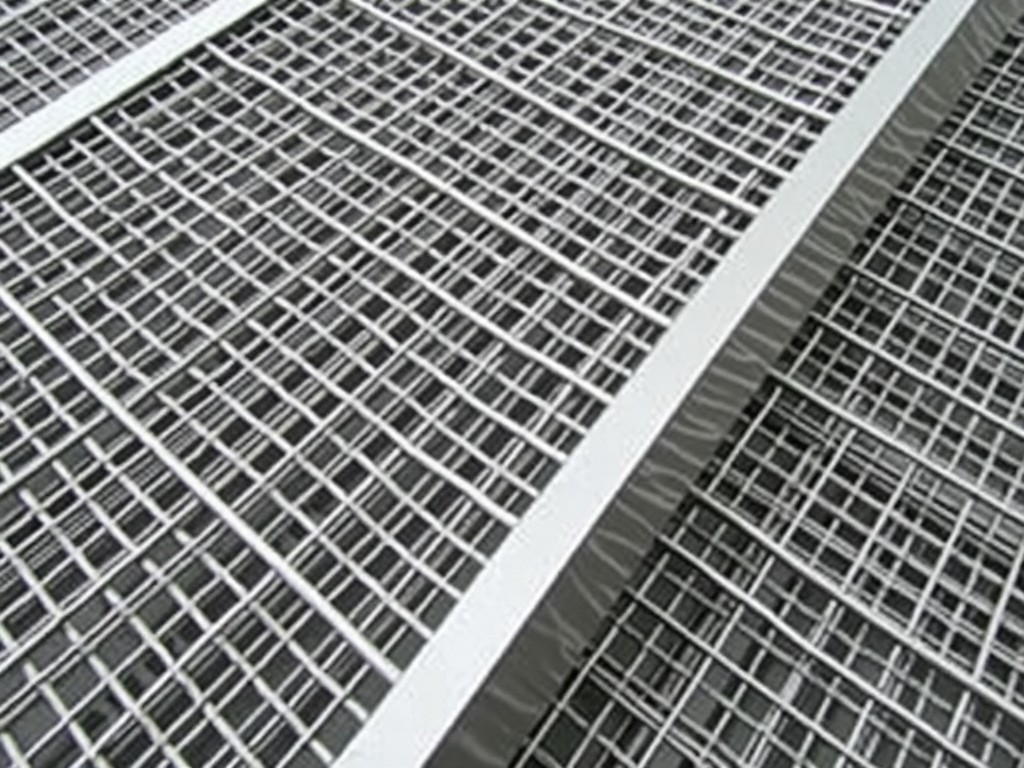
Factory Supply Stainless Steel Mesh Conveyor Belt
Stainless steel mesh conveyor belts are engineered for industrial material handling where durability, hygiene, and thermal resistance are critical. Unlike solid-surface belts, the open mesh design allows airflow, liquid drainage, and visibility through the belt surface, making them suitable for processes involving washing, cooling, drying, or inspection. Factory supply configurations prioritize consistency in wire diameter, mesh opening, and edge treatment to ensure predictable performance across production lines.
These belts are constructed from interlinked stainless steel wires forming a uniform grid. The interlocking pattern—commonly balanced weave, compound balanced, or chain-link—determines tensile strength, flexibility, and tracking behavior. Material selection (typically AISI 304 or 316L) depends on exposure to moisture, chemicals, or elevated temperatures. Edge finishes such as welded, looped, or sealed sides prevent fraying and maintain belt width stability under load.
Industrial buyers specify mesh conveyor belts based on operational parameters: belt width, pitch (distance between wires), opening size, and load capacity per linear foot. These factors directly influence product throughput, cleaning efficiency, and belt lifespan. For example, finer meshes retain small parts but increase pressure drop; coarser meshes improve drainage but may allow product fall-through. Matching mesh geometry to the conveyed material’s size, weight, and surface properties is essential for reliable operation.
Technical Specifications
| Parameter | Typical Range | Notes |
|---|---|---|
| Belt Width | 100 mm – 2000 mm | Custom widths available; edge treatment affects usable width |
| Wire Diameter | 0.8 mm – 4.0 mm | Affects tensile strength, flexibility, and mesh rigidity |
| Mesh Opening | 2 mm × 2 mm – 50 mm × 50 mm | Determines product retention and airflow/drainage capacity |
| Material | AISI 304, 316L, 310S | 316L preferred for chlorides or marine environments; 310S for sustained >800°C |
| Weave Type | Balanced, Compound Balanced, Chain-Link, Eyelet | Influences belt tracking, splice strength, and lateral stiffness |
| Max Operating Temperature | Up to 1000°C (310S) | Dependent on alloy; oxidation resistance limits long-term exposure |
| Tensile Strength (per meter width) | 5 kN/m – 50 kN/m | Calculated from wire diameter, tensile strength of alloy, and weave geometry |
Material Selection and Corrosion Resistance
AISI 304 stainless steel provides adequate resistance to atmospheric corrosion, food-safe cleaning agents, and intermittent moisture exposure. It is commonly used in baking, snack processing, and general manufacturing where washdown occurs but chloride exposure is limited. Its cost-effectiveness makes it the default choice for dry or low-hygiene-risk environments.
AISI 316L contains molybdenum, significantly improving resistance to pitting and crevice corrosion in chloride-rich environments such as seafood processing, chemical washing, or coastal facilities. The low carbon content minimizes sensitization during welding, preserving corrosion resistance at joint areas. For applications involving frequent sanitization with chlorinated cleaners, 316L is often specified despite higher material cost.
In high-temperature applications—such as heat treating, sintering, or ceramic firing—AISI 310S offers superior oxidation resistance up to 1000°C due to higher nickel and chromium content. While more expensive, it prevents scaling and embrittlement that can occur in 304 or 316L above 800°C. Belt lifespan in thermal processes depends more on oxidation rate than mechanical load, making alloy selection critical for predictable maintenance intervals.
Weave Types and Mechanical Behavior
Balanced weave features alternating left- and right-hand spirals connected by crimped cross rods. This symmetrical design minimizes tracking tendency and provides bidirectional flexibility, making it ideal for center-driven conveyors with frequent reversals. The uniform structure distributes load evenly across the width, reducing edge wear in bidirectional systems.
Compound balanced weave uses double layers of spirals with offset cross rods, increasing load capacity and lateral rigidity without sacrificing flexibility. This configuration resists elongation under heavy product loads and is commonly selected for automotive parts conveying, metal stamping discharge, or heavy-item accumulation zones where belt stretch must be minimized.
Chain-link or eyelink designs integrate rigid links with flexible loops, creating a belt with high transverse stiffness and low elongation. These are preferred in precision indexing applications, such as electronic component assembly or pharmaceutical tray handling, where belt stability under start-stop cycles is essential. The open structure also facilitates rapid drying after washdown.
Edge Treatments and Belt Integrity
Unsealed edges on mesh belts are prone to wire loosening and progressive width reduction, especially under lateral tension or abrasive contact with conveyor frames. To prevent this, factory supply belts often feature sealed edges formed by folding over the terminal wires and welding them in place. This creates a smooth, continuous edge that resists snagging and maintains nominal width throughout the belt’s service life.
Looped edges, formed by bending the end wires into a continuous loop, offer a cost-effective alternative for lighter loads or non-abrasive environments. While not as durable as welded seals, they eliminate sharp protrusions and reduce the risk of belt tracking off due to edge fraying. Loop diameter is typically matched to the wire size to avoid stress concentrations.
In high-sanitation applications, edges may be fully encapsulated using a polymer overlay or stainless steel cap to eliminate crevices where contaminants can accumulate. This treatment is common in ready-to-eat food processing or pharmaceutical lines where cleaning validation requires crevice-free surfaces. The encapsulation adds minimal thickness but significantly improves cleanability and microbial risk mitigation.
Applications Across Industries
In food processing, stainless steel mesh belts enable simultaneous conveyance and thermal treatment. For example, in bread baking lines, the mesh allows hot air to circulate uniformly around the product, promoting even crust formation while permitting steam escape. The open structure also facilitates post-bake cooling by enabling airflow from both sides, reducing condensation and sogginess on the product underside.
Chemical and pharmaceutical manufacturers use these belts for drying granules, tablets, or powders after wet processing. The mesh allows heated air to penetrate the material bed from below, increasing drying efficiency compared to solid belts. Additionally, the visibility through the belt enables operators to monitor bed depth and detect clumping or channeling in real time, supporting process control without interrupting operation.
In metalworking, mesh belts transport hot forgings, sintered parts, or castings through quenching or cooling tunnels. The open design allows quenching media (oil, polymer, or water) to drain freely, preventing pooling and uneven cooling that could cause distortion or cracking. Belt durability under thermal cycling and mechanical impact is essential, making 316L or 310S with compound balanced weave a typical specification.
Electronics assembly lines employ fine-pitch mesh belts to carry printed circuit boards through washing, flux removal, or conformal coating stations. The belt’s dimensional stability ensures precise board positioning, while the open structure allows solvent vapors and rinse fluids to evacuate quickly, reducing drying time and minimizing the risk of residue entrapment under components.
Customization and Ordering Considerations
Belt width is specified based on the conveyor frame and product dimensions, with standard increments of 50 mm. Edge treatment selection depends on sanitation requirements and mechanical load; welded seals are recommended for widths over 1200 mm or in washdown zones. Pitch and wire diameter are chosen to balance open area (for airflow/drainage) with structural integrity under expected product load.
Length is typically ordered as endless (spliced) or open-ended with fastening systems such as pins, clips, or plastic spirals. Endless belts require precise length measurement to accommodate take-up travel and tension adjustment. For modular replacement, segmented belts with mechanical fasteners allow section-by-section removal without disassembling the conveyor.
Surface enhancements such as side guards, cleats, or wear strips can be integrated to prevent product spillage or assist in inclined conveying. These additions are welded or clipped onto the belt structure and must be designed to avoid interfering with belt flexing around pulleys. Customers should provide layout drawings indicating guard height, spacing, and material compatibility with the base belt.
Quality Control and Testing
Dimensional verification includes width, pitch, and wire diameter measurements at multiple points along the belt length to detect weaving inconsistencies. Edge straightness is checked using laser profiling or tensioned straight edges to ensure uniform tracking behavior. Any deviation beyond ±0.5 mm in width or ±10% in pitch may indicate tension imbalance during weaving and is cause for rejection.
Tensile testing is performed on cut samples following ASTM F1249 or equivalent standards, measuring force-to-elongation until failure. Results are compared against calculated values based on wire tensile strength and weave geometry. Belts showing elongation exceeding 2% at working load are investigated for material defects or weaving flaws.
Surface inspection under 10x magnification identifies loose wires, incomplete welds, or surface contaminants. For food-grade or pharmaceutical applications, belts may undergo passivation or electropolishing to enhance corrosion resistance and remove surface iron particles. Final packaging includes protective wrapping and corrosion-inhibiting inserts for sea or long-term storage.
For technical consultation, custom specifications, or quotation requests, contact our engineering team to discuss your conveyor system requirements.
Request Technical Quote
More Products

Send Inquiry
If you are interested in our products, leave your information here and we will be in touch shortly.