Oem Wire Mesh Cooking Basket
Wire mesh cooking baskets are engineered components used in industrial food processing for blanching, steaming, frying, and cooling operations. Their open structure allows uniform fluid or heat
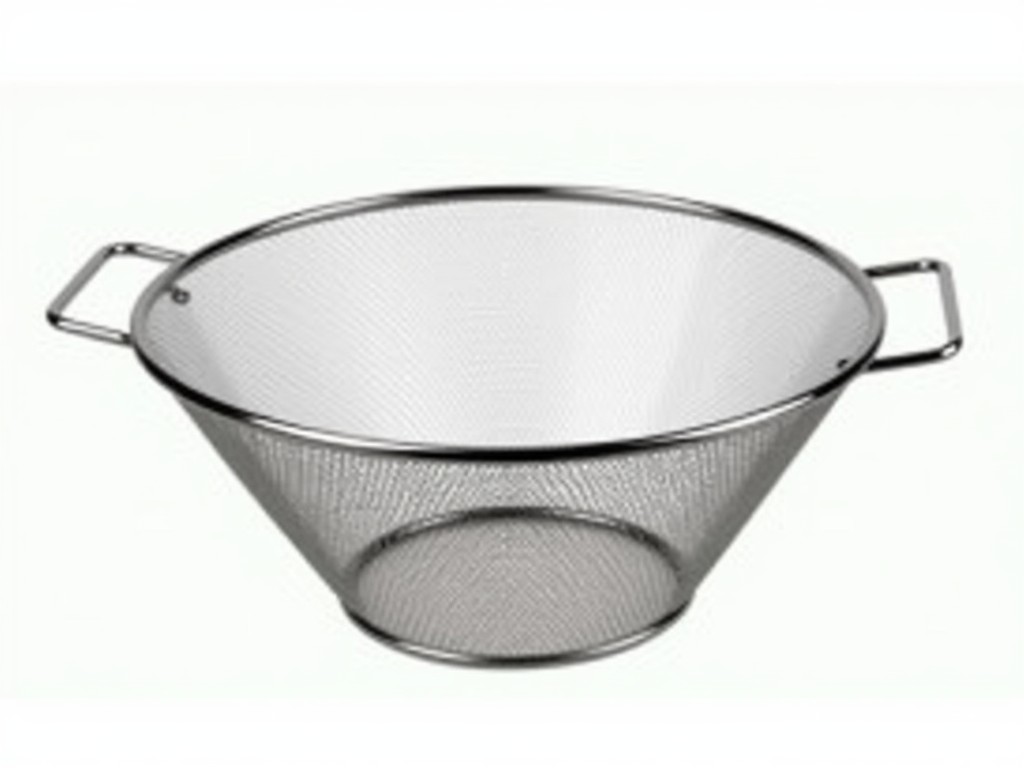
OEM Wire Mesh Cooking Basket
Wire mesh cooking baskets are engineered components used in industrial food processing for blanching, steaming, frying, and cooling operations. Their open structure allows uniform fluid or heat transfer while containing product during thermal treatment. Selection depends on mesh geometry, material compatibility, and mechanical durability under repeated thermal cycling.
OEM variants are designed to integrate seamlessly with existing processing lines, matching equipment dimensions, drive mechanisms, and sanitation requirements. Unlike off-the-shelf baskets, OEM solutions eliminate adaptation gaps that can cause product loss, uneven processing, or sanitation risks. Engineering focus centers on dimensional precision, material certification, and cleanability validation.
Material Selection and Corrosion Resistance
Stainless steel grades 304 and 316L are standard for food-contact wire mesh baskets due to their resistance to chlorides, organic acids, and high-temperature oxidation. 316L contains molybdenum, enhancing pitting resistance in brine or acidic environments common in vegetable blanching or meat processing. Wire diameter typically ranges from 0.8mm to 2.0mm, balancing open area with structural rigidity.
Mesh opening size is defined by nominal aperture (e.g., 1.5mm, 3.0mm, 6.0mm) and directly influences drainage rate and product retention. Fine meshes (<2mm) prevent small particulates from escaping but increase pressure drop; coarse meshes (>5mm) improve flow but risk product loss. Open area percentage is calculated as (opening area / total area) × 100, typically ranging from 40% to 70% for cooking baskets.
Surface finish affects cleanability; electropolished or passivated surfaces reduce microbial adhesion compared to mill finish. Post-weld cleaning and passivation are critical to restore chromium oxide layer integrity after fabrication. Baskets intended for continuous steam exposure may use low-carbon grades to minimize sensitization and intergranular corrosion risk.
Structural Design and Mechanical Performance
Reinforcement strategies include cross wires, perimeter frames, or internal baffles to prevent sag under load. Deflection limits are typically set to <5% of span under maximum product weight (e.g., 15kg for a 400×300mm basket). Spot welding or TIG welding is used at joints; weld penetration must exceed 50% of wire diameter to ensure strength without creating crevices that trap contaminants.
Edge treatment is critical for safety and hygiene; wires are folded over or capped with rounded terminals to eliminate sharp projections. Basket corners often feature radius bends (≥2× wire diameter) to reduce stress concentration and improve cleanability. Dimensional tolerances are held to ±1.5mm on overall dimensions and ±0.5mm on squareness to ensure reliable insertion into guides or carriers.
Customization Parameters for OEM Integration
Mesh specification is tailored to process requirements: aperture size for product retention, wire diameter for pressure drop tolerance, and weave pattern (plain square, twill, or Dutch) for flow characteristics. Dutch weave offers finer filtration in one direction with higher flow in the orthogonal axis, useful in solid-liquid separation steps. Open area and hydraulic diameter are calculated to validate process compatibility.
Additional features include product-specific baffles to prevent clumping, magnetic catch systems for automated release, or integrated temperature sensor pockets. Surface treatments such as electropolishing or PTFE coating (for non-stick requirements) are available upon validation of food safety compliance. All custom features undergo design review for cleanability, drainability, and resistance to thermal fatigue.
Quality Control and Validation
Weld integrity is assessed via visual inspection (10x magnification) and dye penetrant testing on critical joints to detect surface-breaking defects. Passivation effectiveness is verified through copper sulfate swab testing or potentiostatic measurement to confirm free iron removal. Material test reports (MTRs) are provided for all wire and frame stock, confirming chemical composition and mechanical properties.
Functional validation may include hydrostatic pressure testing to assess leak integrity (if applicable), flow rate measurement to confirm open area performance, and cycle testing under simulated process conditions (temperature, agitation, chemical exposure). Cleanability is evaluated using ATP bioluminescence or protein residue testing after standardized cleaning cycles. All QC records are retained for traceability.
Typical Applications in Food Processing
In meat processing, baskets hold sausages or meatballs during showering or chilling; 316L is preferred due to chloride exposure from brines. Mesh openings of 4–6mm allow antimicrobial spray penetration while preventing product deformation under agitation. Handle design accommodates automated pick-and-place systems on continuous conveyors, reducing manual intervention and contamination risk.
For fryer applications, baskets withstand repeated immersion in hot oil (160–190°C); wire diameter ≥1.5mm resists sag under product load, and electropolished finish minimizes carbon buildup. Mesh size is tailored to product shape: 6–8mm for bone-in chicken pieces, 3–4mm for fish fillets or nuggets. Custom baffles prevent product nesting, ensuring even oil contact and consistent color development.
| Parameter | Typical Range | Notes |
|---|---|---|
| Wire Diameter | 0.8–2.0 mm | Selected based on load and open area requirements |
| Mesh Opening | 1.5–8.0 mm | Aperture size defines retention and flow characteristics |
| Open Area | 40–70% | Calculated as (opening area / total area) × 100 |
| Frame Wire | 2.0–3.0 mm | Perimeter reinforcement to resist racking |
| Depth | 50–200 mm | Determined by product volume and process time |
| Material | SS 304, 316L | 316L preferred for high-chloride environments |
Lead time for OEM wire mesh baskets typically ranges from 4 to 6 weeks after design approval, depending on material availability and complexity of custom features. Simpler designs with standard mesh and minimal fabrication may ship in 3 weeks; baskets requiring specialized weaves, surface treatments, or integrated components may extend to 8 weeks. Prototyping or sample units are available upon request to validate fit and function before full production.
Quotation requires detailed specifications: overall dimensions (L×W×H), mesh opening and wire diameter, material grade, handle type and position, estimated annual quantity, and any required certifications (e.g., FDA compliance, 3-A Sanitary Standards). Providing a sample or technical drawing of the existing basket accelerates the review process. Shipping is typically via palletized crate with corrosion-inhibiting padding for export protection.
More Products

Send Inquiry
If you are interested in our products, leave your information here and we will be in touch shortly.