Oversized Basket For Blankets
Industrial storage solutions for textiles require careful evaluation of dimensional capacity, material durability, and handling efficiency. An oversized basket designed for blanket storage must
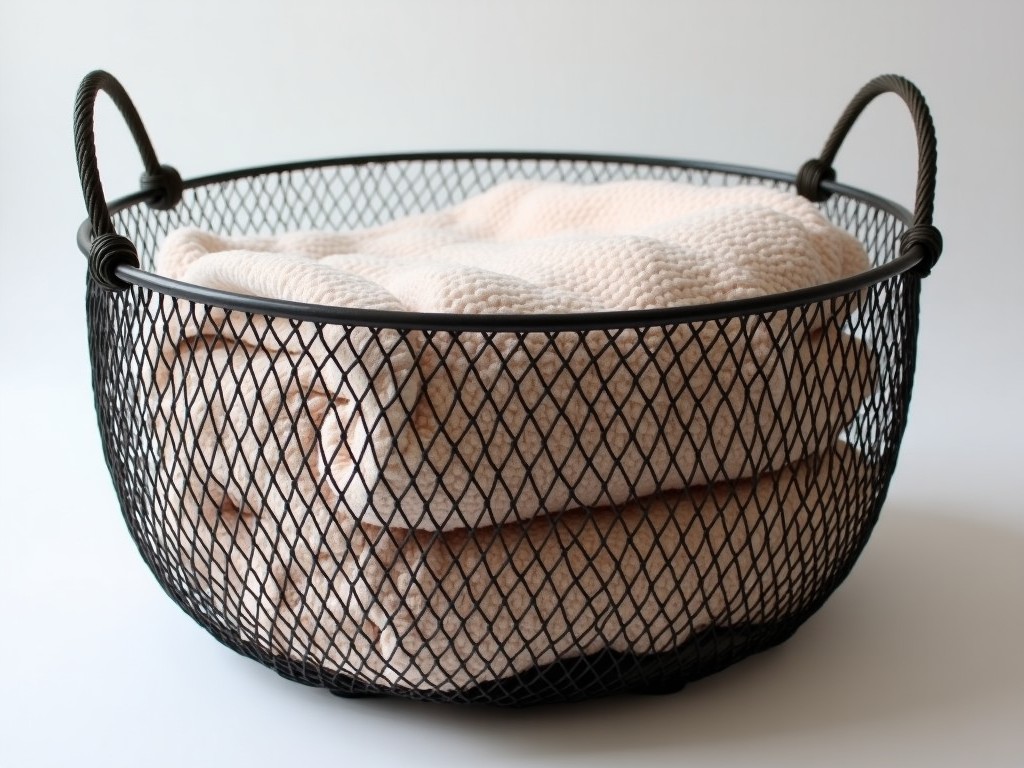
Oversized Basket for Blankets: Industrial Design and Material Considerations
Industrial storage solutions for textiles require careful evaluation of dimensional capacity, material durability, and handling efficiency. An oversized basket designed for blanket storage must accommodate variable load densities while maintaining structural integrity under repeated use in warehouses, distribution centers, or institutional laundry facilities. This page outlines the technical parameters that influence selection, focusing on measurable engineering characteristics rather than subjective claims.
Dimensional Specifications and Load Capacity
The internal volume of an oversized blanket basket is defined by its length, width, and height, typically ranging from 1200mm to 1800mm in length, 800mm to 1200mm in width, and 700mm to 1000mm in height. These dimensions allow for the storage of 20 to 40 standard wool or fleece blankets, depending on folding density and material thickness. External dimensions must account for handling clearance, particularly when using forklifts or pallet jacks, with recommended external dimensions not exceeding 2000mm in length to ensure compatibility with standard warehouse aisles and racking systems.
Load capacity is determined by the material’s tensile strength and the basket’s structural geometry. For polypropylene or HDPE constructions, a uniformly distributed load of 150kg to 250kg is typical before permanent deformation occurs. Point loads from concentrated blanket bundles should not exceed 50kg per 300mm² to avoid localized stress concentrations. Deflection under maximum load should remain below 10mm at the center of the base to prevent blanket snagging or difficulty in retrieval.
Material Selection and Environmental Resistance
Material choice directly impacts longevity, hygiene, and resistance to environmental factors. High-density polyethylene (HDPE) is commonly selected for its resistance to moisture, mild chemicals, and UV degradation when stabilized. Polypropylene offers higher rigidity and heat resistance, suitable for environments near drying units or steam lines. Both materials operate effectively between -20°C and 60°C, with HDPE preferred in cold storage and polypropylene in warmer, high-cycle facilities.
Surface finish affects both cleanliness and textile protection. A smooth, non-porous interior reduces fiber retention and facilitates cleaning with standard detergents or disinfectants. Textured exteriors improve grip during manual handling but may increase cleaning complexity. Antimicrobial additives are available upon request for healthcare or hospitality applications where biofilm resistance is a requirement, though they do not replace routine cleaning protocols.
Structural Design and Handling Features
Reinforcement at stress points—such as the base corners, handle mounts, and top rim—is critical for longevity. Ribbing or gussets on the base prevent sagging under prolonged load, while double-walled construction at the rim resists deformation from repeated lifting. Handles, when integrated, should be molded as part of the basket body to avoid delamination or failure at joints. Handle spacing must allow for two-person lifting (typically 600mm to 800mm apart) and accommodate gloved hands in industrial settings.
Nesting capability reduces return-trip logistics costs when baskets are empty. A tapered design with a 5° to 10° draft angle enables stable nesting, reducing storage footprint by up to 70% when stacked. However, excessive taper reduces usable internal volume, so the angle must balance storage efficiency with nesting performance. Some designs incorporate interlocking lugs to prevent lateral shift during stacked storage or transport.
Comparison of Common Construction Types
| Feature | HDPE Injection Molded | PP Copolymer Injection Molded | Fabric-Reinforced Composite |
|---|---|---|---|
| Typical Load Capacity | 200 kg | 250 kg | 180 kg |
| UV Resistance (Stabilized) | Good | Moderate | Dependent on coating |
| Chemical Resistance | Excellent (alkalis, alcohols) | Good (oils, solvents) | Moderate (requires barrier layer) |
| Operating Temp Range | -20°C to 60°C | -10°C to 80°C | -30°C to 50°C |
| Recyclability | Widely accepted | Widely accepted | Limited (mixed materials) |
The table above illustrates typical performance ranges based on standard material grades. Actual values depend on resin formulation, wall thickness, and geometric design. For applications involving frequent sanitization or exposure to industrial detergents, material compatibility should be validated through immersion testing. Custom wall thicknesses from 4mm to 8mm are available to adjust stiffness and load tolerance without altering external dimensions.
Quality Control and Manufacturing Consistency
Dimensional accuracy is maintained through precision mold tooling and controlled cooling cycles during injection molding. Critical dimensions—such as internal height, handle clearance, and base flatness—are inspected using coordinate measuring machines (CMM) or optical scanners at a frequency of 1 per 500 units. Wall thickness variation is kept within ±0.3mm to ensure consistent load distribution. Visual inspection checks for surface defects, flash, or incomplete filling, particularly in corners and handle regions.
Batch-to-batch color variation is monitored using spectrophotometry to maintain aesthetic consistency for facilities requiring uniform appearance. Material traceability is maintained via lot numbering, linking each basket to resin supplier, machine parameters, and inspection records. For regulated industries, documentation of compliance with FDA 21 CFR §177.1520 (for polyolefins in food contact) or EU 10/2011 is available upon request, though the basket itself is not intended for direct food contact.
Application-Specific Considerations
In hotel linen operations, baskets are often used to transport folded blankets between floors via service elevators. Here, smooth-rolling casters (if added) must support dynamic loads and resist hair or fiber entanglement. In military or emergency response logistics, baskets may be stored outdoors for extended periods, necessitating UV-stabilized materials and drainage holes to prevent water accumulation. For cleanroom-adjacent environments, low-particulate-generating materials and seamless interiors reduce contamination risk.
Retail distribution centers handling seasonal inventory may require baskets with collapsible sides for return transport. While not standard, hinged or removable side panels can be engineered to reduce return volume by 50%, though this introduces moving parts that require maintenance. Fixed-design baskets remain preferable for high-cycle, low-maintenance operations where simplicity and durability outweigh return-trip optimization.
Customization Options and Project Requirements
Customization begins with defining the operational cycle: load weight, frequency of use, handling method (manual, forklift, conveyor), and environmental exposure. Based on these inputs, engineers adjust material grade, wall thickness, ribbing pattern, and handle ergonomics. Dimensional changes to length, width, or height are possible but require new tooling; therefore, modular adjustments—such as adding removable dividers or label holders—are often more cost-effective for variant needs.
Surface identification methods include hot-stamping, engraving, or embedded RFID pockets for tracking. Color coding for workflow segregation is achievable through masterbatch blending, with tolerances matching Pantone or RAL standards. Ventilation slots or perforated bases can be added to improve airflow for damp textiles, though open area must be limited to less than 15% of the base surface to maintain load support.


More Products

Send Inquiry
If you are interested in our products, leave your information here and we will be in touch shortly.