Window Security Screens That Open
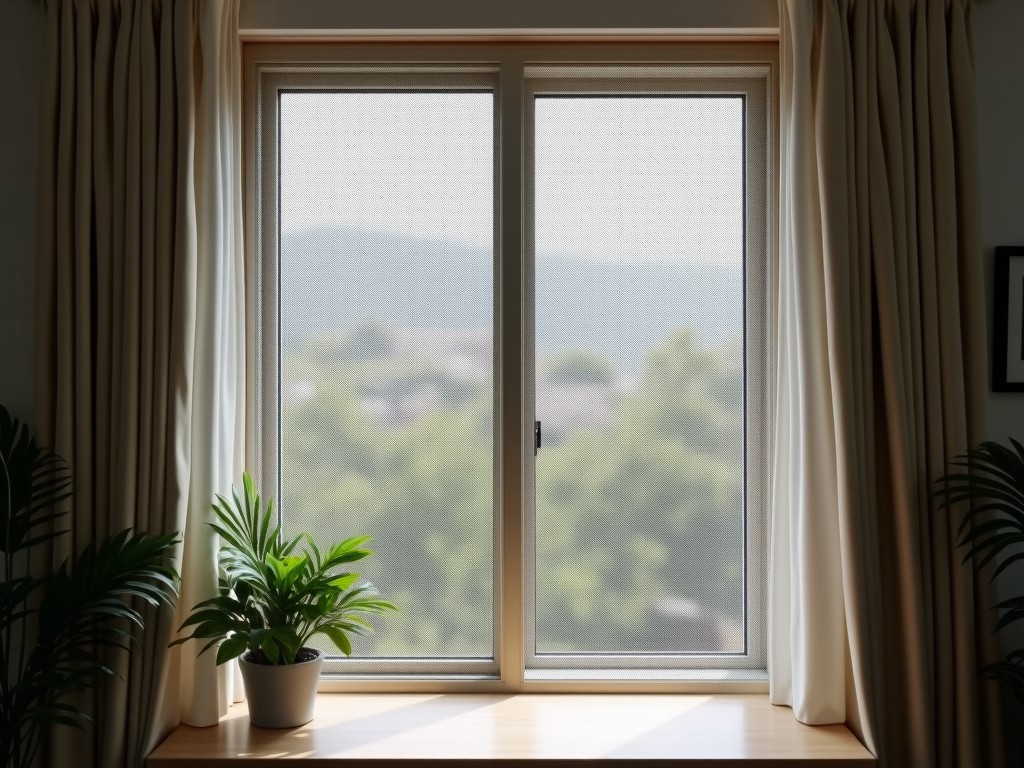
Window security screens that open combine forced-entry resistance with operational functionality, allowing ventilation and emergency egress while maintaining a physical barrier against intrusion.
Window Security Screens That Open
Window security screens that open combine forced-entry resistance with operational functionality, allowing ventilation and emergency egress while maintaining a physical barrier against intrusion. These systems integrate reinforced framing, high-tensile mesh, and specialized hardware to meet security performance levels without compromising the window’s intended use. Industrial buyers evaluate them based on structural integrity under dynamic load, corrosion resistance in exposed environments, and compliance with relevant safety codes for operable barriers.
Core Design Principles
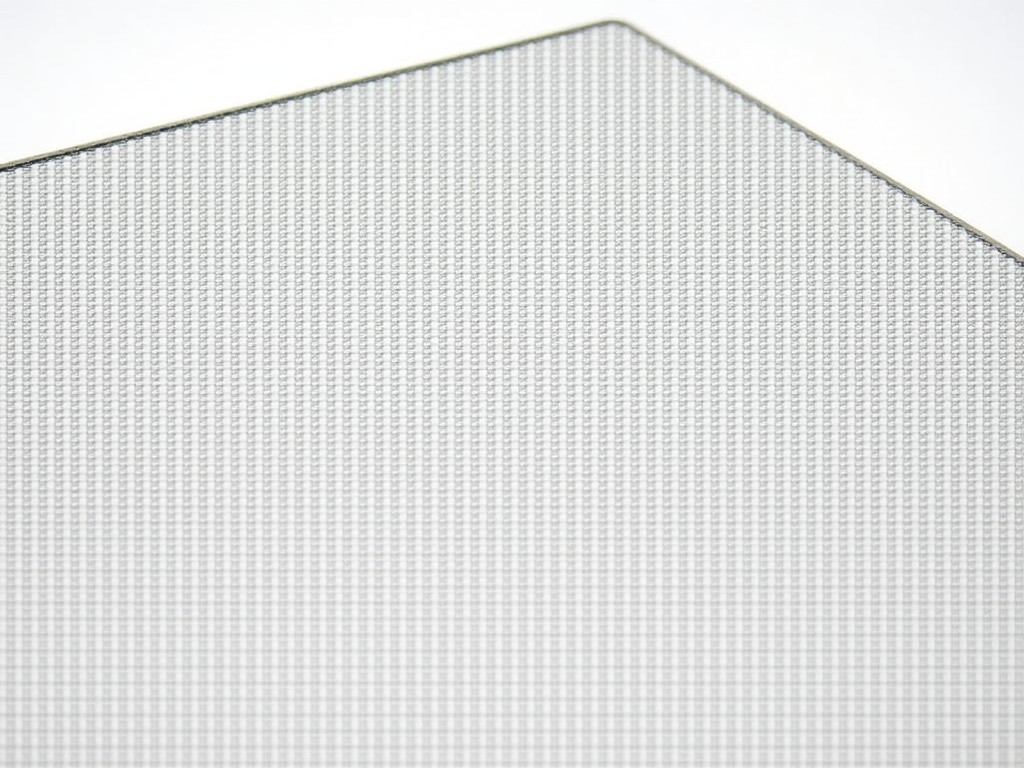
The primary design challenge is balancing static strength with moving-part reliability. Frames are typically extruded aluminum or cold-formed steel, engineered to resist bending and torsional forces during attack simulations. Mesh materials—such as 304 or 316 stainless steel wire with diameters ranging from 0.8mm to 1.2mm—are selected based on tensile strength (often exceeding 500 MPa) and aperture size (commonly 1.1mm x 1.1mm or 1.5mm x 1.5mm) to prevent tool insertion while maintaining airflow. Hinges, locks, and strike plates are designed for thousands of cycles without degradation, using hardened pins and anti-lift mechanisms to prevent bypass.
Operational clearance is critical: screens must open fully to at least 90 degrees for cleaning and emergency access, yet remain securely latched in the closed position. This requires precision-machined hardware with controlled friction and positive stops. Weather sealing is integrated via EPDM or silicone gaskets compressed between frame and sash to maintain IP ratings for water and dust resistance, particularly in coastal or industrial zones where salt spray and particulate exposure accelerate wear.
Material Selection and Performance Characteristics
- Frame: 6063-T5 aluminum alloy with minimum wall thickness of 1.8mm, powder-coated to 60–80µm for UV and salt resistance; alternatively, galvanized steel (Z275 coating) or 304 stainless steel for harsh environments.
- Mesh: 304 stainless steel wire, 0.9mm diameter, 1.1mm aperture, delivering 45% open area for airflow and 650 N/cm shear resistance; 316 grade available for chloride-rich environments.
- Hardware: Stainless steel hinges (grade 304) with self-lubricating polymer bearings, rated for 25,000 cycles; multi-point locking with hardened steel bolts engaging into strike plates rated for 15 kN pull-off force.
- Seals: Closed-cell EPDM, durometer 65±5 Shore A, compressed to 30% deflection for long-term compression set resistance (<25% after 72h at 70°C).
Operational and Safety Considerations
These screens must satisfy dual-use requirements: security when closed, unobstructed egress when open. To comply with life safety codes (e.g., IBC, NFPA 101), the opening mechanism must be operable from the interior without keys, tools, or special knowledge—typically via a lever or thumb-turn actuator releasing all locking points simultaneously. Force required to disengage locks is limited to ≤90 N to accommodate children, elderly, or impaired individuals under stress conditions.
In high-rise or institutional applications, fall prevention is addressed by limiting the maximum open angle via adjustable stops, often set to 100–110 mm clear opening to prevent passage of a 100mm sphere (per child safety regulations). Some designs incorporate dual-mode operation: a “ventilation latch” allowing partial opening (50–75mm) for airflow while maintaining full security, and a “clean/release mode” enabling full swing access for maintenance.
Typical Applications
These systems are specified in environments where security and ventilation are concurrent requirements—such as ground-floor retail facades, pharmacy windows, data center cooling openings, and correctional facility visitor interfaces. In each case, the screen must resist common attack methods (e.g., kicking, levering, wire cutting) while allowing HVAC airflow or personnel communication. For example, in tropical climates, they enable passive cooling without compromising security; in secure facilities, they support visitor interaction without exposing staff to direct contact.
Industrial facilities use them on transformer room windows or control panel enclosures where dust ingress must be minimized but thermal management requires air exchange. The mesh aperture is selected to block particulates above 50µm while maintaining sufficient open area for convective cooling. Marine installations favor 316 stainless steel frames and mesh to resist pitting from salt spray, with hardware designed for submersion resistance during storm events.
Customization and Integration
Screens are fabricated to match existing window dimensions, with tolerances typically held to ±1.5mm for width and height to ensure proper sealing and operation. Custom mullion configurations, angled frames for sloped sills, and retrofit adapters for historic wood or steel windows are engineered per project requirements. Finish options include anodized aluminum (clear, bronze, black), powder coating in RAL colors, or brushed stainless steel to match architectural specifications.
Integration with alarm systems is possible via magnetic reed switches or strain-gauge sensors embedded in the frame or mesh, triggering when the screen is removed, cut, or displaced beyond a threshold. Motorized versions exist for inaccessible locations, using low-voltage actuators with manual override for power failure scenarios. All customizations undergo prototype testing for load cycle, environmental exposure, and forced-entry resistance before full production.
Quality Control and Testing
Each unit undergoes functional verification: smooth operation over full range, latch engagement at multiple points, and seal compression uniformity. Security performance is validated through standardized tests such as LPS 1175 (SR1 or SR2) or equivalent, measuring resistance to manual tools over timed intervals. Corrosion resistance is assessed via salt spray (ASTM B117) or cyclic humidity testing, with acceptance criteria based on visible rust or functional degradation after 500–1000 hours.
End-of-line checks include dimensional inspection, hardware torque validation (e.g., hinge screws to 2.5 Nm ±10%), and mesh tension measurement to ensure uniform aperture distribution. Documentation includes material test reports, finish thickness certification, and test summaries for security and environmental performance. Traceability is maintained via batch numbers linking raw materials to final assembly.
| Parameter | Typical Value or Range | Test Standard / Reference |
|---|---|---|
| Frame Material Thickness | 1.8 mm (min) aluminum; 2.0 mm steel | Manufacturer spec; ASTM B221 |
| Mesh Wire Diameter | 0.8–1.2 mm stainless steel | ASTM A580 / A493 |
| Mesh Aperture | 1.1 mm × 1.1 mm or 1.5 mm × 1.5 mm | ISO 9044 |
| Open Area (for airflow) | 40–50% | Calculated from mesh geometry |
| Lock Pull-Off Resistance | ≥15 kN per point | LPS 1175 Annex A |
| Cycle Life (hinges/locks) | 25,000 operations | Manufacturer endurance test |
| Salt Spray Resistance | 1000 hours (316 SS); 500 hours (304 SS/galv) | ASTM B117 |
| Max Operating Force (interior release) | ≤90 N | IBC 1010.1.9; NFPA 101 |
For project-specific requirements—such as non-standard geometries, integrated sensors, or certified security ratings—engineering consultation is recommended. Supply includes detailed installation instructions, maintenance schedules, and compliance documentation to support long-term performance validation.

More Products

Send Inquiry
If you are interested in our products, leave your information here and we will be in touch shortly.