B2B Stakes For Temporary Fencing
Temporary fencing systems require reliable anchoring to maintain stability under wind loads, accidental impact, and site activity. B2B stakes designed for this purpose provide the critical interface
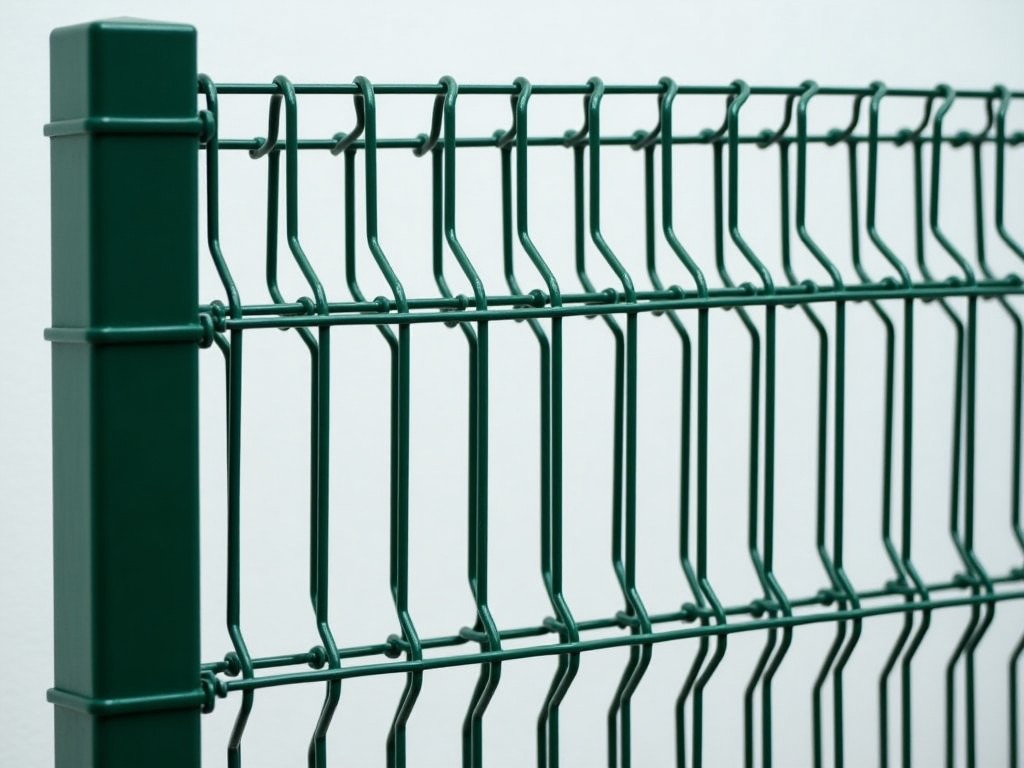
B2B Stakes for Temporary Fencing
Temporary fencing systems require reliable anchoring to maintain stability under wind loads, accidental impact, and site activity. B2B stakes designed for this purpose provide the critical interface between fence panels and substrate, transferring lateral forces into the ground while allowing rapid installation and removal. Their effectiveness depends on geometric design, material selection, and installation method—factors that directly influence safety, reusability, and total cost of ownership on construction, event, and utility sites.
Unlike permanent foundations, temporary stakes must balance holding strength with extractability. Over-engineering increases removal difficulty and site damage; under-engineering risks fence displacement. Optimal stakes achieve sufficient embedment depth and soil resistance through tapered profiles, surface deformations, or helical features, while maintaining a cross-section that resists bending and withdrawal. Material choice affects corrosion resistance, weight, and lifecycle cost, particularly in reusable systems exposed to varying soil pH and moisture.
This page outlines the technical considerations for selecting B2B stakes for temporary fencing, covering load mechanisms, material options, dimensional standards, installation practices, and quality controls. Information is presented to support procurement decisions based on engineering performance rather than promotional claims.
Load Mechanisms and Soil Interaction
Temporary fencing stakes resist loads primarily through passive earth pressure along their embedded shaft and passive resistance at the tip. Wind loads on fence panels create overturning moments that translate into lateral forces at ground level, typically ranging from 0.5 to 2.0 kN per stake depending on panel height, porosity, and wind speed. The stake must develop sufficient soil shear resistance along its surface to counteract this force without excessive deflection or pull-out.
Soil type significantly influences required embedment depth. In cohesive soils (clay), adhesion and cohesion contribute to resistance; in granular soils (sand, gravel), friction angle and interlocking dominate. A stake in loose sand may require twice the embedment depth of one in compacted clay to achieve equivalent holding capacity. Site-specific soil reports or penetrometer tests inform optimal depth selection, though conservative assumptions are common for temporary applications.
Dynamic loads from pedestrian impact or equipment contact introduce short-duration spikes that exceed static wind loads. Stakes must absorb these impulses without permanent deformation or fatigue failure over multiple cycles. This necessitates adequate yield strength and ductility in the material, particularly at stress concentrations such as bends, welds, or holes used for panel attachment.
Material Options and Performance Characteristics
Material selection affects strength-to-weight ratio, corrosion resistance, fatigue life, and recyclability. Common options include low-carbon steel, high-strength low-alloy (HSLA) steel, and galvanized variants. Each presents trade-offs between initial cost, lifespan, and handling characteristics in B2B temporary fencing applications.
- Low-carbon steel (e.g., A36 equivalent): Offers good weldability and formability with yield strength ~250 MPa. Suitable for short-term use in non-corrosive environments; requires painting or coating for extended exposure.
- HSLA steel (e.g., A572 Grade 50): Yield strength ~340–450 MPa allows reduced cross-section for equivalent stiffness, lowering weight and material cost. Preferred for reusable systems where weight affects handling efficiency.
- Hot-dip galvanized steel: Provides zinc coating (typically 55–85 µm) for corrosion resistance in outdoor storage and repeated use. Coating thickness correlates with service life in humid or saline conditions; inspection focuses on coating continuity at bends and cut edges.
Alternative materials such as reinforced plastics or composites are used in niche applications requiring non-conductivity or minimal ground penetration, but generally lack the stiffness and impact resistance of steel for standard temporary fencing stakes. Steel remains dominant due to its predictable behavior, established supply chains, and compatibility with common installation tools (e.g., pile drivers, manual drivers).
Dimensional Standards and Design Variants
Stake dimensions are determined by required embedment depth, panel attachment method, and handling constraints. Standard lengths range from 600 mm to 1200 mm, with diameters or cross-sectional dimensions scaled to resist bending and withdrawal. Common profiles include round, square, and tapered sections, each offering distinct advantages in installation and soil interaction.
| Parameter | Typical Range | Influencing Factors |
|---|---|---|
| Overall Length | 600–1200 mm | Fence height, wind load, soil type |
| Cross-Section (Round) | 16–25 mm diameter | Bending stiffness, driving ease, material cost |
| Cross-Section (Square) | 16–20 mm | Rotational resistance, panel alignment, welding simplicity |
| Tip Configuration | Chisel, blunt, or helical | Soil penetration, installation torque, withdrawal resistance |
| Attachment Feature | Hook, hole, or bracket | Panel compatibility, installation speed, load transfer efficiency |
Tapered designs reduce driving resistance by displacing soil laterally during insertion, while helical or threaded shafts increase tensile capacity through soil interlock—beneficial in high-wind or sandy conditions but complicating removal. Attachment features must align with fence panel specifications; mismatched interfaces create stress concentrations or allow panel disengagement under load. Standardization (e.g., compatibility with common panel hole patterns) improves interchangeability across suppliers and reduces on-site adaptation time.
Installation Practices and Site Considerations
Proper installation ensures the stake develops its design capacity. Manual driving using a sledgehammer or proprietary driver is common for lengths under 900 mm; mechanical pile drivers are used for longer stakes or hard substrates. The stake must remain vertical within ±5 degrees to avoid eccentric loading and premature bending. Over-driving beyond design depth risks damaging coating or deforming the tip, reducing reusability.
Soil preparation affects installation efficiency and holding capacity. Removing surface debris, loose fill, or vegetation improves tip penetration and reduces lateral variation. In frozen or compacted soils, pre-drilling a pilot hole prevents tip damage and ensures straight insertion. However, oversized holes reduce soil-stake interaction and should be avoided unless backfilled with compacted material.
Angle of installation influences load resistance. Vertical installation maximizes passive earth pressure along the shaft. Batter (inclined) installation increases pull-out resistance in the direction of the batter but reduces capacity in opposing directions—used only when specific load directions are known and constant, such as wind-break fencing on exposed sites.
Reusability depends on minimizing damage during extraction. Extractors or lifting lugs reduce bending and straightening needs. Stakes showing permanent set, cracks, or coating loss exceeding 20% of surface area should be retired from rotational inventory. Documentation of installation and removal cycles supports predictive maintenance and lifecycle cost analysis.
Quality Control and Inspection Criteria
Consistent performance relies on dimensional accuracy, material integrity, and surface quality. Key inspection points include length tolerance (±5 mm), straightness (<0.5% of length), cross-sectional uniformity, and coating adhesion. Visual and tactile checks identify bends, cracks, or sharp edges that could damage panels or injure workers.
Material test reports (MTRs) verify chemical composition and mechanical properties. Tensile testing confirms yield and ultimate strength; bend tests assess ductility without cracking. For galvanized stakes, coating thickness is measured via magnetic induction or gravimetric methods, with adherence tested per ASTM D3359. Non-destructive methods like ultrasonic testing detect internal flaws in high-reuse applications.
Functional validation may include pull-out tests in representative soil or simulated driving cycles to assess deformation and tip integrity. Sampling frequency depends on production volume and criticality—typically 1 per 500 pieces for dimensional checks, 1 per 2000 for mechanical properties. Suppliers should provide traceability from raw material to finished lot, enabling root-cause analysis if field performance deviates.
Packaging protects stakes during transit and storage. Bundles are typically secured with steel or plastic strapping, with corner protectors to prevent bending. Identification tags include part number, material grade, coating type, and batch code. Units are often packed in palletized crates or wire baskets for easy handling with forklifts or pallet jacks, supporting efficient kitting with fence panels and accessories.
Application-Specific Adaptations
While standard stakes serve general temporary fencing, certain applications benefit from tailored designs. Understanding the operational context allows selection of features that improve safety, efficiency, or lifespan without over-specifying.
- High-wind zones (e.g., coastal, open plains): Longer stakes (1000–1200 mm) with helical tips or increased diameter develop greater tensile capacity. Galvanized coating is essential for corrosion resistance in saline air.
- Underground utility locations: Non-metallic or detectable stakes prevent damage to buried lines during installation. Detectable versions incorporate tracer wires or magnetic markers for post-installation location.
- Event flooring overlay: Shorter, broader stakes (e.g., 600 mm length, 25 mm diameter) minimize penetration depth while resisting lateral loads from crowd barriers on paved or decked surfaces.
- Repeated-use rental inventory: Standardized dimensions, robust coating, and extractor-compatible designs reduce handling time and retirement rates. Weight optimization improves logistics efficiency.
- Environmentally sensitive areas: Biodegradable coatings or non-toxic materials reduce soil contamination risk upon abandonment or loss.
Customization is available for project-specific requirements, including length, tip geometry, attachment interface, and coating type. Engraving or staking for asset tracking (e.g., QR codes, serial numbers) supports inventory management in large-scale deployments. Minimum order quantities and lead times vary based on complexity and material availability.
For technical specifications, customization requests, or quotation inquiries regarding B2B stakes for temporary fencing, please contact our engineering team.
Request Technical Consultation
Product Categories


Send Inquiry
If you are interested in our products, leave your information here and we will be in touch shortly.