B2B Temporary Fencing For Pool Area
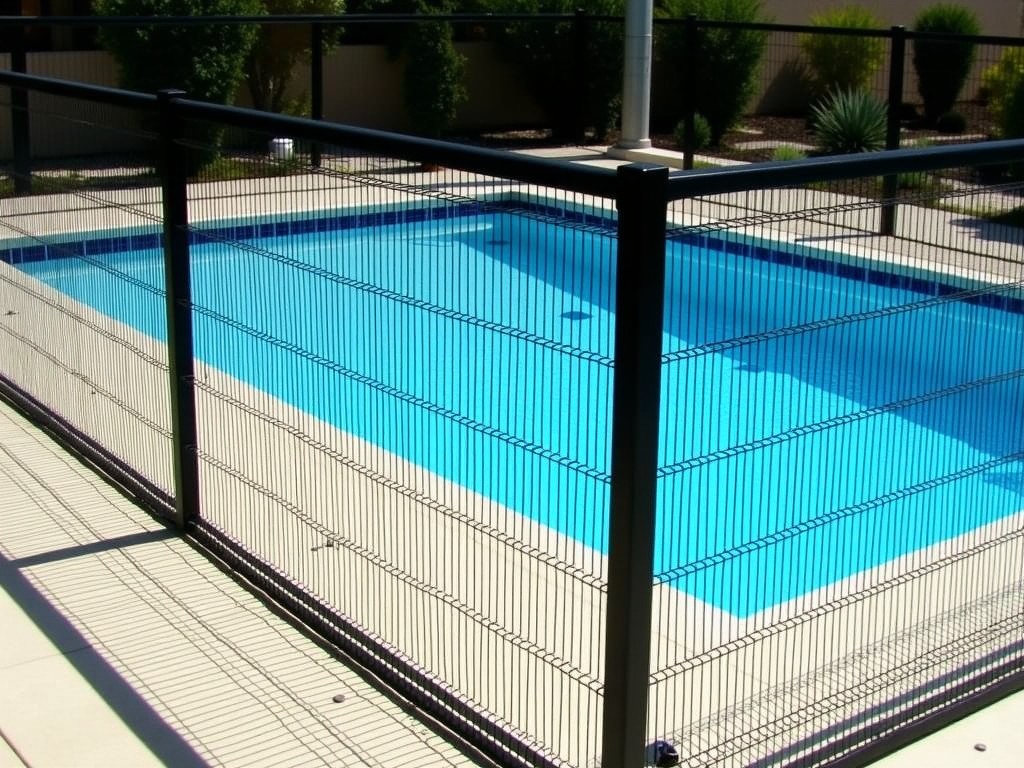
Temporary fencing for pool areas serves as a critical safety barrier during construction, renovation, or event use, designed to prevent unauthorized access and meet regulatory requirements for pool
B2B Temporary Fencing for Pool Area
Temporary fencing for pool areas serves as a critical safety barrier during construction, renovation, or event use, designed to prevent unauthorized access and meet regulatory requirements for pool safety zones. Unlike permanent installations, these systems prioritize rapid deployment, reusability, and compliance with local safety codes without requiring ground penetration or structural modifications.
Core Design Principles for Pool Safety Zones
Effective temporary pool fencing must maintain a minimum height of 1.2 meters to deter climbing, with vertical spacing between components not exceeding 100mm to prevent child passage. The system relies on weighted bases or sandbags for stability, eliminating the need for drilling or anchoring into pool decks, which preserves surface integrity and avoids waterproofing risks.
Panel connections use positive-locking mechanisms that resist lateral displacement under wind loads up to 150 Pa, while allowing tool-free release for reconfiguration. Materials are selected for UV resistance and non-corrosive properties, ensuring performance in chlorinated or saline environments over multiple reuse cycles.
Material Selection and Performance Characteristics
Primary structural components utilize galvanized steel tubing with a minimum wall thickness of 1.2mm, providing a yield strength of 250 MPa to resist deformation from impact or wind pressure. Surface treatment includes hot-dip galvanization per ISO 1461, delivering a zinc coating thickness of 55μm for corrosion resistance in wet environments.
Infill options include high-density polyethylene (HDPE) mesh with 30mm aperture size, offering 85% visibility while maintaining structural integrity, or solid polypropylene panels for privacy applications. Both materials withstand temperatures from -20°C to 60°C and resist degradation from pool chemicals over 500+ hours of UV exposure testing.
Modular System Configuration and Deployment
Standard panel widths range from 1.0m to 2.5m in 0.5m increments, allowing precise adaptation to irregular pool perimeters, ladder access points, and equipment zones. Height adjustability is achieved through telescoping posts with detent locks at 1.2m, 1.5m, and 1.8m settings, accommodating varying code requirements across jurisdictions.
Base systems consist of recycled rubber or HDPE blocks weighing 15kg each, providing sufficient overturning resistance when placed at 2m intervals along the fence line. Inter-panel connectors include dual-pin alignment guides that maintain positional accuracy within 5mm during assembly, reducing gaps that could compromise safety integrity.
Comparison of Common Temporary Fencing Types for Pool Areas
| Feature | Steel Frame with HDPE Mesh | Solid Polypropylene Panel | Aluminum Frame with Vinyl Mesh |
|---|---|---|---|
| Minimum Height (mm) | 1200 | 1200 | 1200 |
| Wind Load Resistance (Pa) | 150 | 200 | 100 |
| Chemical Resistance | Excellent (chlorine/salt) | Excellent | Good (may degrade over time) |
| Visibility | 85% | 0% | 80% |
| Weight per Panel (kg) | 8.5 | 12.0 | 6.0 |
Installation and Safety Compliance Considerations
Deployment begins with site assessment to identify trip hazards, slope gradients exceeding 5°, and proximity to electrical sources. Panels are positioned to maintain a 900mm clear zone from the pool edge where required by local regulations, with base weights placed on the pool-side of the fence to prevent inward collapse.
Gate integration uses self-closing hinges with magnetic latches that engage automatically when released, meeting AS 1926.1 requirements for pool barrier functionality. All connection points are inspected for protrusion hazards, with rounded edges and burr-free finishes applied to eliminate laceration risks during handling.
Quality verification includes tension testing of mesh to 500N to ensure no sagging under load, and base stability checks using inclined plane simulations at 10° tilt. Documentation provides load test certificates and material safety data sheets for chlorinated environment compatibility.
Customization Options for Project-Specific Requirements
Panel lengths can be adjusted in 100mm increments using overlap joints with mechanical locks, enabling precise fitting around curved pool edges or obstructive structures like diving boards. Custom height extensions up to 2.4m are available for high-risk zones, utilizing intermediate bracing to maintain stiffness without increasing base weight requirements.
Color coding options include safety yellow for high-visibility zones or dark gray for aesthetic integration with surrounding landscaping, achieved through powder coating with UV-stable pigments. Reflective strips compliant with AS/NZS 1906.4 can be added to vertical posts for low-light visibility during nighttime operations.
Specialized configurations include swing-arm gates for equipment access, removable sections for ladder maintenance, and integrated signage mounts for safety warnings. All modifications retain the core stability principles and are validated through finite element analysis for wind and impact scenarios.
Long-Term Value and Reusability Factors
The system is designed for a minimum of 50 deployment cycles with less than 5% degradation in structural performance, based on accelerated aging tests simulating weekly use over five years. Component interchangeability allows damaged panels or bases to be replaced individually, reducing lifecycle costs compared to disposable alternatives.
Stackable design minimizes storage footprint, with 50 panels occupying less than 1.2 cubic meters when nested. Maintenance requires only periodic cleaning with neutral pH detergent and inspection of locking mechanisms, with no lubrication or painting needed between uses due to corrosion-resistant materials.
End-of-life recyclability exceeds 95% by weight, with steel components entering standard recycling streams and plastics processed through HDPE or PP reclamation pathways. This supports corporate sustainability goals while maintaining safety integrity throughout the product’s service life.
For technical specifications, customization requests, or project consultation regarding temporary pool fencing solutions, contact our engineering team.
Request Technical Consultation
Product Categories


Send Inquiry
If you are interested in our products, leave your information here and we will be in touch shortly.