B2B Temporary Outdoor Privacy Fence
Temporary outdoor privacy fences are engineered solutions designed to provide visual screening, site security, and environmental separation for short- to medium-duration industrial, commercial, and
B2B Temporary Outdoor Privacy Fence
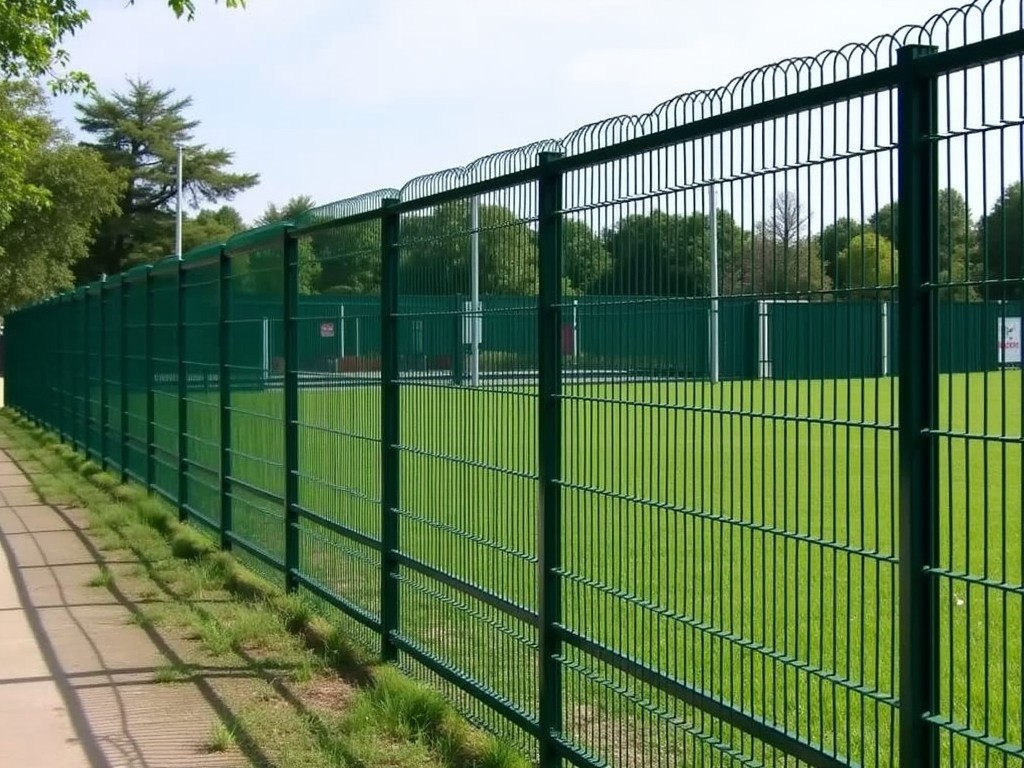
Temporary outdoor privacy fences are engineered solutions designed to provide visual screening, site security, and environmental separation for short- to medium-duration industrial, commercial, and infrastructure projects. Unlike permanent fencing systems, these installations prioritize rapid deployment, modular reconfiguration, and material recovery while maintaining structural integrity under variable outdoor conditions. Their primary function is to obstruct line-of-sight without requiring excavation, concrete footings, or long-term site alteration, making them ideal for active work zones, event perimeters, and environmentally sensitive areas.
Common applications include construction site screening to conceal ongoing work from public view, utility project buffers to minimize visual impact on adjacent properties, outdoor event enclosures for crowd control and attendee privacy, and remediation zones where temporary containment of dust, debris, or visual disturbance is required. Each application demands specific performance characteristics related to wind loading, UV stability, connection strength, and ease of disassembly, which inform material selection and system design.
Material Composition and Structural Design
The core structure typically consists of interlocking panels fabricated from high-density polyethylene (HDPE) or polypropylene (PP) blends, selected for their resistance to moisture, chemical exposure, and UV degradation. Panel thickness ranges from 12 to 20 mm, providing sufficient rigidity to resist bowing under wind loads while remaining lightweight enough for manual handling. Surface textures are often ribbed or corrugated to enhance stiffness without increasing material mass, and colors are formulated with UV stabilizers to prevent fading or embrittlement over extended outdoor exposure.
Frame components, when used, are commonly made from galvanized steel or powder-coated aluminum, chosen based on corrosion resistance requirements and reusability cycles. Connection mechanisms include spring-loaded pins, cam locks, or overlapping flange systems that allow tool-free assembly and disassembly. These joints are designed to maintain alignment under lateral loads while permitting angular adjustment to accommodate uneven terrain or curved layouts.
Panel height options generally range from 1.2 to 2.4 meters, with standard widths between 1.0 and 1.5 meters per unit. Taller configurations may require intermediate bracing or tensioning systems to prevent oscillation. Base stabilization is achieved through weighted stands, sandbags, or ground spikes depending on surface type—concrete, asphalt, soil, or gravel—ensuring stability without permanent fixation.
Performance Characteristics Under Environmental Loads
Wind resistance is a critical design parameter, particularly for installations in exposed or coastal locations. Panel systems are engineered to withstand sustained wind speeds of up to 80–100 km/h (50–62 mph) when properly anchored, with drag coefficients minimized through perforated designs or slatted configurations that allow controlled airflow passage. Solid panels may require closer post spacing or additional bracing to avoid vortex-induced vibration or overturning moments.
Thermal expansion and contraction are accommodated through sliding connections or expansion gaps at panel joints, preventing buckling or joint failure during temperature fluctuations. Materials are selected with coefficients of thermal expansion compatible with framing elements to avoid stress accumulation. Impact resistance is evaluated via standardized drop tests, ensuring panels can withstand incidental contact from equipment or debris without cracking or permanent deformation.
Chemical resistance is relevant in industrial settings where exposure to solvents, oils, or cleaning agents may occur. HDPE and PP formulations exhibit inertness to most dilute acids, alkalis, and hydrocarbons, maintaining structural properties over repeated cleaning cycles. Fire performance varies by formulation; standard grades are combustible but can be modified with flame-retardant additives upon request to meet specific site safety regulations.
Customization Options for Project-Specific Requirements
Customization begins with panel dimensions, where height, width, and thickness can be adjusted to match site constraints or visual screening needs. For example, taller units may be specified for highways or rail corridors to block sightlines from elevated vantage points, while narrower panels facilitate installation in confined urban alleys. Surface finish options include smooth, textured, or printed surfaces—allowing for branding, safety messaging, or camouflage patterns to blend with natural surroundings.
Color selection extends beyond standard neutrals (gray, beige, green) to include custom Pantone matches for corporate identification or high-visibility safety orange/yellow for temporary hazard zones. Perforation patterns—such as circular, slotted, or lattice designs—can be modified to balance privacy levels with wind permeability, reducing structural stress while maintaining visual obstruction. These patterns are often optimized using computational fluid dynamics (CFD) to achieve target drag reduction without compromising opacity.
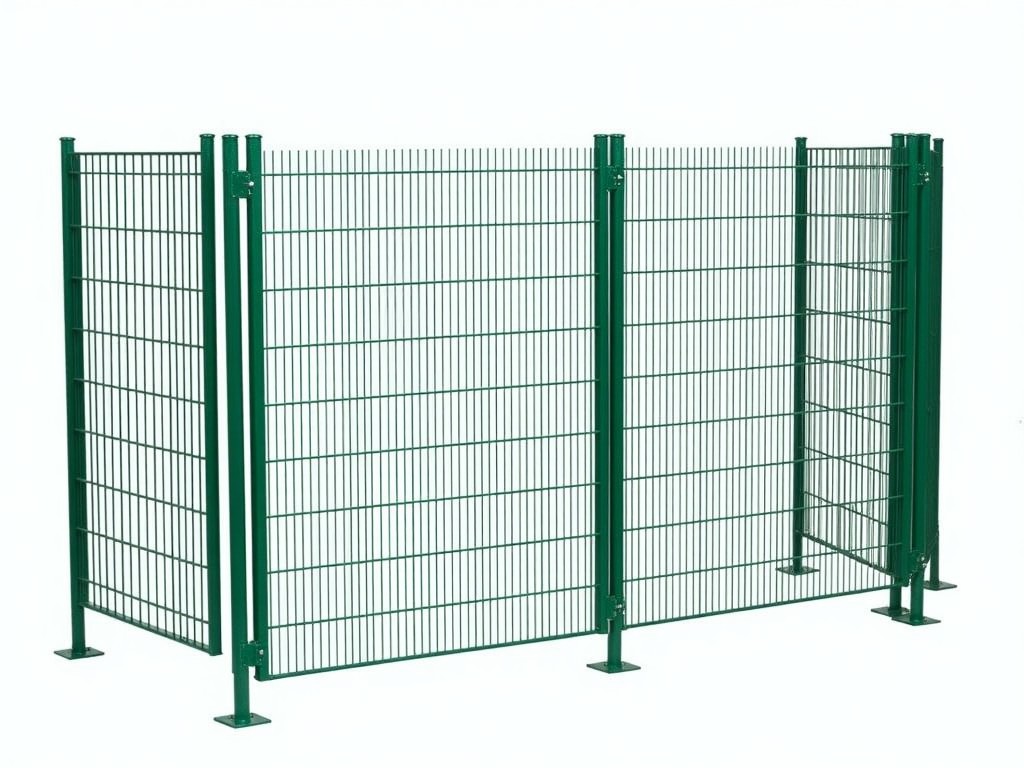
Accessory integration is common, including mounting brackets for signage, lighting fixtures, or surveillance equipment. Cable management channels may be incorporated into panel edges or frames to conceal power or data lines for temporary CCTV or lighting systems. Gate assemblies—single or double leaf—can be engineered to match panel aesthetics and locking mechanisms, providing controlled access points without compromising perimeter continuity.
Quality Control and Manufacturing Considerations
Material consistency is verified through melt flow index (MFI) testing and density measurements to ensure uniform polymer behavior across batches. Dimensional stability is assessed via thermal cycling tests, where panels are exposed to repeated temperature extremes (-20°C to +60°C) to validate resistance to warping or joint misalignment. Connection hardware undergoes torque and fatigue testing to confirm retention strength over multiple assembly-disassembly cycles, typically rated for 50+ reuses without degradation.
Visual inspection includes checking for surface defects such as sink marks, flash, or discoloration that could indicate molding inconsistencies or material contamination. Color uniformity is monitored using spectrophotometers to ensure compliance with specified tolerances, particularly important for branded or uniformly appearing installations. UV stability is confirmed through accelerated weathering testing (e.g., ASTM G154) to predict service life under intended solar exposure.
Packaging methods are designed to prevent damage during transit and storage. Panels are typically stacked flat with protective interleaving layers and secured in palletized crates or reusable containers. Edge protection and corner guards are used to prevent impact damage. Instructions for handling, storage, and reassembly are included to maintain product longevity and performance across multiple project cycles.
Comparison of Common Configuration Types
| Configuration Type | Typical Use Case | Wind Permeability | Reusability Cycles | Installation Time (per 10m) |
|---|---|---|---|---|
| Solid Panel (HDPE) | High-privacy screening, event backdrops | Low (closed surface) | 20–30 cycles | 15–20 min |
| Perforated Slat (PP) | Wind-exposed sites, highway buffers | Medium (30–50% open) | 30–40 cycles | 12–18 min |
| Mesh Panel with Privacy Strip | Dust control, semi-private zones | High (60–80% open) | 40+ cycles | 10–15 min |
Environmental and Lifecycle Considerations
Material recovery is a key advantage of temporary fencing systems. At end-of-use, panels are typically collected, cleaned, and reprocessed into new products through mechanical recycling streams. HDPE and PP are widely accepted in industrial recycling facilities, allowing closed-loop reuse where collected material is remolded into new panels or other industrial components. This reduces landfill burden and lowers the carbon footprint associated with repeated procurement.
Reusability extends economic value across multiple projects. A single panel system may serve 10–20+ installations over its lifespan, depending on handling practices and environmental exposure. Proper storage—away from direct sunlight and extreme temperatures—can significantly prolong service life. Manufacturers often provide take-back programs or recycling guidance to support sustainable decommissioning practices, particularly for large-scale infrastructure or event contractors with recurring needs.
Site impact is minimized due to the absence of ground penetration. Unlike post-driven fences, temporary systems leave no soil disturbance, preserving landscaping, irrigation, or underground utilities. This is especially valuable in historic sites, protected ecosystems, or leased properties where restoration costs or permissions would otherwise prohibit permanent installation. The ability to deploy and remove fencing without trace supports compliance with environmental stewardship standards and temporary use permits.
For project-specific requirements including custom dimensions, material selection, perforation patterns, or accessory integration, contact our technical team to discuss your site conditions and performance needs. We provide detailed quotations based on layout plans, expected duration, and environmental factors.
Product Categories


Send Inquiry
If you are interested in our products, leave your information here and we will be in touch shortly.