Black Pvc Coated Chain Link Wire Mesh Fence
Black PVC coated chain link wire mesh fence is a corrosion-resistant barrier system formed by applying a polyvinyl chloride (PVC) extrusion over galvanized steel wire. The coating provides a uniform
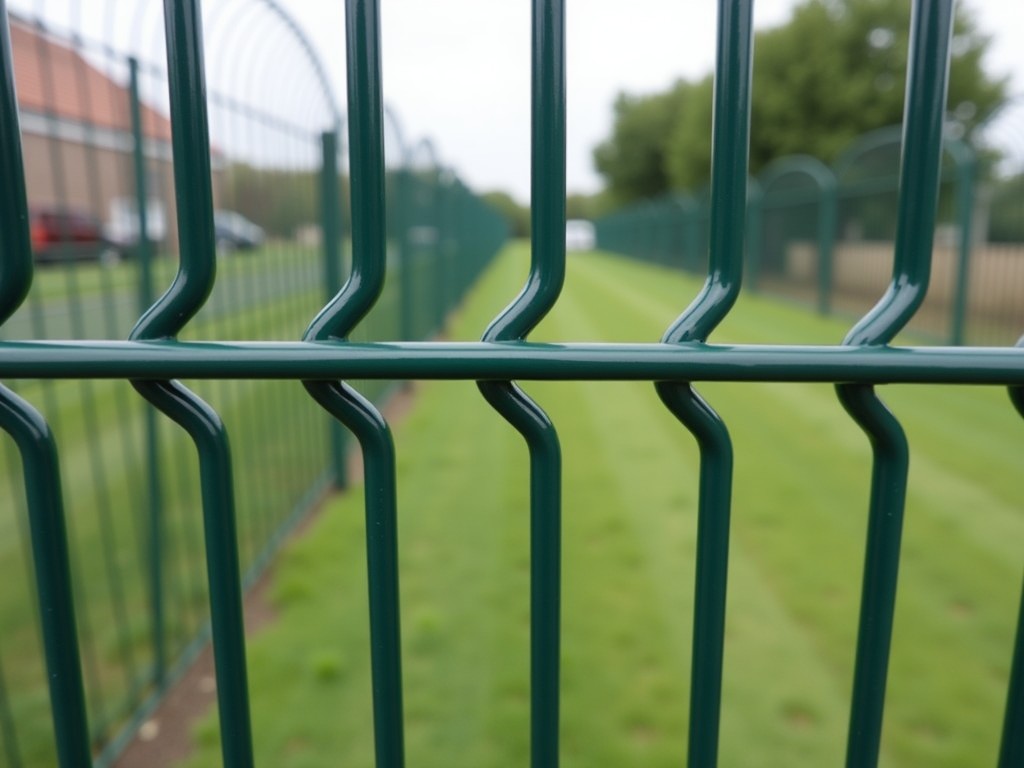
Black PVC Coated Chain Link Wire Mesh Fence
Black PVC coated chain link wire mesh fence is a corrosion-resistant barrier system formed by applying a polyvinyl chloride (PVC) extrusion over galvanized steel wire. The coating provides a uniform black finish while enhancing durability in outdoor environments. This product combines the tensile strength of steel wire with the protective properties of thermoplastic coating to deliver long-term performance in demanding applications.
The base wire is typically manufactured from low-carbon steel, hot-dip galvanized to a minimum zinc coating weight of 200 g/m² (per ASTM A123 or equivalent). The PVC coating is applied via extrusion, resulting in a total wire diameter that includes both the steel core and the polymer layer. Common coating thicknesses range from 0.3 mm to 0.5 mm, depending on project specifications and environmental exposure levels.
Unlike standard galvanized chain link, the black PVC finish reduces visual prominence in residential, commercial, and institutional settings while maintaining structural integrity. The coating also acts as a barrier against moisture, chemicals, and UV radiation, slowing the degradation of the underlying steel. This makes it suitable for installations where aesthetics and longevity are both critical factors.
Technical Specifications
| Parameter | Typical Value | Notes |
|---|---|---|
| Base Wire Material | Low-carbon steel | ASTM A641 Type I or equivalent |
| Galvanization | Hot-dip zinc coated | Minimum 200 g/m² (both sides) |
| PVC Coating Thickness | 0.3–0.5 mm | Extruded; customizable per requirement |
| Finished Wire Diameter | 2.0–4.0 mm | Includes steel core and PVC layer |
| Mesh Opening (Diamond) | 50 mm × 50 mm | Standard; other sizes available (e.g., 38 mm, 75 mm) |
| Roll Height | 0.9 m – 3.0 m | Custom heights upon request |
| Roll Length | 10 m – 50 m | Standard lengths; spliceless options available |
| Tensile Strength (Wire) | 350–550 MPa | Depends on wire diameter and coating |
| UV Stability | Stabilized PVC | Resists chalking and embrittlement |
| Temperature Range | -20°C to +60°C | Continuous exposure; intermittent higher |
Material and Construction Details
The manufacturing process begins with drawing low-carbon steel wire to the desired gauge, followed by hot-dip galvanization to apply a zinc-iron alloy layer. This metallurgical bond provides sacrificial protection, meaning the zinc corrodes preferentially to protect the steel substrate even if the PVC coating is locally damaged.
After galvanization, the wire undergoes PVC extrusion where molten polyvinyl chloride is forced through a die around the wire, creating a seamless, adherent coating. The extrusion temperature, line speed, and cooling rate are tightly controlled to ensure uniform thickness and adhesion. Poor adhesion can lead to delamination under thermal cycling or mechanical stress, so quality control includes peel testing and visual inspection.
The coated wire is then woven into a diamond pattern using a chain link knitting machine. The helical twist design allows the mesh to flex under load without permanent deformation, distributing impact forces across multiple wires. Selvedges are typically knuckled (twisted) on both ends to eliminate sharp edges, improving safety during handling and installation.
Applications and Installation Considerations
Black PVC coated chain link is frequently selected for perimeter security in schools, parks, and recreational facilities where visual discretion is preferred over the industrial appearance of bare galvanized steel. The dark color blends with shadows, foliage, and architectural elements, reducing visual intrusion while maintaining clear visibility through the mesh for surveillance purposes.
In commercial and industrial settings, it is used around storage yards, substations, and waste containment areas where chemical exposure or abrasion may occur. The PVC coating resists damage from mild acids, alkalis, and salts commonly found in coastal or urban environments. It also reduces static buildup compared to bare metal, which can be advantageous in environments with sensitive electronic equipment.
Installation requires standard chain link fencing components: line posts, terminal posts, top rails, tension bands, brace bands, and tie wires. Posts are typically set in concrete footings to resist lateral loads. The mesh is unrolled, stretched taut using a come-along tool, and secured to posts with aluminum or steel ties. Proper tensioning is critical—insufficient tension leads to sagging, while over-tensioning can deform posts or break wires.
Gate assemblies matching the mesh specification are recommended to maintain uniformity. Ground clearance should be maintained (typically 50 mm) to prevent moisture accumulation and facilitate maintenance. Periodic inspection should focus on coating integrity at contact points and post bases, where mechanical wear and corrosion are most likely to initiate.
Customization Options
- Wire diameter: 1.8 mm to 4.0 mm (finished, including PVC)
- Mesh opening: 25 mm to 100 mm (custom diamond or square)
- PVC color: Black (standard), green, brown, white (upon request)
- Roll height: 0.6 m to 3.6 m (standard increments)
- Roll length: 5 m to 50 m (spliceless or spliced)
- Selvedge: Knuckled (standard), twisted, or barbed (for security)
- Post compatibility: Galvanized steel, aluminum, or concrete
- Coating adhesion: Enhanced primers available for harsh environments
Quality Control and Testing
Quality assurance begins with incoming wire inspection, where diameter, tensile strength, and zinc coating weight are verified using micrometers, tensile testers, and magnetic coating thickness gauges. Each batch is traceable to the raw material mill certificate. During extrusion, in-line monitoring ensures coating thickness remains within ±0.05 mm of target.
Finished mesh undergoes visual inspection for defects such as pinholes, bubbles, or uneven coating. Adhesion is tested via ASTM D4541 (pull-off strength) or equivalent, with typical values exceeding 2.5 MPa. Weathering resistance is evaluated through accelerated UV exposure (ASTM G154) and salt fog testing (ASTM B117), though real-world performance data is often referenced from field installations.
Dimensional stability is checked by measuring roll width and height tolerances, which are typically held to ±10 mm. Tensile strength of the finished wire is sampled per lot to ensure it meets the specified range. Packaging includes UV-stabilized polyethylene film and corner protectors to prevent damage during transit and storage.
Packaging and Logistics
Standard packaging involves wrapping each roll in a UV-resistant polyethylene sleeve, followed by placement on a pallet with corner bracing and stretch film securing. Rolls are typically oriented vertically to prevent deformation. Labeling includes product code, dimensions, batch number, and handling instructions. For export shipments, additional moisture barriers and phytosanitary-treated pallets may be applied per destination requirements.
Pallet dimensions are optimized for container loading—common configurations hold 20–25 rolls per pallet, depending on roll height and length. Weight per pallet ranges from 500 kg to 1,200 kg. Forklift access is designed from all four sides. Storage should occur in a dry, shaded area to prevent premature aging of the PVC, although the material is formulated to withstand temporary outdoor exposure.
Lead times vary based on customization level but typically range from 2 to 4 weeks for standard specifications. Special colors, non-standard mesh sizes, or certified material grades may extend timelines. Clients are advised to provide full specifications early in the quotation process to avoid delays. Samples are available upon request for approval before bulk production.
For technical inquiries, custom specifications, or project consultation, contact our engineering team to discuss your application requirements.
Request Technical Support
Product Categories


Send Inquiry
If you are interested in our products, leave your information here and we will be in touch shortly.