Buy Portable Fence For Swimming Pools
When selecting a portable fence for swimming pool safety, understanding the engineering trade-offs between mobility, structural integrity, and compliance is essential. This page explains the
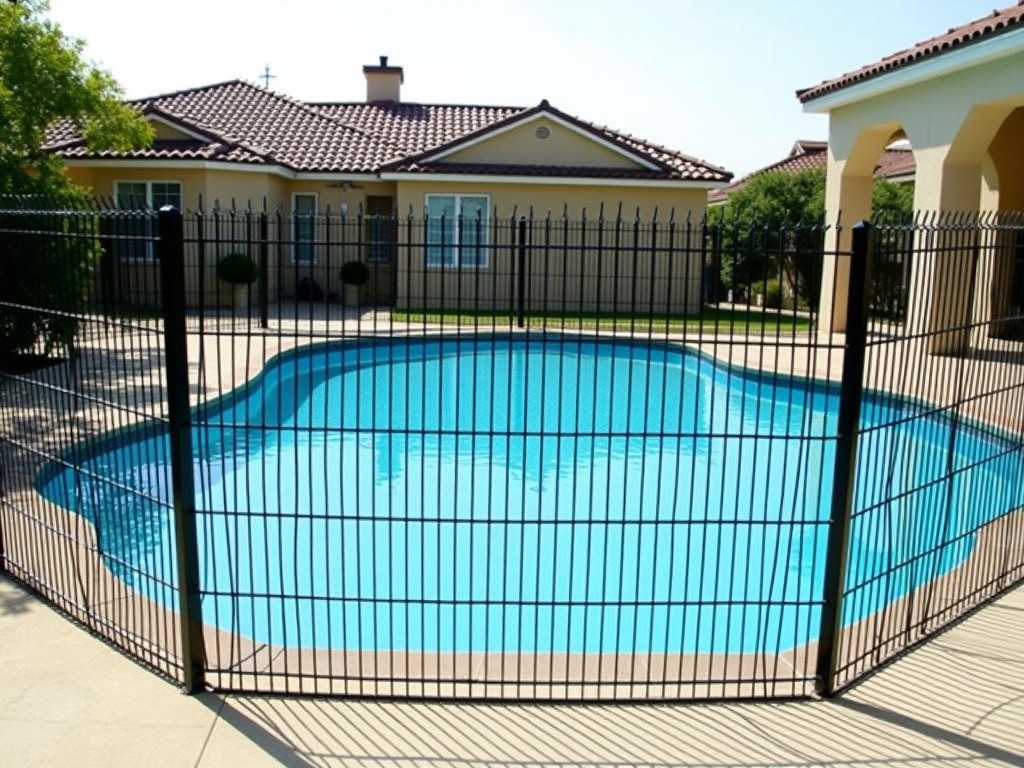
Portable Pool Fence Systems for Temporary and Semi-Permanent Installation
When selecting a portable fence for swimming pool safety, understanding the engineering trade-offs between mobility, structural integrity, and compliance is essential. This page explains the technical characteristics of modular barrier systems designed for pool environments, focusing on material performance, load resistance, and installation practicality.
Core Design Principles for Portable Pool Barriers
Portable pool fences differ from permanent installations in their ability to be assembled, disassembled, and relocated without tools or ground penetration. The primary engineering challenge lies in maintaining lateral stability against wind loads and impact forces while using non-invasive anchoring methods. Systems achieve this through weighted bases, friction-locked joints, and low-center-of-gravity profiles.
Material selection directly affects durability in chlorinated and UV-exposed environments. Common structural components use powder-coated aluminum or marine-grade PVC, chosen for their corrosion resistance and tensile strength. Panel infills typically consist of mesh fabric with specific burst strength ratings or rigid polycarbonate sheets, each offering different visibility and climb resistance properties.
Load Resistance and Stability Metrics
Stability is quantified through tested resistance to horizontal forces, simulating wind pressure and accidental impact. Standard portable systems are engineered to withstand 50 Pa lateral load without tipping, equivalent to approximately 25 km/h wind speed. This performance is achieved through base ballast ranging from 15 to 25 kg per linear meter, depending on panel height and aspect ratio.
Joint integrity is another critical factor. Connection mechanisms must maintain alignment under cyclic loading while allowing tool-free release. Spring-loaded pins or cam-lock systems are commonly used, with pull-out resistance typically exceeding 300 N per joint. These values are validated through repeated load cycling tests per ASTM F2286 guidelines for temporary barriers.
Material Options and Environmental Performance
Aluminum frames utilize 6063-T5 alloy with minimum 20μm powder coating thickness, providing resistance to chloride-induced pitting. PVC components are formulated with UV stabilizers to prevent embrittlement, maintaining impact strength above 20 kJ/m² after 1,000 hours of QUV exposure. Mesh infills are typically polyester-coated with PVC, offering tear strength of 250 N/cm and porosity below 10% to prevent sphere passage.
For applications requiring higher visibility or rigid barriers, polycarbonate panels with UV-resistant coatings are available. These provide impact resistance equivalent to 12 mm laminated glass while weighing less than 3 kg/m². Surface treatments include anti-static and hydrophobic coatings to reduce mineral deposit adhesion from pool splash.
Typical Configuration Parameters
| Parameter | Typical Range | Notes |
|---|---|---|
| Panel Height | 900–1200 mm | Based on local pool safety regulations |
| Panel Width | 600–1200 mm | Affects maneuverability and storage |
| Base Weight per Linear Meter | 15–25 kg | Sand or water-filled; affects stability |
| Infll Mesh Burst Strength | >1800 kPa | ASTM D3786 tested |
| Joint Pull-Out Resistance | >300 N | Per connection point |
Installation and Reconfiguration Logic
Assembly follows a linear sequence: base units are positioned first, followed by vertical post insertion, then panel attachment. Alignment is maintained through tapered sockets or magnetic guides, reducing setup time to approximately 2 minutes per linear meter. Disassembly reverses the process, with components nesting for storage in standard pallet footprints.
Reconfiguration is facilitated by modular design—panels and posts are interchangeable within a system line. Corner adjustments use hinged or swivel joints capable of 0–90° articulation, maintaining structural continuity. Systems are designed for radius changes as tight as 1.2 meters without requiring custom parts, accommodating irregular pool decks or obstacle avoidance.
Applications in Pool Environments
Portable barriers are particularly valuable in multi-use facilities where pool areas must be temporarily secured during maintenance, events, or seasonal changes. Unlike permanent fencing, they allow rapid restoration of open deck space when safety supervision is present. Their non-damaging installation makes them suitable for rented properties, above-ground pools, or decks with waterproofing membranes that cannot be penetrated.
In residential settings, they provide a flexible layer of protection during gatherings or when children are present, complementing permanent barriers rather than replacing them. Commercial applications include swim schools, hotel pools, and aquatic therapy centers where access control needs vary daily. The ability to store and redeploy the system supports operational efficiency without compromising safety compliance.
Quality Control and Manufacturing Considerations
Dimensional consistency is critical for interchangeable parts. Post diameters and panel tolerances are held to ±0.5 mm to ensure reliable joint engagement. Powder coating adhesion is verified via cross-hatch testing (ASTM D3359), targeting minimum 4B rating. UV stability of polymeric components is assessed through accelerated weathering, with color change limited to ΔE<5 after 1,500 hours exposure.
Batch testing includes load validation on a sample basis—typically 1% of production units undergo full stability testing. Material traceability is maintained for aluminum alloys and PVC compounds, with mill certificates available upon request. These practices ensure that replacement parts purchased months or years later will maintain compatibility and performance.
Customization Pathways
While standard configurations meet most portable pool fencing needs, certain projects require adaptation. Panel height can be increased in 100 mm increments using extension posts, though this affects base weight requirements due to increased overturning moment. Infill options include solid privacy strips, reflective safety tape, or branded mesh panels, all attached via compatible edge channels.
Base designs vary between sand-filled, water-filled, and solid rubber variants. Water-filled bases allow rapid deployment and drainage but require freeze protection in cold climates. Solid rubber bases offer higher friction coefficients but increase transport weight. Gate integration is available as a self-closing, latch-equipped module that maintains the same structural interface as standard panels.
To discuss your specific pool safety requirements, including site conditions, regulatory compliance, and reconfiguration frequency, please provide your project details. Our technical team will assess load conditions, material suitability, and installation logistics to recommend a suitable portable barrier system.
Submit Project Details for Technical Review
Product Categories


Send Inquiry
If you are interested in our products, leave your information here and we will be in touch shortly.