China Mobile Fencing And Security
Mobile fencing and security systems provide temporary perimeter protection for construction sites, industrial facilities, and event venues across China. These systems are engineered for rapid
China Mobile Fencing and Security Systems
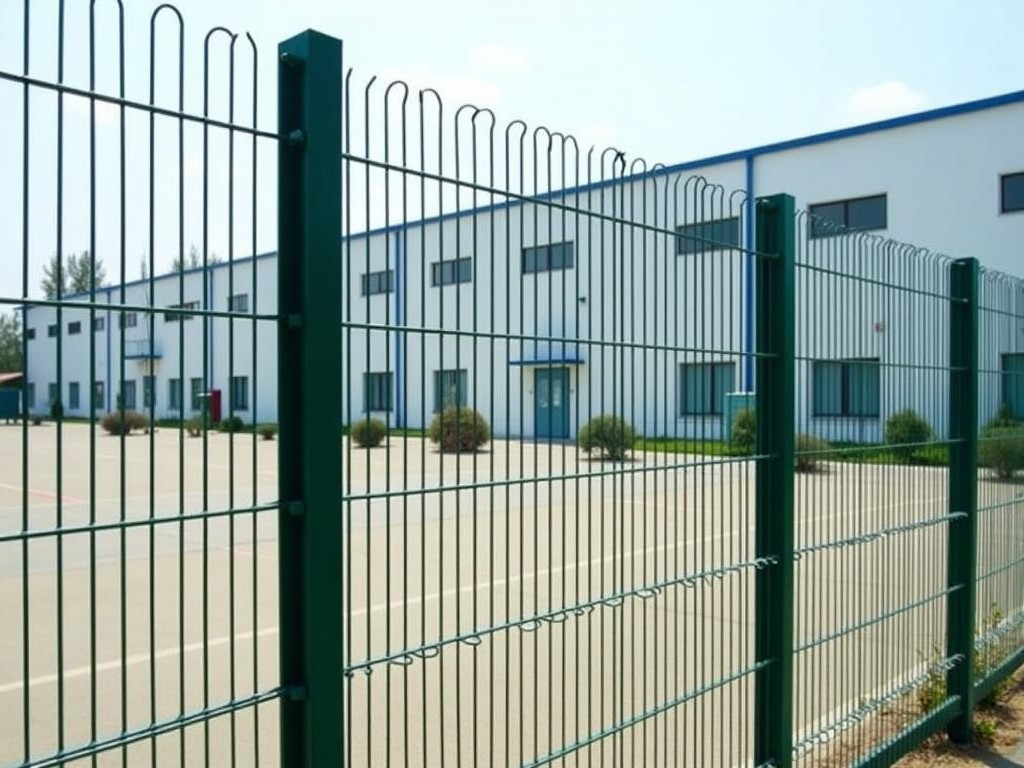
Mobile fencing and security systems provide temporary perimeter protection for construction sites, industrial facilities, and event venues across China. These systems are engineered for rapid deployment, reusability, and adaptability to uneven terrain, addressing the logistical challenges of securing large or dynamic work zones without permanent infrastructure.
Unlike fixed barriers, mobile systems consist of interlocking panels, weighted bases, and optional security enhancements that can be reconfigured as site conditions change. The design prioritizes structural stability under wind loads, resistance to unauthorized displacement, and ease of handling by two-person crews using standard tools.
Core Structural Components
The primary panel is typically fabricated from hot-dip galvanized steel tubing with a minimum wall thickness of 1.2mm, forming a rectangular frame measuring 2.1m in height and 2.5m in width. Vertical infill consists of either welded mesh (50x50x3mm) or horizontal steel bars spaced at 150mm intervals to prevent climbing while maintaining visibility.
Panel edges feature reinforced female couplers that accept male pins from adjacent units, creating a continuous barrier when engaged. Each coupler includes a spring-loaded locking mechanism that requires a deliberate downward force to disengage, reducing the risk of accidental separation during handling or wind loading.
Base stability is achieved through modular concrete or steel ballast blocks weighing between 25kg and 40kg each, depending on wind exposure ratings. These blocks sit in recessed pockets at the panel’s base and are secured via a pin-and-lug system that prevents lateral shift while allowing vertical adjustment for terrain compensation up to 150mm.
Security Enhancement Options
For higher-risk applications, panels can be integrated with anti-climb features such as 3mm diameter barbed tape mounted along the top rail or mesh overlays with 25x25mm apertures to deter hand and footholds. These additions increase the effective deterrent height without altering the panel’s structural integrity or weight distribution.
Optional surveillance mounts are welded to the rear of select panels, accommodating CCTV cameras, motion sensors, or solar-powered lighting units. These mounts are positioned at 1.8m height and rated for equipment loads up to 8kg, with vibration-dampening pads to maintain image stability in windy conditions.
Access control points are engineered as standalone gates matching the panel system’s height and coupling mechanism. Each gate includes a drop rod latch, reinforced hinges with self-lubricating bushings, and a ground socket that accepts a locking pin to prevent unauthorized removal when closed.
Material and Finish Specifications
All structural steel undergoes hot-dip galvanization per ISO 1461, achieving a minimum zinc coating of 60μm to ensure corrosion resistance in humid and coastal environments typical of southern China. Alternative finishes include powder coating in RAL 7035 (light gray) or RAL 9005 (black) for aesthetic or thermal regulation requirements, applied over a phosphate primer layer.
Ballast blocks are manufactured from either recycled concrete aggregate (2500kg/m³ density) or cold-rolled steel (7850kg/m³ density), with lifting handles cast into the top surface for ergonomic handling. Steel blocks feature a textured powder coat to reduce slip during wet-weather deployment.
Fasteners and locking components are made from stainless steel grade 304 to prevent galling and ensure long-term operability of moving parts, particularly in environments with frequent temperature cycling or exposure to deicing agents.
Typical Applications in Industrial Contexts
Construction zones benefit from mobile fencing’s ability to follow phased excavation schedules, where panels are relocated every 2–4 weeks as work fronts advance. The system’s modularity allows crews to create zigzag configurations that resist wind funnelling in open sites, a common issue with linear barricades in coastal provinces.
Industrial plants undergoing maintenance turnarounds use these systems to isolate hazardous areas such as confined space entries or hot work zones. The visibility provided by mesh infill enables supervisors to monitor activity without entering the perimeter, improving compliance with lockout/tagout procedures.
Large-scale logistics hubs deploy mobile fencing during peak seasonal operations to manage pedestrian and vehicle flow around temporary staging areas. The system’s reconfigurability allows rapid adaptation to changing dock door assignments or conveyor layouts without requiring civil works permits.
| Parameter | Typical Value | Notes |
|---|---|---|
| Panel Height | 2100 mm | Standard; custom heights 1800–2400 mm available |
| Panel Width | 2500 mm | Optimized for transport and manual handling |
| Infll Type | Welded mesh or vertical bars | Mesh: 50x50x3mm; Bars: 20x5mm @ 150mm spacing |
| Ballast Weight | 25–40 kg per base | Concrete or steel; selected per wind zone |
| Wind Load Resistance | Up to 110 km/h | With proper ballast and ground engagement |
| Surface Finish | Hot-dip galvanized | ISO 1461 compliant; powder coat optional |
| Gate Width | 1000–1200 mm | Single or double leaf; matches panel coupling |
Deployment and Handling Considerations
Panels are designed for manual handling by two workers, with a typical unit weight of 35–45kg depending on infill and finish. Integrated lifting lugs at the top corners allow for mechanical handling using fork-lift slings or crane hooks when deploying multiple units, reducing strain during large-scale installations.
Ground engagement is facilitated by adjustable base pins that accommodate slopes up to 10 degrees without requiring site grading. On softer surfaces such as gravel or soil, optional ground spikes can be driven through the base plate to prevent lateral movement, particularly in high-wind corridors.
Storage and transport efficiency is achieved through stackable design—panels nest vertically when disengaged, with a footprint of 0.6m² per 10 units. Ballast blocks stack separately using built-in handles, allowing a single pallet to hold 20 blocks for efficient logistics to remote sites.
Quality Assurance and Lifecycle Factors
Each production batch undergoes dimensional verification of critical interfaces—coupler pitch, pin diameter, and base pocket alignment—using GO/NOGO gauges to ensure interchangeability across production lots. Weld integrity is checked via ultrasonic spot testing on 10% of mesh-to-frame joints, with acceptance criteria based on absence of cracks or porosity exceeding 0.5mm.
The expected service life exceeds 10 years under normal use, with galvanization providing the primary corrosion barrier. Surface damage from handling is common but does not compromise structural performance unless the zinc layer is penetrated to the base steel over >5% of the panel area, at which point touch-up with zinc-rich paint is recommended.
End-of-life recyclability is high—over 95% of materials by weight are recoverable, with steel components remelted and concrete ballast crushed for reuse in sub-base layers. This supports circular economy objectives in industrial procurement policies increasingly enforced in Tier 1 and Tier 2 cities across China.
Product Categories


Send Inquiry
If you are interested in our products, leave your information here and we will be in touch shortly.