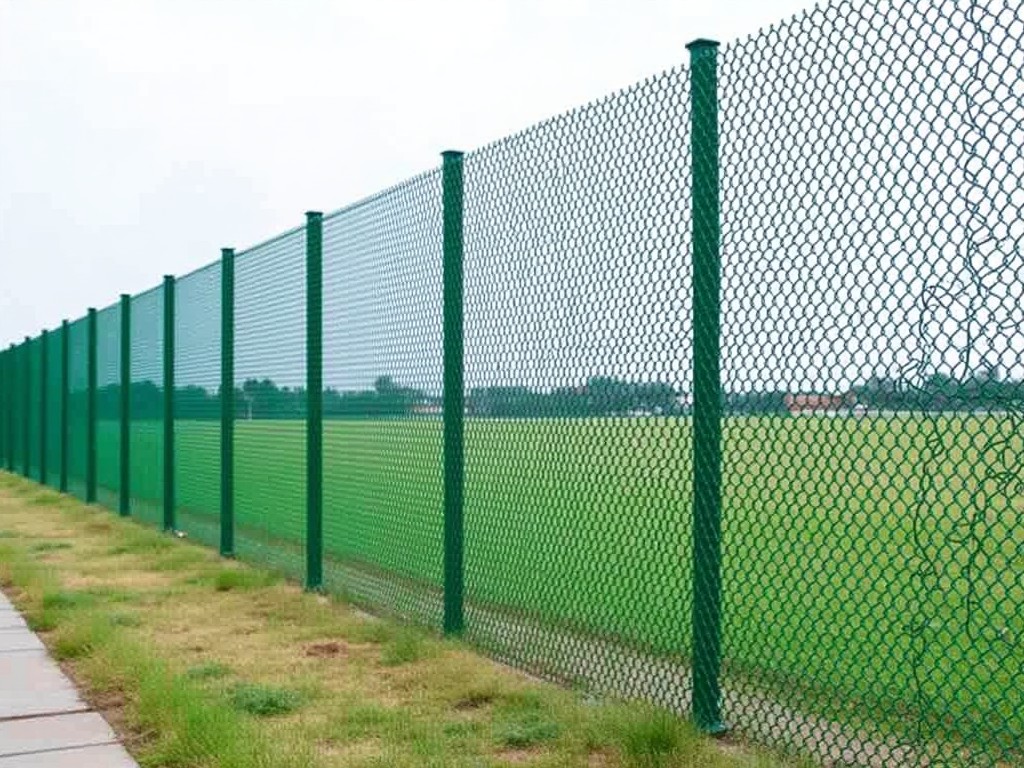
China Plastic Coated Chain Mesh Fencing
Plastic coated chain mesh fencing consists of a galvanized steel wire core wrapped in a continuous layer of thermoplastic polymer, typically polyethylene or PVC. This dual-layer construction combines
China Plastic Coated Chain Mesh Fencing
Plastic coated chain mesh fencing consists of a galvanized steel wire core wrapped in a continuous layer of thermoplastic polymer, typically polyethylene or PVC. This dual-layer construction combines the tensile strength of steel with the corrosion resistance and environmental protection of the coating. The mesh is formed by interlocking wires in a diamond or square pattern, creating a flexible yet rigid barrier suitable for perimeter security, animal containment, and industrial site delineation. Coating thickness typically ranges from 0.5 mm to 1.5 mm, depending on application requirements and environmental exposure. The coating process involves extrusion or dip-coating techniques that ensure uniform adhesion and eliminate pinholes that could lead to localized corrosion.
Material Composition and Coating Specifications
The steel core is usually low-carbon wire with a tensile strength between 350 MPa and 550 MPa, galvanized to a minimum coating weight of 200 g/m² (Zn) or equivalent zinc-aluminum alloy for enhanced durability. The plastic coating is applied over the galvanized layer to provide a barrier against moisture, chemicals, and UV radiation. Common coating materials include low-density polyethylene (LDPE) with a melt flow index of 0.2–0.4 g/10 min and UV stabilizers, or polyvinyl chloride (PVC) with plasticizer content controlled to maintain flexibility down to -20°C. Coating adhesion is measured via cross-hatch testing per ASTM D3359, with acceptable results requiring no more than 5% coating removal. Color options are typically limited to standard hues like green, black, or brown due to pigment stability in outdoor environments.
Structural Design and Mesh Geometry
Chain mesh fencing is manufactured by weaving galvanized steel wires into a continuous spiral pattern, then connecting adjacent spirals with crimped line wires to form the mesh. The standard mesh opening sizes range from 50 mm × 50 mm to 100 mm × 100 mm, with wire diameters typically between 2.0 mm and 4.0 mm before coating. After plastic coating, the overall wire diameter increases by 1.0 mm to 3.0 mm, depending on coating thickness. The tensile strength of the finished mesh is primarily determined by the steel core; the coating contributes negligible structural load but significantly extends service life in corrosive environments. Posts and fittings are usually made from hot-dip galvanized steel or coated to match the mesh, ensuring galvanic compatibility.
Performance Characteristics in Environmental Exposure
The plastic coating acts as a sacrificial barrier that prevents direct contact between the steel core and external aggressors such as salt spray, industrial pollutants, and acidic soils. In coastal environments, coated chain mesh fencing demonstrates significantly reduced rust formation compared to uncoated galvanized alternatives, with visual inspection showing minimal degradation after 5–7 years of exposure. UV stabilizers in the coating inhibit polymer chain scission, maintaining flexibility and impact resistance over time. The coating also reduces surface abrasion during installation and handling, minimizing damage to the zinc layer. Thermal expansion of the plastic layer is accommodated by the mesh’s inherent flexibility, preventing cracking or delamination under normal temperature cycling.
Comparison with Alternative Fencing Systems
| Property | Plastic Coated Chain Mesh | Uncoated Galvanized Chain Mesh | Welded Mesh Panels |
|---|---|---|---|
| Corrosion Resistance (5-year coastal) | Excellent (no visible rust) | Moderate (surface staining) | Good (depends on coating) |
| Flexibility for Uneven Terrain | High | High | Low |
| Impact Resistance | Good (coating absorbs energy) | Fair | Excellent (rigid) |
| Installation Speed | Moderate (requires stretching) | Moderate | Fast (panel-based) |
| Typical Service Life | 15–25 years | 8–15 years | 12–20 years |
Common Applications and Suitability
Plastic coated chain mesh fencing is widely used in agricultural settings for livestock containment, where the smooth coating reduces injury risk to animals compared to bare wire. In municipal infrastructure, it secures public utilities, water treatment facilities, and transportation corridors due to its low maintenance and resistance to de-icing salts. Industrial facilities deploy it around storage yards, waste processing areas, and perimeter zones where chemical exposure or moisture is prevalent. The coating’s color options allow for visual integration with natural surroundings in parks or residential developments. Unlike rigid panels, its flexibility enables installation on sloped or uneven ground without requiring extensive grading.
Customization Options and Manufacturing Considerations
Wire diameter, mesh opening size, coating thickness, and color can be adjusted based on project-specific requirements such as load expectations, environmental severity, or visibility needs. For high-security applications, smaller mesh openings (e.g., 50 mm × 50 mm) and thicker coatings (up to 1.5 mm) are available to deter climbing and enhance durability. Coating formulation can be modified for increased UV resistance in desert climates or improved low-temperature flexibility in Arctic regions. Manufacturing tolerances for wire diameter are typically ±0.05 mm, and coating thickness uniformity is maintained within ±0.1 mm across the roll length. Rolls are commonly supplied in heights of 1.0 m to 2.4 m and lengths of 25 m or 50 m, with custom lengths available upon request.
Quality Control and Testing Protocols
Quality assurance begins with incoming wire inspection, where tensile strength, elongation, and zinc coating weight are verified per ASTM A641/A641M. During coating, inline monitoring ensures consistent thickness and adhesion. Finished mesh undergoes roll testing for tensile strength, elongation at break, and coating integrity using mandrel bend tests per ASTM D522. Salt spray testing (ASTM B117) is conducted on sample sections to validate corrosion resistance, typically requiring >1,000 hours with no red rust. Visual inspection checks for coating uniformity, absence of pinholes, and proper spiral alignment. All test results are documented and available to customers upon request.
Packaging, Handling, and Installation Guidelines
Fencing rolls are wrapped in UV-stabilized polyethylene film and secured with steel bands to prevent deformation during transit. Rolls are stacked horizontally on pallets with corner protectors to avoid edge damage. Handling requires gloves and proper lifting equipment due to roll weight, which can exceed 50 kg for larger sizes. Installation involves setting line posts at intervals of 2.5 m to 3.5 m, depending on height and wind load, then unrolling the mesh and securing it with tie wires or clips. Tensioning is critical to prevent sagging; a tension ratchet or come-along tool is used to achieve recommended tightness. Bottom wires are often buried or secured to a ground rail to prevent lifting. Post caps and tension bars are recommended to maintain top-line integrity and prevent water ingress into post tops.
Long-Term Value and Life Cycle Considerations
Although the initial cost of plastic coated chain mesh fencing is higher than uncoated galvanized alternatives, the extended service life and reduced maintenance needs often result in lower total cost of ownership over 15–20 years. Elimination of periodic repainting or rust treatment lowers operational expenses, particularly in remote or hard-to-access locations. The coating’s resistance to chemical degradation minimizes the risk of failure in industrial environments where acidic vapors or fertilizers are present. At end-of-life, the steel core is recyclable, and the plastic layer can be separated for specialized recycling streams, supporting sustainability goals. Proper installation and periodic visual inspection further maximize longevity.
Product Categories


Send Inquiry
If you are interested in our products, leave your information here and we will be in touch shortly.