China Temporary Event Fencing For Sale
Temporary event fencing serves as a critical safety and crowd management solution for short-term gatherings, construction zones, and public assemblies. Unlike permanent barriers, these systems
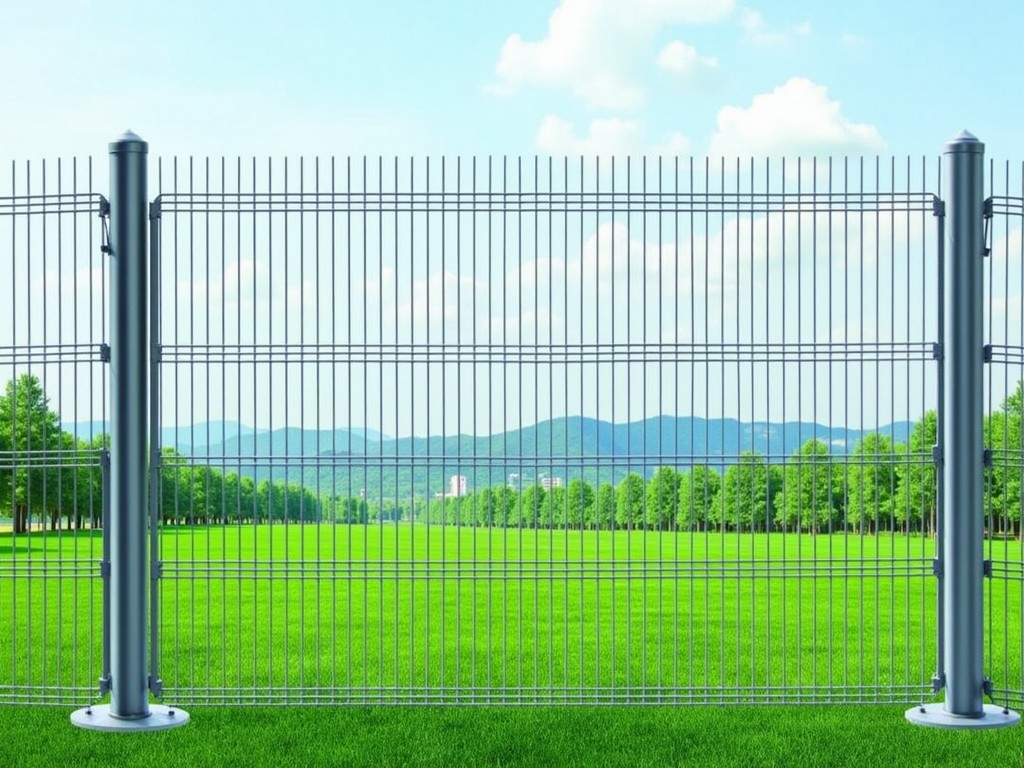
China Temporary Event Fencing for Sale
Temporary event fencing serves as a critical safety and crowd management solution for short-term gatherings, construction zones, and public assemblies. Unlike permanent barriers, these systems prioritize rapid deployment, modular reconfiguration, and material efficiency while maintaining structural integrity under dynamic loads. Industrial buyers evaluating such systems must assess not only initial cost but also lifecycle logistics, including transport volume, setup labor, and resistance to environmental stressors like wind uplift or accidental impact. This page details the engineering characteristics, material options, and application-specific considerations for temporary fencing sourced from Chinese manufacturers, focusing on measurable attributes that influence procurement decisions.
Core Structural Design Principles
Effective temporary fencing relies on a balance between stiffness and flexibility. Panels typically employ a rectangular or square tubular frame—commonly 32mm or 38mm in diameter—welded to an infill mesh or vertical picket system. The frame’s moment of inertia determines resistance to lateral deformation; for example, a 38mm round tube with 2.0mm wall thickness offers approximately 40% greater bending resistance than a 32mm equivalent under identical material grade. Connections between panels use pin-and-lug or clamp mechanisms designed to transmit shear forces while allowing angular adjustment for curved layouts. Locking pins often feature a minimum shear strength of 15kN to prevent disengagement under impact loads exceeding 500J, a threshold derived from typical crowd surge simulations.
Base stability is equally critical. Most systems integrate a weighted foot or ground anchor interface. Concrete-filled feet, usually 250mm x 250mm x 50mm, provide approximately 18kg of ballast per unit, sufficient to resist overturning moments from wind pressures up to 800Pa (equivalent to 35km/h gusts) when panels are 2.1m tall. Alternatively, ground spikes—typically 16mm diameter steel rods, 400mm long—achieve comparable stability in soil with bearing capacity above 100kPa by developing passive resistance along their embedded length. The choice between weighted feet and spikes depends entirely on substrate conditions; hard surfaces like asphalt or concrete necessitate ballast, while permeable grounds like grass or gravel favor penetration anchors for minimal surface disturbance.
Material Specifications and Corrosion Protection
Structural components are predominantly manufactured from Q235B carbon steel, a material with a minimum yield strength of 235MPa and tensile strength ranging from 370–500MPa. This grade offers adequate plasticity for cold-forming processes like tube bending while maintaining weldability for frame assembly. For infill, two primary options exist: welded wire mesh (commonly 50mm x 50mm or 75mm x 50mm apertures with 3.0–4.0mm diameter wire) or vertical steel pickets (16mm diameter, spaced 100–150mm apart). Mesh provides superior visibility and wind permeability—reducing drag coefficient by approximately 30% compared to solid barriers—while pickets offer greater resistance to climbing due to reduced hand-hold opportunities.
Corrosion protection directly impacts service life, especially in humid or coastal environments. Hot-dip galvanizing per ISO 1461 is the standard treatment, applying a zinc coating typically between 55–85μm thick. This thickness corresponds to a predicted service life of 10–15 years in rural atmospheres and 5–8 years in industrial zones before significant rust formation compromises structural integrity. Alternative finishes include powder coating (60–80μm thickness) over a galvanized primer, which adds UV resistance and aesthetic customization but increases cost by 15–25%. Some manufacturers offer galvannealed coatings for improved paint adhesion, though this is less common for temporary applications where reusability outweighs long-term appearance retention.
Panel Dimensions and Modularity
Standard panel heights range from 1.0m to 2.4m, with 2.1m being the most prevalent for crowd control applications due to its effectiveness in deterring unauthorized scaling while maintaining visibility over the barrier. Widths are typically 2.0m or 2.5m per panel, selected to optimize transport efficiency—two 2.5m panels fit within a standard 20ft container’s internal width with minimal wasted space. Panel weight varies significantly based on infill: a 2.1m x 2.5m mesh panel with 38mm frame and 3.5mm wire averages 22kg, whereas an equivalent picket panel reaches 28kg due to higher material density. These weights directly influence manual handling requirements; panels under 25kg generally allow two-person installation without mechanical aids, a key consideration for labor-constrained events.
Modularity extends beyond simple linear connections. Corner posts, T-joints, and adjustable-angle couplers enable the creation of enclosures, zigzag layouts, or barriers following irregular site perimeters. Adjustable couplers typically permit angular deflection from 0° to 30° per joint, allowing accurate tracing of curved boundaries without gaps. Gate integration is also standardized: single-leaf gates (1.0m wide) or double-leaf gates (2.0m–2.5m wide) use the same panel height and infill, with hinges designed to withstand 200 opening/closing cycles before wear necessitates maintenance. Latching mechanisms often incorporate a gravity drop bolt paired with a padlock eye, ensuring fail-secure behavior if power or manual intervention is lost.
Applications: Why This Fencing Suits Specific Use Cases
In music festivals and sporting events, temporary fencing manages spectator flow and establishes secure perimeters around stages, VIP zones, or hazardous equipment like lighting rigs. The 2.1m height with mesh infill is preferred here because it allows security personnel to maintain visual surveillance while preventing projectile transfer—objects larger than 50mm diameter cannot pass through standard 50x50mm mesh, reducing risks from thrown bottles or debris. Wind load calculations become critical in open venues; for a 100m linear run of 2.1m fencing, the total lateral force at 100km/h wind speed exceeds 12kN, necessitating intermediate ground anchors every 4–6 panels to prevent cumulative overturning.
Construction sites utilize these systems primarily for perimeter security and pedestrian separation. Here, picket infill is often chosen over mesh due to its superior resistance to tampering—cutting through 16mm diameter pickets requires significantly more time and noise than severing wire mesh, acting as a deterrent against opportunistic theft. Additionally, the open nature of pickets reduces wind loading, which is advantageous on tall, exposed structures where fencing is mounted atop scaffolding or temporary walls. For sites requiring frequent reconfiguration—such as phased building projects—systems with quick-release pins enable panel relocation in under 90 seconds per unit, minimizing disruption to ongoing work.
Public works and emergency response scenarios demand rapid deployment. In flood mitigation, for example, fencing is used to demarcate exclusion zones around unstable infrastructure. The ability to anchor directly into soil via spikes—without requiring concrete footings—allows installation rates of up to 50 panels per hour by a two-person crew. Similarly, during urban rescue operations, lightweight mesh panels (under 20kg each) can be manually carried into restricted access areas to create temporary triage zones, with the open mesh facilitating airflow and visibility for medical personnel. These use cases highlight why deployability and substrate adaptability often outweigh absolute strength in selection criteria.
Customization Options Based on Project Requirements
While standard dimensions cover most scenarios, specific projects often require adjustments. Height can be customized in 100mm increments from 1.0m to 3.0m, though increases beyond 2.4m necessitate frame reinforcement—typically upgrading to 50mm diameter tube or adding a central horizontal brace—to maintain stiffness under wind load. Width adjustments are less common due to container logistics constraints but are feasible in 50mm steps; non-standard widths may increase per-unit cost by 10–20% due to reduced material yield from standard coil sizes. Infill aperture size is another variable: tighter mesh (e.g., 25x25mm) improves small-object retention but increases wind drag coefficient by up to 40%, requiring corresponding increases in ballast or anchoring density.
Surface treatments can be tailored to environmental exposure. In coastal regions with chloride exposure, manufacturers may recommend hot-dip galvanizing followed by a duplex powder coating system, extending predicted service life to 12–18 months in splash zones compared to 6–8 months for galvanizing alone. For applications requiring high visibility—such as nighttime roadwork—reflective tape (Class 2 or 3 per EN 13356) can be applied to the top rail or vertical members, with typical retroflectivity values of 150–250 cd/lx/m². Some clients specify color coding for zone differentiation (e.g., red for danger, yellow for caution), achieved through powder coating in RAL standards; however, pigment additives can slightly reduce UV stability of the coating, potentially shortening fade resistance by 15–25% compared to clear or white finishes.
Quality Control and Testing Protocols
Reputable manufacturers implement multi-stage inspection rather than relying solely on final product checks. Raw material verification includes mill test certificates for steel grade and chemical composition, supplemented by on-site spectrometric analysis to confirm carbon and manganese levels within Q235B tolerances. During production, each welding point undergoes visual inspection per ISO 5817 Level B (moderate imperfections allowed), with critical joints—such as frame-to-infill connections—subject to magnetic particle testing if cracks are suspected. Dimensional checks occur at multiple stages: tube length tolerance is typically ±2mm, while aperture spacing in mesh must remain within ±3mm to ensure consistent infill performance and prevent localized weakness.
Load testing validates design assumptions. A common protocol applies a 500J impact load via a 50kg pendulum striking the panel at mid-height; acceptable deflection is less than 50mm at the point of impact, with no permanent deformation or connection failure. Wind resistance is assessed through either computational fluid dynamics (CFD) simulation or scaled wind tunnel tests, measuring the drag coefficient (Cd) of panel assemblies; for standard mesh infill, Cd typically ranges from 1.1 to 1.3, significantly lower than solid barriers (Cd > 2.0). Galvanizing thickness is verified using magnetic induction gauges at minimum five points per panel, with readings averaged to ensure compliance with the specified micron range—any single reading below 80% of the target triggers batch review.
Packaging and Logistics Considerations
Efficient packaging directly affects landed cost and on-site handling. Panels are typically stacked vertically in bundles of 10–15 units, separated by polyethylene sheeting to prevent abrasion, then secured with steel or plastic strapping. A standard bundle of 2.1m x 2.5m mesh panels (12 units) occupies approximately 0.8m³ and weighs around 264kg, allowing efficient containerization—forty such bundles fit within a 40ft HQ container, maximizing payload. Corner posts, gates, and accessories are packaged separately in labeled cartons to avoid damage during transit; small components like pins and clips are often counted and sealed in moisture-resistant bags with desiccant to prevent corrosion during sea freight.
Protection against moisture during shipment is critical for preserving galvanized integrity. While the zinc coating provides inherent corrosion resistance, prolonged exposure to condensation or salt spray during transit can lead to white rust formation—a non-protective zinc hydroxide layer that, if not removed, may accelerate underlying steel corrosion. To mitigate this, manufacturers often apply a temporary passivation chromate coating (trivalent chromium-based, compliant with REACH) or include vapor corrosion inhibitors (VCIs) inside the packaging. Internal packaging humidity is sometimes monitored via indicator cards; if relative humidity exceeds 60% for extended periods, additional VCIs are deployed. These measures ensure that panels arrive at the destination with surface readiness for immediate use, avoiding costly on-site cleaning or re-treatment.
Typical Specification Table
| Parameter | Typical Value | Notes |
|---|---|---|
| Frame Tube Diameter | 32mm or 38mm | Round, welded steel; 2.0–2.5mm wall thickness |
| Panel Height | 1.0m – 2.4m (standard) | Customizable to 3.0m with reinforcement |
| Panel Width | 2.0m or 2.5m | Optimized for container shipping |
| Infill Type | Welded mesh or vertical pickets | Mesh: 50x50mm aperture, 3.0–4.0mm wire; Pickets: 16mm dia, 100–150mm spacing |
| Surface Treatment | Hot-dip galvanizing (ISO 1461) | Coating: 55–85μm Zn; Optional powder coat over primer |
| Weight (2.1m x 2.5m Mesh) | Approx. 22kg | Varies with frame size and wire diameter |
| Base System | Weighted feet or ground spikes | Feet: ~18kg ballast; Spikes: 16mm dia, 400mm length |
| Wind Resistance (2.1m tall) | Stable up to 800Pa (35km/h gusts) | With proper anchoring; dependent on soil/footing |
Selecting temporary event fencing requires aligning technical specifications with site-specific demands rather than relying on generic claims. Factors such as substrate type, expected wind exposure, required service duration, and manual handling constraints should drive the choice between mesh and picket infill, frame dimensions, and anchoring method. Buyers are advised to provide detailed project parameters—including total linear length, height requirements, ground conditions, and anticipated load scenarios—when requesting quotations to enable accurate configuration and pricing. This approach ensures the delivered system performs as intended under real-world conditions, minimizing the risk of over-specification or inadequate protection.
For procurement teams seeking to evaluate suppliers, key discussion points should include material traceability, welding procedure specifications, galvanizing batch records, and packaging standards for export. Understanding how a manufacturer validates structural performance—through testing protocols or compliance with temporary works guidelines such as BS 8442 or equivalent—provides insight into their engineering rigor. While cost remains a factor, the total value proposition encompasses reusability, ease of storage, and reduced lifecycle management effort, all of which are enhanced by modular, well-documented systems designed for repeated deployment cycles.
Inquire About Temporary Event Fencing Solutions
Product Categories


Send Inquiry
If you are interested in our products, leave your information here and we will be in touch shortly.