China Temporary Pool Fence For Sale
Temporary pool fencing provides a critical safety barrier for construction sites, renovation projects, and event venues where permanent fencing is impractical. Unlike permanent installations, these
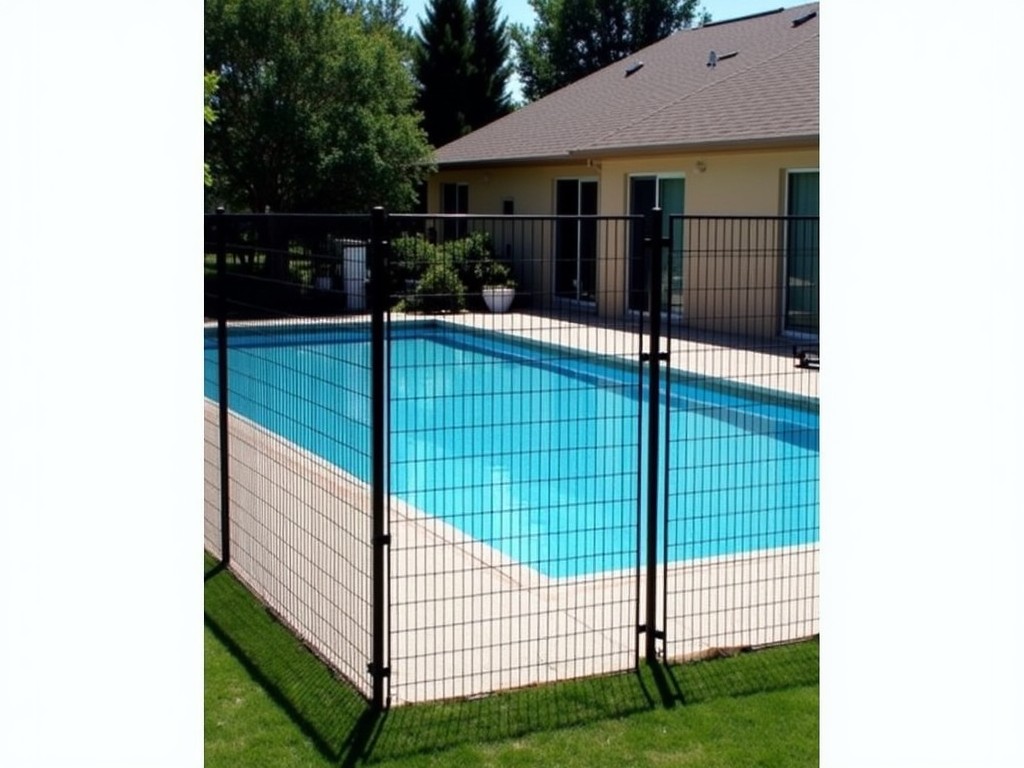
China Temporary Pool Fence for Sale
Temporary pool fencing provides a critical safety barrier for construction sites, renovation projects, and event venues where permanent fencing is impractical. Unlike permanent installations, these systems must balance rapid deployment with structural integrity to withstand environmental loads and accidental impacts while maintaining compliance with local safety regulations. Selecting the appropriate system requires understanding material properties, connection mechanisms, and foundation requirements specific to the application environment.
Our temporary pool fence systems utilize hot-dip galvanized steel tubing with a minimum zinc coating of 60 g/m², providing corrosion resistance suitable for outdoor exposure in temperate climates for up to 24 months without maintenance. Panel dimensions are standardized at 2.1 meters in height and 2.4 meters in width, with vertical pickets spaced at 100 mm intervals to prevent climbability and meet most municipal pool safety codes. The base system includes pre-drilled flange plates for ground spike or sandbag anchoring, allowing installation on soil, asphalt, or concrete substrates without permanent modification.
Technical Specifications
| Parameter | Value |
|---|---|
| Panel Height | 2100 mm |
| Panel Width | 2400 mm |
| Vertical Picket Diameter | 19 mm (round tube) |
| Horizontal Rail Dimensions | 32 mm × 32 mm square tube |
| Picket Spacing | 100 mm center-to-center |
| Material Grade | Q235B steel |
| Surface Treatment | Hot-dip galvanization (min 60 g/m²) |
| Connection Type | U-channel coupler with anti-rattle pin |
| Wind Load Rating | 120 km/h (with proper anchoring) |
| Weight per Panel | 18.5 kg |
Material and Corrosion Protection
The fence panels are constructed from Q235B structural steel, selected for its balance of yield strength (approximately 235 MPa) and formability, allowing precise bending of pickets and rails during manufacturing. Hot-dip galvanization applies a metallurgical bond between zinc and steel, creating a protective layer that sacrificially corrodes before the underlying steel, significantly extending service life in humid or chemically exposed environments. This process ensures uniform coating coverage on complex geometries, including tube interiors and welded joints, which spray-applied coatings often miss.
For projects requiring extended exposure beyond 24 months or in high-chloride environments (such as coastal areas), hot-dip galvanized panels can be supplied with an additional powder-coated top layer in white, black, or dark green, increasing barrier protection against UV degradation and chemical splash. The powder coating is applied electrostatically and cured at 200°C, achieving a film thickness of 60–80 μm with adhesion exceeding 5B per ASTM D3359. Customers should specify environmental conditions during quotation to ensure appropriate coating selection.
Anchoring and Stability Systems
Stability of temporary pool fencing depends entirely on the anchoring method, as the panels themselves derive rigidity from their geometric shape rather than ground embedment. Three primary anchoring options are available: ground spikes for soil or grass surfaces, sandbag brackets for asphalt or concrete, and weighted base plates for indoor or sensitive flooring. Each method transfers lateral loads from wind or impact into the substrate through friction or passive resistance, preventing overturning or displacement.
Ground spikes are manufactured from 25 mm diameter steel rod, 600 mm in length, with a pointed tip for penetration and a flattened head to prevent pull-through. They are inserted through pre-drilled holes in the panel flange and driven to a minimum depth of 450 mm for adequate holding capacity in compacted soil. Sandbag brackets utilize a U-shaped cradle that holds 25 kg sandbags, positioned at the panel base to create a resisting moment; typically, two sandbags per panel are required for wind loads up to 80 km/h. Weighted base plates, made from 8 mm thick steel, rely on gravity and are suited for indoor pools or event spaces where ground penetration is prohibited.
Installation crews should verify substrate conditions prior to anchoring; loose fill, gravel, or frozen ground may require alternative methods such as ground screws or concrete deadmen. Anchoring spacing should not exceed 2.4 meters (one panel width) to maintain system integrity, and all connections between panels must be secured with the supplied anti-rattle pins to prevent disengagement under cyclic loading. Proper tensioning of the coupler system ensures panels act as a unified barrier rather than independent units.
Applications and Compliance Considerations
Temporary pool fencing is commonly deployed during residential pool construction, commercial renovation, and public events where permanent barriers are not yet installed or are temporarily removed. The primary function is to prevent unauthorized access to water hazards, particularly by children under five years old, aligning with the intent of residential pool safety legislation in many jurisdictions. Unlike decorative or crowd-control barriers, pool-specific fencing must resist climbability and provide minimal footholds, which is achieved through the 100 mm vertical picket spacing and smooth rail surfaces.
In addition to safety, these systems support project logistics by delineating work zones, protecting equipment, and managing pedestrian flow around active construction areas. For example, during pool resurfacing, the fence prevents debris from entering the water while allowing contractors unimpeded access to the perimeter. Municipal inspectors often require proof of compliance with local pool barrier standards, which may reference AS 1926.1 (Australia), BOCA National Building Code (US), or equivalent regional regulations; our product documentation includes material certificates and anchorage guidelines to facilitate approval.
It is important to note that temporary fencing does not replace permanent pool barriers required for ongoing operation; it is intended solely for interim protection during periods of heightened risk. Project managers should coordinate fence removal with the installation of permanent barriers or other approved safety measures, such as pool covers or alarms, to maintain continuous protection. Documentation of inspection dates, anchoring verification, and panel condition should be maintained throughout the rental or deployment period.
Customization and Ordering Information
While standard panels are 2.1 m high × 2.4 m wide, custom heights ranging from 1.2 m to 2.4 m are available upon request, with corresponding adjustments to picket length and rail spacing to maintain structural proportions. Width customization is less common due to manufacturing efficiencies but can be accommodated in increments of 300 mm for specialized site layouts. All custom dimensions undergo engineering review to ensure wind load resistance and anchorage compatibility are preserved.
Color options extend beyond galvanized silver to include powder-coated finishes in RAL 9010 (pure white), RAL 9005 (jet black), and RAL 6005 (moss green), selected for visibility against common backgrounds or aesthetic integration with surroundings. Custom colors require minimum order quantities and additional lead time for powder coating setup. Gate assemblies, including single-leaf and double-leaf configurations with self-closing hinges and latch mechanisms, are available as integrated components or retrofit kits.
To request a quotation, please provide the following details: total linear meters required, preferred anchoring method (ground spike, sandbag, or weighted base), desired panel height and width if non-standard, color preference, project location (for environmental coating advice), and required delivery date. Standard lead time is 10–15 working days for stock galvanized panels; custom colors or gate additions may extend this to 20–25 days. Samples of panel sections and anchoring hardware are available upon request for qualification testing.
Product Categories


Send Inquiry
If you are interested in our products, leave your information here and we will be in touch shortly.