China Temporary Pool Fence Gold Coast
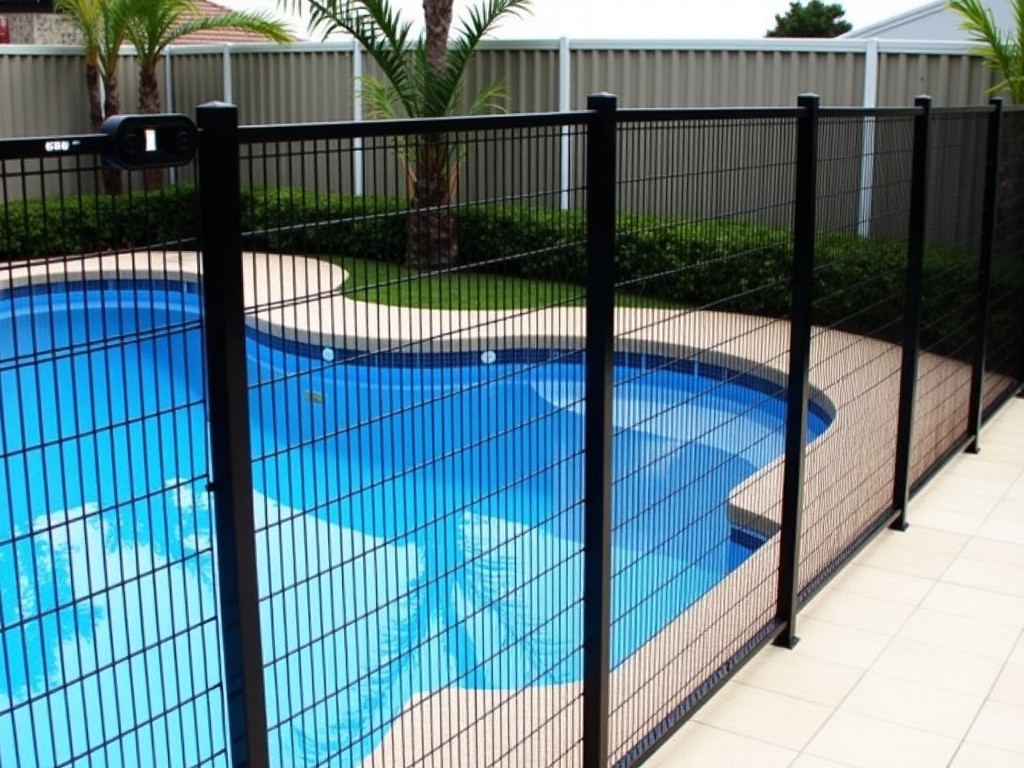
Temporary pool fencing on the Gold Coast serves as a critical safety barrier during construction, renovation, or event-based pool installations, designed to meet Queensland’s stringent pool safety
China Temporary Pool Fence Gold Coast
Temporary pool fencing on the Gold Coast serves as a critical safety barrier during construction, renovation, or event-based pool installations, designed to meet Queensland’s stringent pool safety regulations under the Building Act 1975 and Queensland Development Code MP 3.4. These systems are engineered for rapid deployment and removal without compromising structural integrity or compliance, addressing the unique environmental challenges of coastal regions including salt-laden air, high UV exposure, and frequent wind loads.
Manufactured primarily in China for cost-efficient scalability, these fences utilize hot-dip galvanized steel frames with powder-coated finishes to resist corrosion in marine environments, while maintaining a lightweight profile for manual handling by two-person crews. The modular design incorporates anti-climb vertical pickets spaced at 100mm intervals, a minimum height of 1200mm from finished ground level, and self-closing, self-latching gates compliant with AS 1926.1-2012, ensuring adherence to local council inspection requirements across Gold Coast suburbs such as Surfers Paradise, Broadbeach, and Burleigh Heads.
Unlike permanent fencing solutions, temporary systems prioritize reusability and site adaptability, featuring interchangeable panels, adjustable base plates for uneven substrates, and tool-free coupling mechanisms that allow reconfiguration around irregular pool shapes or temporary structures like marquees and storage containers. This adaptability reduces project downtime and minimizes material waste over multiple construction cycles, aligning with sustainable site management practices increasingly mandated by Queensland government contractors.
Technical Specifications and Material Composition
The structural backbone of these temporary pool fences consists of 32mm diameter circular hollow section (CHS) steel posts with a minimum wall thickness of 1.2mm, hot-dip galvanized to Z275 coating mass (275g/m² total zinc) per AS/NZS 4792, providing a predicted service life of 15+ years in C3 marine environments before maintenance recoating is required. Horizontal rails employ 25mm x 25mm square hollow section (SHS) members with 1.0mm wall thickness, welded to posts at 90-degree angles using continuous fillet welds to ensure lateral load resistance under AS 1170.2 wind pressure calculations for Region B, Terrain Category 2.
Picket infill consists of 19mm diameter solid steel bars or 25mm x 25mm SHS profiles, vertically oriented and spaced at 100mm centers to prevent sphere passage compliance, with all weld points ground smooth to eliminate protrusions exceeding 3mm in height. The powder-coated finish applies a minimum 60-micron epoxy primer followed by 80-micron polyester topcoat in white or black, achieving adhesion ratings of 5B per ASTM D3359 and UV stability exceeding 1500 hours under QUV accelerated testing, critical for preventing chalking and delamination in Gold Coast’s high solar irradiance zone.
Base plates are fabricated from 6mm thick hot-rolled steel, punched with anchor holes for M10 chemical or mechanical fixings into concrete substrates, or fitted with rubber-weighted ballast systems (typically 20kg per plate) for temporary installations on pavers or grass where penetration is prohibited. All components undergo 100% visual inspection for weld continuity, coating uniformity, and dimensional tolerance (±2mm on length, ±1mm on picket spacing) before packaging, with batch traceability maintained via laser-etched part numbers and QR codes linking to material test certificates.
Design Logic for Coastal Environmental Resistance
Coastal environments like the Gold Coast present accelerated corrosion risks due to chloride aerosol deposition, particularly within 1km of the shoreline where salt particle concentration can exceed 50μg/cm²/month. To counter this, the fence system employs a duplex protection strategy: hot-dip galvanizing provides sacrificial anode protection, while the powder coating acts as a barrier layer, significantly reducing electrochemical reaction rates at coating defects—a principle validated by ISO 12944-5 corrosivity category C4 testing protocols.
Wind load resistance is engineered through moment resistance calculations at the post-base interface, with typical design wind speeds of 45 m/s (Region B, Importance Level 2) requiring a minimum embedment depth of 400mm in concrete or equivalent ballast moment of 1.8 kN·m per post to prevent overturning. The system’s open picket design reduces drag coefficient by approximately 35% compared to solid panel alternatives, lowering lateral forces during tropical cyclones or sudden gust events common in Southeast Queensland summer months.
Thermal expansion considerations are addressed through slotted rail connections that allow ±8mm longitudinal movement per 3m panel length, preventing stress buildup and coating cracking during diurnal temperature cycles that can exceed 25°C in exposed coastal areas. Additionally, all fasteners are made from grade 304 stainless steel to avoid galvanic corrosion when dissimilar metals are in contact within the assembly, a detail often overlooked in lower-cost temporary fencing imports.
Installation and Reconfiguration Workflow
Installation begins with site survey to determine post spacing based on pool perimeter geometry, local council setback requirements (typically 900mm from water edge), and gate placement for emergency access. Posts are positioned using laser guides or string lines, with base plates either anchored via chemical anchors (e.g., Hilti HIT-HY 200) into cured concrete or placed on pre-leveled ballast pads for non-penetrative surfaces. Each panel weighs approximately 18kg, allowing two workers to handle and connect units without mechanical aids.
Panel interconnection uses a patented spring-loaded pin and socket mechanism that engages with a 15mm lateral shift, providing audible and tactile feedback upon full insertion, eliminating the need for bolts or tools. This system allows disassembly and reassembly in under 90 seconds per joint, with cycle life tested to 500+ reuses before pin degradation exceeds 0.5mm clearance tolerance. Gates incorporate a dual-action latch requiring simultaneous upward pull and outward push to open, meeting the “child-resistant” criteria of AS 1926.1 while allowing single-operation release for adults under 70N force.
Reconfiguration for changing site conditions—such as shifting from excavation phase to tiling or fence line adjustments due to utility discovery—is facilitated by the modular nature of the system. Panels can be rotated, removed, or inserted at any joint point without disturbing adjacent units, and base plates can be repositioned within 50mm tolerance to accommodate minor substrate variations. All components are nested in stackable stillages during storage, with vertical spacing of 100mm to prevent coating abrasion and allow forklift handling from all four sides.
Comparison: Temporary vs. Permanent Pool Fencing Solutions
| Parameter | Temporary System | Permanent Welded Steel |
|---|---|---|
| Installation Time (30m perimeter) | 2.5–3.5 hours | 8–12 hours (including curing) |
| Relocation Feasibility | Full disassembly and reuse | Not feasible without cutting |
| Initial Material Cost | Lower (galvanized + powder coat) | Higher (hot-dip only, thicker sections) |
| Lifecycle Cost (5 reuses) | 40–60% lower than permanent | Baseline (single use) |
| Wind Load Resistance (Region B) | Engineered for 45 m/s with ballast | Designed for 50 m/s (fixed) |
| Compliance Pathway | AS 1926.1 + QDC MP 3.4 (temporary) | AS 1926.1 + QDC MP 3.4 (permanent) |
*Note: Values based on typical Gold Coast project conditions; actual performance subject to site-specific engineering review.
Quality Control and Traceability Protocol
Quality assurance begins at raw material intake, where steel coils are accompanied by mill test certificates (MTCs) verifying chemical composition (C ≤ 0.25%, Mn ≤ 1.60%, P ≤ 0.04%, S ≤ 0.04%) and mechanical properties (yield strength ≥ 250 MPa, tensile strength 400–550 MPa) per AS/NZS 1163. Incoming material undergoes spot checks via X-ray fluorescence (XRF) for zinc coating mass and optical emission spectrometry (OES) for alloy verification, with rejection thresholds set at ±10% from target values.
During fabrication, each welding station is monitored via periodic tensile and bend tests on sample coupons, with acceptance criteria requiring failure in the base metal, not the weld zone, indicating proper fusion. Coating thickness is measured using magnetic induction gauges at five points per component (posts, rails, pickets, base plates), with minimum averages of 85μn for galvanizing and 140μn for powder coating; any reading below 70μn or 120μn respectively triggers line stoppage and root cause analysis.
Final assembly includes functional gate testing (self-close speed between 0.5–1.5 seconds, latch engagement force < 50N), picket spacing verification via go/no-go gauges (100mm ±1mm), and overall height measurement from finished grade. Each completed panel receives a unique identifier laser-etched onto the base plate, linking to a digital batch record containing raw material lot numbers, welding parameters, coating curves, and inspection signatures, accessible via QR code for project handover documentation.
Applications Beyond Pool Safety: Adjacent Use Cases
While primarily specified for pool area security, the modular nature and corrosion-resistant design of this temporary fencing system find utility in adjacent Gold Coast applications where rapid deployment, reusability, and environmental durability are paramount. Construction sites utilize the same panels for perimeter security around excavation zones, material laydown areas, and temporary site offices, benefiting from the system’s ability to withstand salt spray and UV degradation over multi-month projects without frequent repainting or replacement.
Event management companies deploy these fences for crowd control at coastal festivals, markets, and sporting events held in parks or beachfront reserves, where ground penetration is often prohibited by local council permits. The weighted ballast option allows installation on grass or sand without damaging subterranean irrigation or utility lines, while the open picket design maintains visibility and airflow—critical for surveillance and comfort in high-humidity conditions.
Infrastructure maintenance crews working on seawalls, stormwater outlets, or beach access ramps adopt the system to protect pedestrians from open trenches or elevated work zones during low-tide windows, taking advantage of its quick setup and teardown to comply with narrow operational windows dictated by tidal schedules. The fence’s resistance to wind-induced vibration also makes suitable for temporary shielding around sensitive equipment like surveying instruments or portable water treatment units exposed to coastal breezes.
For project-specific technical datasheets, wind load calculations, or compliance documentation tailored to your Gold Coast site conditions, contact our technical team to discuss configuration options, sample availability, or lead times for regional delivery.
Request Technical Consultation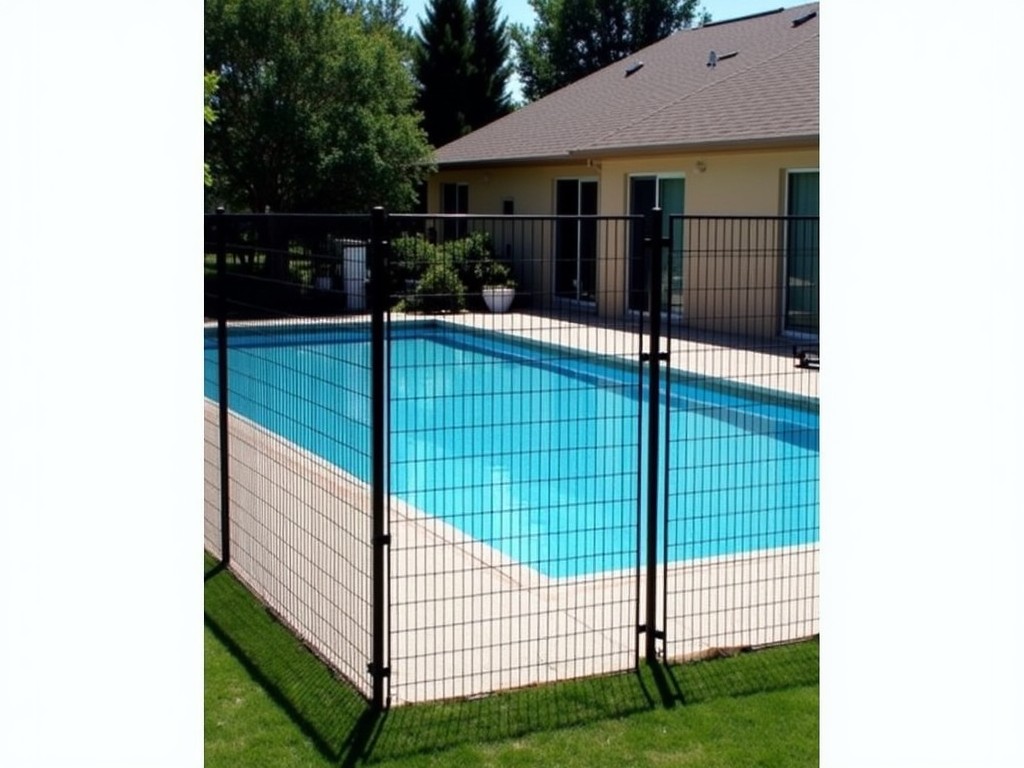
Product Categories


Send Inquiry
If you are interested in our products, leave your information here and we will be in touch shortly.