Flat Wrap Razor Wire Fence Installation
Flat wrap razor wire is a security barrier system designed for high-risk perimeters where traditional fencing is insufficient. Unlike concertina or spiral configurations, flat wrap features razor
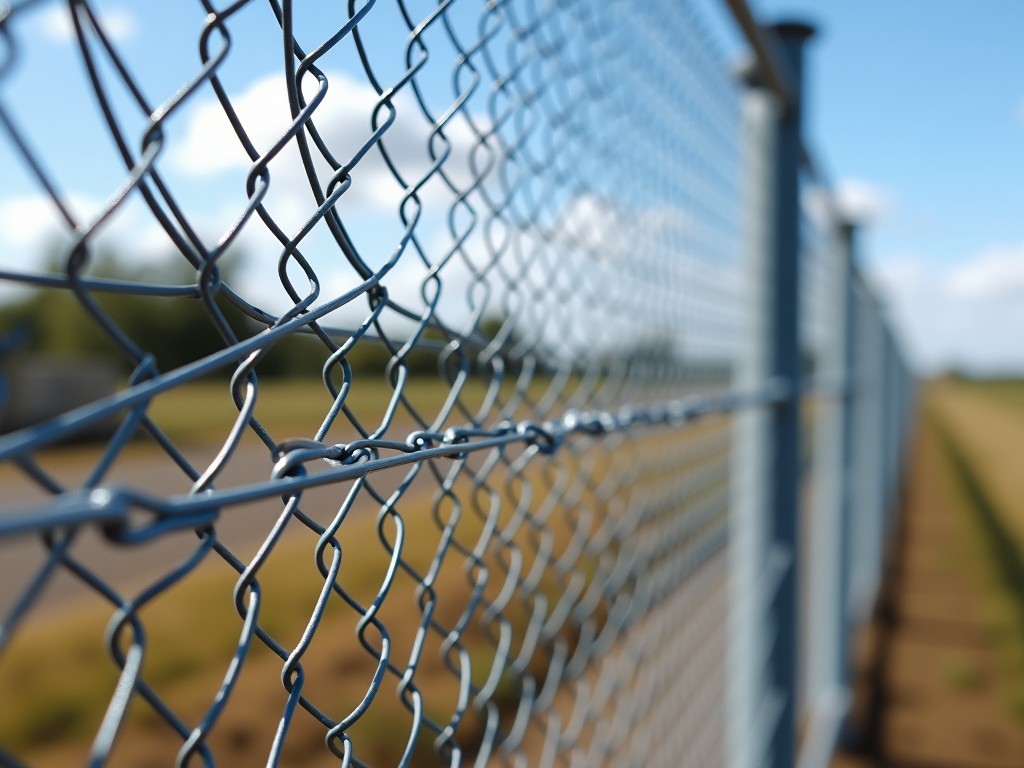
Flat Wrap Razor Wire Fence Installation: Technical Guide
Flat wrap razor wire is a security barrier system designed for high-risk perimeters where traditional fencing is insufficient. Unlike concertina or spiral configurations, flat wrap features razor blades welded to a central high-tensile wire in a planar arrangement, allowing for low-profile mounting on walls, fences, or ground-level installations. This configuration reduces visual intrusion while maintaining effective deterrence through sharp, closely spaced blades that impede climbing and cutting attempts. The system is commonly deployed in industrial facilities, correctional institutions, utility substations, and border security zones where unauthorized access poses significant operational or safety risks.
Installation methodology directly affects system performance and longevity. Proper tensioning, anchor spacing, and blade orientation are critical to prevent sagging, blade deformation, or premature corrosion. Unlike flexible barrier systems, flat wrap relies on precise geometric alignment to maintain its protective profile. Deviations in installation can create gaps or weak points that compromise the entire barrier’s effectiveness, making technical execution as important as material selection.
Material Composition and Structural Properties
The core wire in flat wrap razor wire is typically manufactured from galvanized steel with a minimum tensile strength of 1,700 MPa, providing resistance to stretching under environmental loads such as wind or thermal expansion. The razor blades are formed from cold-rolled stainless steel (AISI 304 or 316 grade) with a thickness of 0.5 mm, featuring a triple-point design that maximizes cutting efficiency while resisting deformation under impact. Blade spacing is standardized at 26 mm intervals along the core wire, resulting in approximately 38 blades per linear meter.
Galvanization is applied via hot-dip process to achieve a zinc coating weight of 275 g/m² (equivalent to G90 standard), offering corrosion protection in moderate environments. For coastal or industrial atmospheres with high chloride or sulfur exposure, optional stainless steel core wire (AISI 316L) is available, eliminating the need for galvanization and providing inherent resistance to pitting and crevice corrosion. Polymer coatings (such as PVC or PE) may be applied over the galvanized or stainless base for additional barrier protection and color customization, though they add minimal tensile contribution.
Blade geometry follows ISO 1461 standards for sharpness and durability, with each blade featuring three cutting edges ground to a 22-degree angle. This configuration ensures consistent performance across temperature extremes (-40°C to +80°C) and resists dulling from abrasive contact. The flat profile allows for direct mounting to surfaces using specialized brackets, minimizing stand-off distance compared to helical configurations.
Installation Methodology and Technical Requirements
Flat wrap razor wire is typically installed using a top-mounted or cantilevered bracket system attached to existing perimeter structures such as chain-link fences, concrete walls, or steel palisades. The wire is secured at intervals not exceeding 3.0 meters to prevent deflection under load, with end anchors designed to withstand a minimum tensile force of 15 kN. Intermediate supports use corrosion-resistant brackets (galvanized or stainless steel) that maintain the wire in a fixed planar orientation, preventing rotation or lateral movement that could reduce blade exposure.
Tensioning is achieved via turnbuckles or straining devices installed at terminal points, allowing for post-installation adjustment to compensate for thermal contraction or settlement. Initial tension is set to 8–10 kN at 20°C, calibrated to maintain blade alignment without over-stressing the core wire. Temperature compensation is critical: a 10°C change induces approximately 0.12% length change in steel, requiring tension adjustment in environments with seasonal variation exceeding 20°C.
Ground-level installations require a buried or surface-mounted base rail to prevent lifting, with the wire positioned 150–200 mm above finished grade to deter crawling while avoiding vegetation interference. All penetrations through weatherproofing membranes (e.g., on roof perimeters) must be sealed with compatible grommets or flashing to maintain building envelope integrity. Installation crews must use cut-resistant gloves and eye protection due to the inherent hazard of blade contact during handling.
Performance Characteristics and Limitations
The effective deterrence range of flat wrap razor wire is defined by its inability to be traversed without significant risk of injury. Testing indicates that attempting to climb over the barrier results in laceration risk within 0.5 seconds of blade contact, with fabric penetration occurring at forces below 50 N. Cutting attempts using standard bolt cutters (up to 24-inch length) require sustained force exceeding 3.5 kN per blade, making rapid breach impractical without specialized tools. The flat profile limits effectiveness against tunneling unless combined with buried sensors or concrete foundations.
Environmental factors influence long-term performance. UV exposure degrades polymer coatings over 5–7 years in direct sunlight, though the underlying metal corrosion protection remains intact. Accumulation of debris, snow, or vegetation between blades can reduce effective coverage, necessitating periodic inspection and cleaning in low-maintenance zones. In high-vibration environments (e.g., near heavy machinery or rail lines), resonant frequencies may cause wire fatigue; dampening brackets or reduced span lengths are recommended in such cases.
Unlike electrified systems, flat wrap provides passive security with no power consumption or maintenance of electronic components. However, it does not provide alarm functionality and should be integrated with surveillance or motion detection for comprehensive perimeter security. The system’s low visual footprint makes it suitable for architecturally sensitive sites where bulky barriers are prohibited, but it offers less psychological deterrence than highly visible options such as barbed tape or spike toppings.
Comparison with Alternative Perimeter Security Systems
| Parameter | Flat Wrap Razor Wire | Concertina Razor Wire | Barbed Tape |
|---|---|---|---|
| Profile Height | 20–25 mm | 50–75 mm (expanded) | 10–15 mm |
| Blade Density (per meter) | 38 | 30–40 (variable) | 50–60 |
| Installation Depth Required | Minimal (surface mount) | Requires stand-off brackets | None (adhesive or clip) |
| Tensile Strength (core wire) | 1,700 MPa | 1,500–1,700 MPa | 800–1,200 MPa |
| Corrosion Resistance (galvanized) | Moderate (G90) | Moderate (G60–G90) | Low (typically untreated) |
| Typical Use Case | Top-of-wall, ground-level, high-visibility sensitivity | Ground barriers, trench tops, temporary deployment | Low-risk perimeters, temporary fencing, aesthetic-sensitive zones |
The table above compares key technical attributes of flat wrap razor wire against common alternatives. Flat wrap offers a balance of low profile and structural integrity, making it suitable for installations where clearance is limited but mechanical durability is required. Concertina configurations provide greater initial obstacle depth due to helical expansion but require more complex anchoring and are prone to tangling during installation. Barbed tape, while visually discreet, lacks the tensile strength and blade geometry to resist determined cutting or climbing attempts over extended periods.
Quality Control and Manufacturing Considerations
Manufacturing begins with cold-drawing high-carbon steel wire to achieve the required tensile strength and dimensional consistency (core wire diameter: 2.5 ±0.1 mm). The wire undergoes hot-dip galvanization in a zinc bath maintained at 450°C, with coating thickness verified via magnetic induction gauges to ensure compliance with ASTM A123. Razor blades are stamped from stainless steel coil using progressive dies, with each blade inspected for edge angle (22° ±2°) and point symmetry using optical comparators.
Blade welding to the core wire is performed via resistance welding at precisely controlled amperage and duration to avoid overheating the stainless steel, which could reduce corrosion resistance. Post-welding, the entire strand undergoes a stress-relief bake at 200°C for 2 hours to minimize residual tension that could lead to wire creep. Final inspection includes a 100% visual check for blade alignment, coating continuity, and absence of burrs or sharp points on the wire core that could cause premature failure during handling.
Batch testing includes tensile strength verification (min. 15 kN break force), corrosion resistance via salt spray testing (ASTM B117, 500 hours minimum for galvanized), and blade retention testing (simulated impact at 5 J). Products are coiled with internal spacers to prevent blade-to-blade contact during transit, and each coil is labeled with material grade, coating type, length, and batch number for traceability. Custom lengths are available upon request, though standard coils are typically 50 or 100 meters to facilitate handling and installation efficiency.
Applications in Industrial and High-Security Environments
In power generation facilities, flat wrap razor wire is commonly mounted on the tops of perimeter walls surrounding substations and transformer yards. Its low profile minimizes visual impact on surrounding landscapes while preventing unauthorized access to energized equipment. The system is often integrated with vibration sensors mounted on the support structure to detect cutting or climbing attempts, providing a layered defense without altering the barrier’s physical footprint.
Water treatment plants and wastewater facilities utilize flat wrap on concrete containment walls to deter trespassing into hazardous zones involving chemical storage or open tanks. The corrosion-resistant stainless steel option is preferred in these environments due to exposure to chlorine, sulfuric acid, and humid conditions that accelerate degradation of standard galvanized coatings. Installation typically follows the curvature of civil structures, requiring flexible mounting brackets that maintain consistent blade orientation on radial surfaces.
Transportation infrastructure, including rail yards and airport perimeter zones, employs flat wrap on fencing adjacent to restricted zones where ground clearance is limited by utility conduits or drainage systems. The ability to install directly atop existing chain-link or weld-mesh fences reduces installation time and cost compared to systems requiring new posts or foundations. In correctional facilities, flat wrap is used on interior exercise yard walls to prevent escalation from climbing to more serious breaches, where its predictable performance and low maintenance requirements support long-term operational reliability.
For project-specific installation guidance, material selection, or technical documentation, contact our engineering team to discuss your perimeter security requirements.
Product Categories


Send Inquiry
If you are interested in our products, leave your information here and we will be in touch shortly.