Oem Temporary Fence For Inground Pool
Temporary fencing for inground pools serves as a critical safety barrier during construction, renovation, or maintenance phases when permanent enclosures are not yet installed or are temporarily
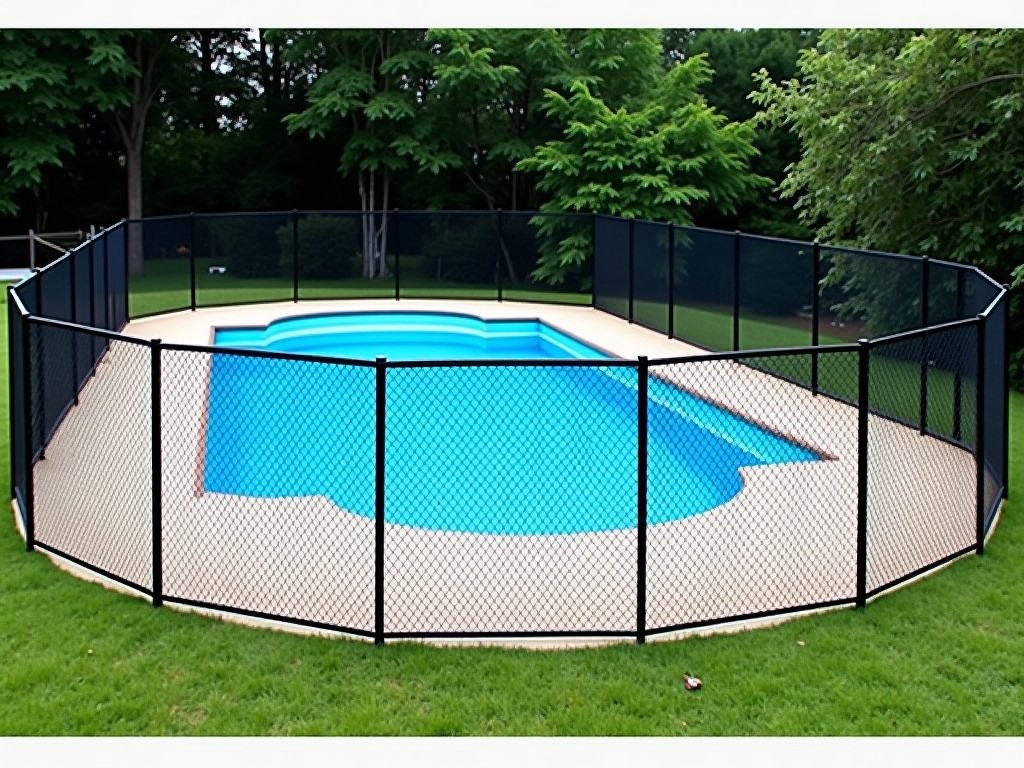
OEM Temporary Fence for Inground Pool
Temporary fencing for inground pools serves as a critical safety barrier during construction, renovation, or maintenance phases when permanent enclosures are not yet installed or are temporarily removed. Regulatory compliance often requires continuous protection to prevent unauthorized access, particularly by children or pets, to reduce drowning risks. These systems must balance rapid deployment with structural integrity to withstand environmental loads and accidental impacts while remaining non-invasive to surrounding landscapes or finished surfaces.
Unlike permanent pool fences, temporary systems prioritize modularity, ease of installation without tools, and reusability across multiple job sites. Materials are selected for corrosion resistance in humid, chlorinated environments and UV stability to prevent degradation under prolonged sun exposure. The design must accommodate uneven ground common around pool perimeters while maintaining consistent height and gap compliance with local safety codes.
OEM manufacturers focus on engineering solutions that meet jurisdictional requirements (such as ASTM F2286 or local building codes) while allowing customization for specific project constraints like access gate width, panel length, or anchoring method. Successful temporary fencing integrates safety, logistics, and cost-efficiency—reducing liability risks without adding unnecessary complexity to site workflows.
Key Design Characteristics
Panel height is typically standardized at 48 inches (1220 mm) to meet most residential pool safety regulations, which mandate a minimum barrier height to deter climbing. Vertical pickets are spaced no more than 4 inches apart to prevent sphere passage, a common test criterion for child entrapment prevention. The top and bottom rails are engineered to resist lateral deflection under wind loads or accidental impact, often using reinforced extrusion profiles or tubular steel with internal stiffeners.
Base systems vary depending on surface type: weighted stands with rubberized bases protect decorative concrete or pavers, while ground spikes are used for soil or grass areas to prevent lateral movement. Connection mechanisms between panels employ positive-locking couplers that resist disengagement under tension but allow quick release for reconfiguration. All hardware is designed to be tamper-resistant yet operable with standard tools for authorized personnel only.
Finish options include powder-coated steel in white, black, or dark green to blend with surroundings or meet aesthetic requirements; galvanized substrates provide baseline corrosion protection. For extended outdoor use, some systems incorporate marine-grade aluminum alloys to eliminate rust concerns entirely, though at a higher material cost. UV-stabilized PVC coatings may be applied to steel components in high-sunlight regions to extend service life.
Material Selection and Performance
Structural components are predominantly made from pre-galvanized steel (G90 or Z275 coating) formed into C-channel or tubular shapes for rails and pickets, offering a balance of strength, weight, and cost. The zinc coating provides sacrificial protection against moisture and chloride exposure common in pool environments. Alternative materials include extruded aluminum (6063-T5 alloy) for applications where weight reduction or non-magnetic properties are required, such as near sensitive electronic equipment.
Connectors and locking mechanisms often use glass-filled nylon or polycarbonate for durability, UV resistance, and electrical isolation—preventing galvanic corrosion when dissimilar metals are in contact. These polymers maintain impact strength down to -20°C and resist embrittlement from prolonged UV exposure. Fasteners are typically stainless steel (A2 or A4 grade) to avoid rust streaking and ensure long-term joint integrity.
Weighted bases are constructed from recycled HDPE or solid rubber, filled with sand or water ballast to achieve sufficient stability (typically 15–25 kg per base) without damaging underlying surfaces. Ground anchors are helical or augur-style steel stakes coated for corrosion resistance, designed to penetrate compacted soil to depths of 300–450 mm for reliable uplift resistance. Material selection is always evaluated against the expected duration of use, environmental conditions, and handling frequency on-site.
Customization Options for OEM Partners
OEM temporary fencing systems are engineered for adaptability to specific project requirements, beginning with panel dimensions. Standard panel widths range from 2 to 3 meters, but custom lengths can be produced to minimize on-site cutting and reduce installation time—particularly beneficial for irregular pool perimeters or tight access corridors. Height adjustments above 48 inches are available for jurisdictions with stricter codes or for temporary use around elevated pool decks.
Gate integration is a common customization request, with options ranging from single-panel self-closing gates to double-panel wide-access versions for equipment movement. Gate hardware includes adjustable hinges, magnetic latches, and lockable hasps, all designed to maintain code-compliant gap dimensions when closed. Color matching to corporate branding or site-specific aesthetics is achievable through custom powder coating, with RAL or Pantone references accepted for precise replication.
Additional features include reflective strips for low-visibility conditions, signage mounting points for safety warnings or site information, and removable bottom rails to accommodate uneven grading without compromising vertical picket alignment. OEMs can also specify packaging configurations—such as stackable pallets with protective corner guards or reusable returnable containers—to optimize logistics and reduce damage during transit between job sites.
Quality Control and Manufacturing Considerations
Production begins with incoming material inspection, where zinc coating thickness is measured via magnetic gauges and adhesion tested per ASTM D6577 to ensure corrosion protection longevity. Extruded aluminum profiles are checked for wall thickness tolerance and straightness using laser gauges, while polymer components undergo melt flow analysis to verify consistency in impact resistance and UV stabilizer concentration. Dimensional checks on cut-to-length panels are performed using jigs to maintain hole alignment for coupler insertion.
Welded assemblies (if applicable) are inspected for penetration and porosity using visual and dye penetrant methods, with particular attention to rail-to-picket joints that experience cyclic loading. Powder coating thickness is verified with magnetic gauges, aiming for 60–80 microns to balance coverage and flexibility; adhesion is tested via cross-hatch and tape methods per ASTM D3359. Final assembly includes functional testing of locking mechanisms under simulated wind and impact loads to confirm retention force exceeds 150 N without deformation.
Packaging is designed to prevent surface abrasion during transport—panels are separated by corrugated dividers or polyethylene sheets, and hardware kits are sealed in labeled bags to avoid loss. Each pallet includes a packing list with material batch numbers for traceability. Before shipment, random samples undergo accelerated weathering tests (UV exposure and salt spray) to validate finish durability, with results archived for quality audits.
Typical Applications in Pool Projects
During new pool construction, temporary fencing is installed immediately after excavation to secure the site perimeter before any structural work begins, preventing access to the open hole and protecting against equipment-related hazards. As the pool shell is formed and backfilled, the fence remains in place to safeguard the area during plumbing, electrical, and equipment installation phases—times when trenching and open conduits create additional risks.
In renovation projects, temporary barriers replace permanent fencing that has been removed for coping replacement, tile work, or deck resurfacing, ensuring continuous compliance with safety ordinances throughout the upgrade cycle. They are also used around spa or hot tub additions adjacent to existing pools where temporary isolation is needed during plumbing integration or electrical bonding.
Maintenance crews use these systems when draining pools for acid washing, liner replacement, or structural repairs, creating a secure zone around the empty basin to prevent accidents. Commercial facilities such as hotels or community centers deploy temporary fencing during off-season deep cleaning or filter system overhauls, allowing work to proceed without closing the entire facility to patrons. The reusability of the system makes it cost-effective for contractors managing multiple seasonal projects.
Comparison of Installation Methods
| Method | Surface Suitability | Installation Time | Stability Performance | Surface Impact |
|---|---|---|---|---|
| Weighted Base | Concrete, pavers, asphalt, wood decks | Low (no tools) | Moderate (depends on ballast) | None |
| Ground Spike | Soil, grass, gravel | Low (manual insertion) | High (penetration depth dependent) | Minimal (small hole) |
| Sandbag Ballast | All surfaces (with protective pad) | Moderate (filling required) | Adjustable | None (with barrier) |
| Surface Mount Bracket | Concrete, steel, wood (with anchors) | Moderate (drilling required) | Very High | Low (anchor points) |
Note: Values are typical; actual performance depends on specific product design, site conditions, and proper installation. Weighted bases require sufficient mass (e.g., 20 kg) to resist uplift in wind-exposed areas. Ground spike effectiveness varies with soil compaction and frost depth in colder climates.
Frequently Asked Questions
Can panel dimensions be customized for non-standard pool shapes?
Yes, panel width and height can be adjusted to match specific site geometries. Custom lengths reduce the need for field cutting and help maintain consistent picket spacing around curves or angles. Height modifications are available to meet local code variances or accommodate raised pool decks. Tooling adjustments may be required for significant deviations from standard profiles.
What information is needed to provide an accurate quotation?
Key details include total linear footage required, preferred installation method (weighted base, ground spike, etc.), desired panel height and width, gate specifications (number, width, locking type), finish color or material preference, and expected duration of use. Site surface type and wind exposure estimates also influence ballast or anchoring recommendations.
Are the materials safe for prolonged contact with chlorinated pool water?
Materials are selected for resistance to splash and humidity, not direct immersion. Structural components use coatings or alloys that withstand atmospheric chlorides and UV exposure. Continuous submersion is not recommended; the fence is intended as a perimeter barrier, not a water-contact component. For areas with frequent overspray, marine-grade aluminum or enhanced powder coating may be advised.
How is the fence secured against tampering or unauthorized removal?
Couplers use positive-locking mechanisms that require a tool to disengage, preventing accidental or casual separation. Gate hardware includes lockable hasps or integrated padlock eyes. While not designed as a high-security barrier, the system deters casual access and meets safety code requirements for child resistance when properly installed and maintained.
For technical specifications, customization requests, or project consultation, contact our engineering team to discuss your temporary pool fencing requirements.
Request Information
Product Categories


Send Inquiry
If you are interested in our products, leave your information here and we will be in touch shortly.