Oem Temporary Gate For Backyard
A temporary gate for backyard use provides controlled access during landscaping, construction, or event setup while maintaining site security and safety. Unlike permanent installations, these gates
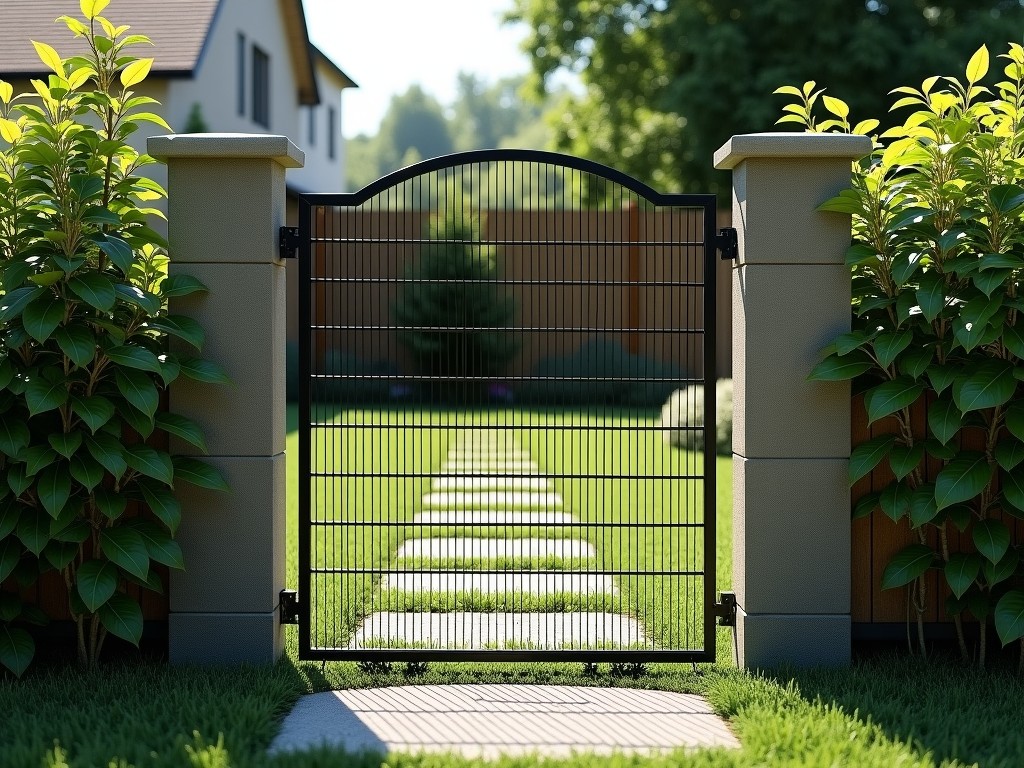
OEM Temporary Gate for Backyard
A temporary gate for backyard use provides controlled access during landscaping, construction, or event setup while maintaining site security and safety. Unlike permanent installations, these gates are designed for rapid deployment, reconfiguration, and removal without damaging existing structures or landscaping. OEM manufacturing allows precise adaptation to site-specific dimensions, load requirements, and environmental conditions. This approach reduces on-site fabrication time and ensures consistency across multiple units for large-scale projects.
Industrial buyers prioritize gate systems that minimize installation complexity while maintaining structural integrity under expected loads. Key considerations include material selection for corrosion resistance, connection methods that allow tool-free assembly, and stability under lateral forces such as wind or accidental impact. The temporary nature demands components that withstand repeated assembly cycles without degradation in performance. Compatibility with standard backyard surfaces—grass, soil, gravel, or pavers—is essential for effective load distribution.
Design and Structural Characteristics
The gate frame typically employs rectangular steel tubing with a minimum wall thickness of 2 mm to resist bending under distributed loads. Corner joints use gusseted plates or internal sleeves to maintain alignment during repeated assembly. Latch mechanisms incorporate spring-loaded pins with positive stops to prevent unintended disengagement under vibration. All load-bearing connections are designed for shear and tensile forces exceeding 1.5 times the anticipated service load, providing a safety margin for dynamic conditions.
Height options range from 0.9 m to 1.2 m to deter casual passage while allowing visibility over the gate. Widths are customizable in 0.1 m increments from 0.8 m to 2.4 m to accommodate pedestrian traffic, equipment movement, or temporary vehicle access. The gate leaf incorporates diagonal bracing or truss patterns to limit deflection under lateral loads to less than L/200, where L is the gate width. Surface treatments include hot-dip galvanizing or powder coating with a minimum thickness of 80 μm for outdoor durability.
Material Options and Performance
Material selection directly affects weight, corrosion resistance, and lifecycle cost. Carbon steel (e.g., Q235 or equivalent) provides high strength-to-weight ratio and is suitable for short-term use when protected with galvanizing or paint. Stainless steel grades 304 or 316 offer superior corrosion resistance in moist or chemically exposed environments, though at higher material cost. Aluminum alloys (e.g., 6061-T6) reduce system weight by approximately 40% compared to steel, easing handling and installation, but require larger cross-sections to match steel stiffness.
For projects requiring frequent relocation, aluminum may reduce labor costs despite higher initial material expense. In coastal or high-humidity regions, stainless steel minimizes maintenance needs over multiple reuse cycles. The choice between materials often depends on project duration, expected number of assembly cycles, and environmental exposure. All materials are sourced with mill test certificates to verify chemical composition and mechanical properties.
Customization and Integration
OEM production enables integration of site-specific features without compromising structural performance. Common customizations include adjustable-height posts to accommodate uneven ground, integrated wheel kits for manual relocation, and modular panels that allow gate width adjustment in the field. Locking provisions can accommodate padlocks, hasps, or electronic access control systems depending on security requirements. Infill options range from mesh panels for visibility and wind passage to solid barriers for privacy or dust containment.
Connection hardware is standardized to allow interchangeability between units from the same production batch. This simplifies spare parts management and ensures consistent performance across multiple gates. Custom branding, such as laser-etched logos or colored powder coating, can be applied for project identification without affecting structural properties. All custom features undergo design validation to confirm they do not create stress concentrations or impede assembly.
Quality Control and Manufacturing
Manufacturing begins with material verification upon receipt, including dimensional checks and coating thickness measurements. Cutting tolerances are held to ±0.5 mm for critical interfaces, and hole positions are verified using CNC drilling or punching to ensure alignment during assembly. Welded joints, where employed, follow ISO 9606-1 standards with visual and dye penetrant inspection on 100% of load-bearing seams. Non-welded connections use torque-controlled fasteners to prevent over-tightening or under-tightening.
Finished units undergo functional testing: latch engagement is verified over 50 cycles, and frame rigidity is checked by applying a 150 N lateral load at mid-height and measuring deflection. Surface coating adhesion is tested via cross-hatch tape test per ASTM D3359. Packaging includes corner protection and moisture barriers to prevent damage during transit. Each unit is labeled with a unique identifier for traceability to material batches and inspection records.
Applications in Residential and Light Commercial Settings
Temporary gates are commonly deployed during backyard renovations to control access for contractors while keeping children and pets out of work zones. They provide a physical barrier that is more reliable than signage or rope barriers, reducing the risk of unauthorized entry into hazardous areas. In landscaping projects, gates prevent soil compaction from foot traffic in protected zones and help maintain clean separation between active work areas and finished sections.
For outdoor events such as parties, weddings, or community gatherings, temporary gates manage pedestrian flow, control access to vendor areas, or secure equipment storage. Their reusability makes them cost-effective for recurring events compared to single-use alternatives. In light commercial settings like property management or utility maintenance, they secure temporary work zones during sidewalk repairs or landscaping updates without requiring permanent modifications to fences or walls.
Comparison of Configuration Options
| Feature | Standard Configuration | Heavy-Duty Option | Lightweight Option |
|---|---|---|---|
| Frame Material | Galvanized Steel (Q235) | Stainless Steel 304 | Aluminum 6061-T6 |
| Wall Thickness | 2.0 mm | 2.5 mm | 2.5 mm |
| Max Width | 2.0 m | 2.4 m | 1.8 m |
| Weight (1.0m x 1.0m) | 12 kg | 14 kg | 7 kg |
| Typical Use Case | General backyard projects | High-wind or security-sensitive areas | Frequent relocation, low-lift requirements |
Ordering and Technical Support
Quotation requires specification of gate dimensions (height and width), expected load conditions, project duration, and environmental exposure. Provide details on ground surface type to determine appropriate footing or base plate design. If integration with existing structures is needed, share attachment points and clearance constraints. For projects requiring multiple units, specify whether interchangeable parts or standardized locking are priorities.
Lead time typically ranges from 2 to 4 weeks for standard configurations, depending on material availability and order volume. Custom features such as special coatings, non-standard dimensions, or integrated hardware may extend timelines. Samples are available upon request for validation of fit, finish, and function before full production. Technical support includes assembly instructions, load rating documentation, and maintenance guidance for reusable systems.
To discuss your specific temporary gate requirements or request a detailed quotation, contact our engineering team.
Request Quotation
Product Categories


Send Inquiry
If you are interested in our products, leave your information here and we will be in touch shortly.