Oem Temporary Security Fencing For Sale
Temporary security fencing provides a rapidly deployable barrier for site protection, crowd control, and asset safeguarding during construction, events, or emergency response. Unlike permanent
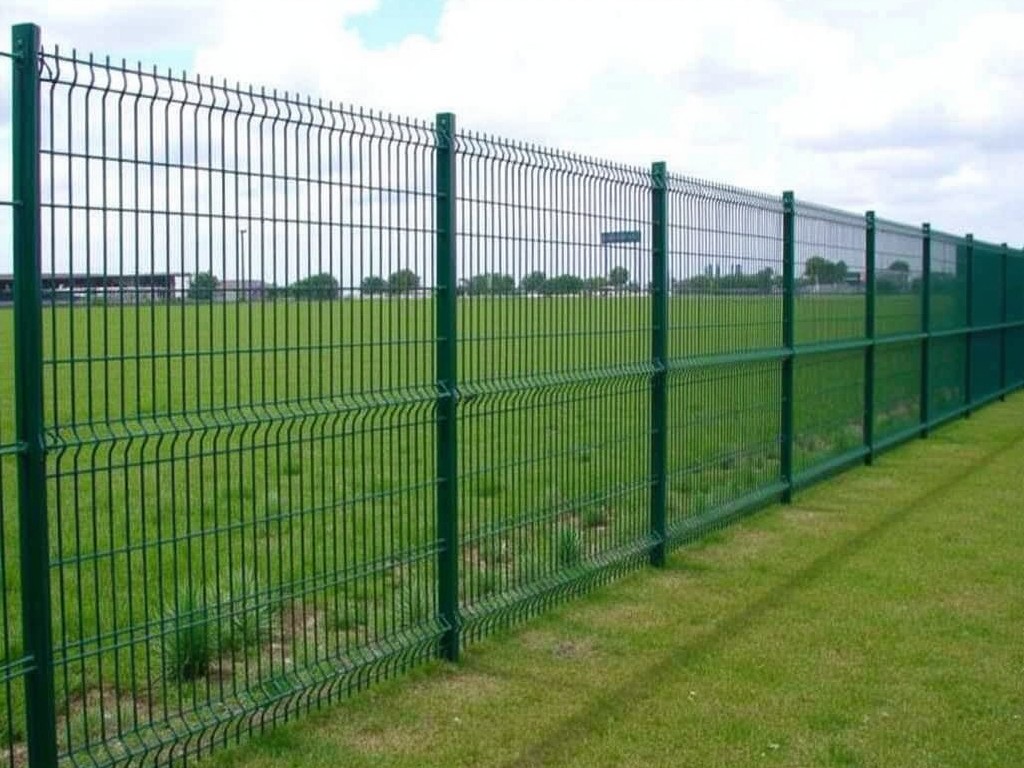
OEM Temporary Security Fencing for Sale
Temporary security fencing provides a rapidly deployable barrier for site protection, crowd control, and asset safeguarding during construction, events, or emergency response. Unlike permanent installations, these systems prioritize ease of assembly, reusability, and transport efficiency while maintaining structural integrity under specified load conditions. Industrial buyers evaluate such systems based on material performance, connection reliability, and compliance with regional safety standards for temporary works.
OEM supply channels enable integration of fencing components into broader site security packages or rental fleets, allowing customization of dimensions, finish, and accessory compatibility to match specific operational workflows. This page details the technical characteristics of standard temporary security fencing systems available for OEM procurement, focusing on measurable engineering parameters rather than subjective claims.
Structural System Design
Panel-based temporary fencing typically consists of welded wire mesh or tubular frame infill connected via standardized couplers. The primary structural behavior relies on the flexural rigidity of the vertical posts and the shear transfer efficiency of the coupling mechanism under lateral loads such as wind pressure or accidental impact. Design considerations include post embedment depth, base stability, and the system’s natural frequency to avoid resonant amplification under dynamic loading.
Common configurations use 2.1m high panels with 25mm square tube verticals and 38mm diameter horizontal rails, forming a rigid rectangle that resists deformation. The wire mesh infill, usually 50x50mm aperture with 3.0mm wire, provides visibility while preventing climb-through. Couplers are forged steel components designed to engage with minimal play, ensuring load paths remain concentric to avoid stress concentrations at connection points.
Material Specifications
Material selection directly affects corrosion resistance, weight, and lifecycle cost. Vertical and horizontal structural members are predominantly cold-formed steel tubing meeting ASTM A500 Grade B or equivalent, with minimum yield strength of 355 MPa. Surface preparation includes degreasing and phosphating prior to application of protective coatings.
Two primary finish options are available: hot-dip galvanization per ASTM A123 (minimum 610 g/m² zinc coating) for environments with moderate corrosion exposure, or powder-coated finishes over galvanized substrates for aesthetic requirements and additional barrier protection. Wire mesh infill is typically manufactured from low-carbon steel wire, either pre-galvanized or coated post-weaving to match frame durability.
Connection and Stability Mechanisms
The integrity of temporary fencing under load depends critically on the coupler design and base support system. Standard couplers use a pin-and-lug arrangement with a minimum shear capacity of 8.5 kN per connection, verified through static testing per PAS 68:2013 or equivalent impact performance benchmarks. This ensures that panel-to-panel forces are transferred without slip or permanent deformation under design wind loads of 0.6 kN/m².
Stability is achieved through weighted bases or ground anchors. Concrete ballast blocks (typically 25kg each) provide lateral resistance through friction, while ground spikes or U-bolts engage soil for softer surfaces. The system’s overturning moment resistance is calculated based on the height-to-base ratio and the coefficient of friction between base and substrate, with minimum safety factors of 1.5 against sliding and 2.0 against overturning.
For uneven terrain, adjustable base plates allow post verticality correction within ±5°, maintaining uniform load distribution across all connections. This adaptability reduces the need for site grading and ensures consistent panel alignment during rapid deployment.
Standard Dimensions and Configuration Options
While project-specific dimensions are common, standard panel sizes facilitate inventory management and predictable logistics. The most frequently specified configuration balances coverage efficiency with handling practicality for two-person installation teams.
| Parameter | Typical Value | Notes |
|---|---|---|
| Panel Height | 2100 mm | Measured from top of base to top of horizontal rail |
| Panel Width | 2500 mm | Center-to-center of adjacent posts |
| Mesh Aperture | 50 x 50 mm | Square opening, center-to-center |
| Wire Diameter | 3.0 mm | Low-carbon steel, pre-galvanized |
| Vertical Post Size | 25 x 25 mm SHS | Cold-formed, ASTM A500 Grade B |
| Horizontal Rail Size | 38 mm diameter CHS | Round tube, welded to posts |
| Coupler Type | Forged steel pin-and-lug | Minimum shear capacity 8.5 kN |
| Base Weight (per foot) | 25 kg | Concrete, with recessed socket for post |
Custom lengths, heights up to 3000mm, and alternative mesh patterns (e.g., 75x50mm for reduced wind load) are available upon request. Vertical posts can be extended with sleeved sections for uneven ground compensation, and horizontal rails may omit the top tube in low-risk applications to reduce weight and material cost.
Surface Treatment and Durability
Corrosion protection is a key determinant of service life, especially for systems stored outdoors between deployments. Hot-dip galvanization provides sacrificial protection through zinc metallurgy, with coating thickness directly proportional to expected time to first maintenance in a given environment. Powder coating over galvanized steel adds a barrier layer that inhibits moisture and chloride ingress, extending lifespan in coastal or industrial atmospheres.
The powder coating process typically uses epoxy-polyester hybrids with a minimum film thickness of 80μm, tested for adhesion (ASTM D3359) and impact resistance (ASTM D2794). Color options are not limited to standard safety hues; custom RAL matches are feasible for branding or site-specific visibility requirements. Edge coverage on tubular members is critical and is verified through cross-section analysis during quality control.
For rental fleets undergoing frequent assembly cycles, abrasion resistance at coupler contact points is addressed through hardened steel inserts or nylon bushings to prevent galling and maintain consistent engagement torque over hundreds of cycles.
Deployment and Handling Characteristics
Operational efficiency depends on the system’s weight, pack size, and ease of connection. A standard 2.1m x 2.5m panel with concrete base averages 42kg, allowing manual handling by two personnel without mechanical aids. When nested, panels occupy approximately 0.18m³ per unit in storage or transport, facilitating efficient truck loading.
Connection time averages 45 seconds per joint for experienced crews, facilitated by the self-aligning nature of the pin-and-lug coupler. Disconnection requires only a hammer or pry bar to release the pin, with no damage to components under normal use. The system’s modularity allows for straight runs, 90-degree corners, and curved configurations using adjustable couplers or panel cutting (with deburring and re-coating of cut ends).
Accessory compatibility includes gate frames (single or double leaf), pedestrian turnstiles, and barrier arms for vehicle control. These interfaces use the same coupler standard, ensuring structural continuity. Signage mounting provisions, such as pre-drilled holes or clamp brackets, are available for attaching warnings, directions, or branding without compromising panel integrity.
Quality Control and Testing
Manufacturing consistency is verified through dimensional inspection, mechanical testing, and coating assessment. Critical dimensions such as post spacing, coupler lug alignment, and mesh tension are checked at 100% frequency during final assembly. Mechanical properties of raw materials are validated via mill certificates, with spot tensile and bend tests conducted per batch.
Coupler shear strength is validated through destructive testing of random samples from each production lot, with results tracked against specification limits. Coating thickness is measured using magnetic or eddy current gauges at multiple points per panel, with non-conforming items routed for rework. Visual inspection under standardized lighting identifies weld defects, coating holidays, or deformation from handling.
Packaging for OEM shipment includes stretch-wrapped pallets with corner protectors and moisture-barrier liners for overseas transport. Each pallet is labeled with SKU, batch number, and QC pass status, enabling traceability. Documentation packages include material test reports, coating certificates, and installation guidelines upon request.
Applications in Temporary Security
Temporary security fencing serves distinct functional roles depending on the site hazard profile. In construction environments, the primary objective is perimeter delineation to prevent unauthorized entry and protect the public from hazards such as falling debris, open excavations, or moving plant equipment. The system’s visibility and climb resistance support compliance with local ordinances governing site security.
For public events, crowd management relies on the fencing’s ability to channel flow, create queues, and establish sterile zones around stages or VIP areas. The modular design allows rapid reconfiguration as attendance patterns shift, and the absence of sharp edges minimizes injury risk during high-density scenarios. Emergency response scenarios prioritize deployment speed; systems must be usable on unprepared surfaces within minutes of arrival, making weight and connection simplicity critical factors.
In utility or infrastructure projects, temporary fencing protects work zones from traffic intrusion while maintaining sight lines for drivers. The open mesh design reduces wind loading compared to solid barriers, decreasing the required ballast weight and improving stability in exposed locations. Additionally, the system’s reusability supports multiple phases of long-term projects, reducing lifecycle cost compared to single-use alternatives.
OEM Customization and Integration
OEM buyers often require fencing systems that integrate seamlessly with complementary security products such as surveillance towers, lighting units, or access control hardware. Customization begins with defining the interface points—whether mechanical, electrical, or data-related—and specifying tolerances to ensure reliable attachment without inducing stress concentrations.
Common modifications include powder-coated finishes in corporate colors, integration of conduit runs within horizontal rails for powering CCTV or lighting, and pre-drilled flange patterns for mounting sensor brackets or antenna masts. Mesh aperture can be adjusted to balance visibility with object retention needs—for example, smaller apertures to prevent small tool passage while maintaining airflow.
Packaging options are tailored to the OEM’s logistics model: individual cartons for retail-style distribution, bulk-stacked pallets for rental fleet replenishment, or custom crates for air freight. Labeling and barcoding can be applied during packaging to support inventory management systems. All customizations are subject to engineering review to confirm that structural performance remains within certified limits.
For technical inquiries, customization requests, or to request a detailed specification sheet, contact our engineering team.
Request Technical Specification
Product Categories


Send Inquiry
If you are interested in our products, leave your information here and we will be in touch shortly.