Oem Wire Mesh Fence Manufacturers
Wire mesh fencing systems are engineered barriers designed for industrial perimeter security, animal containment, and site demarcation. Unlike standard retail fencing, OEM wire mesh fence
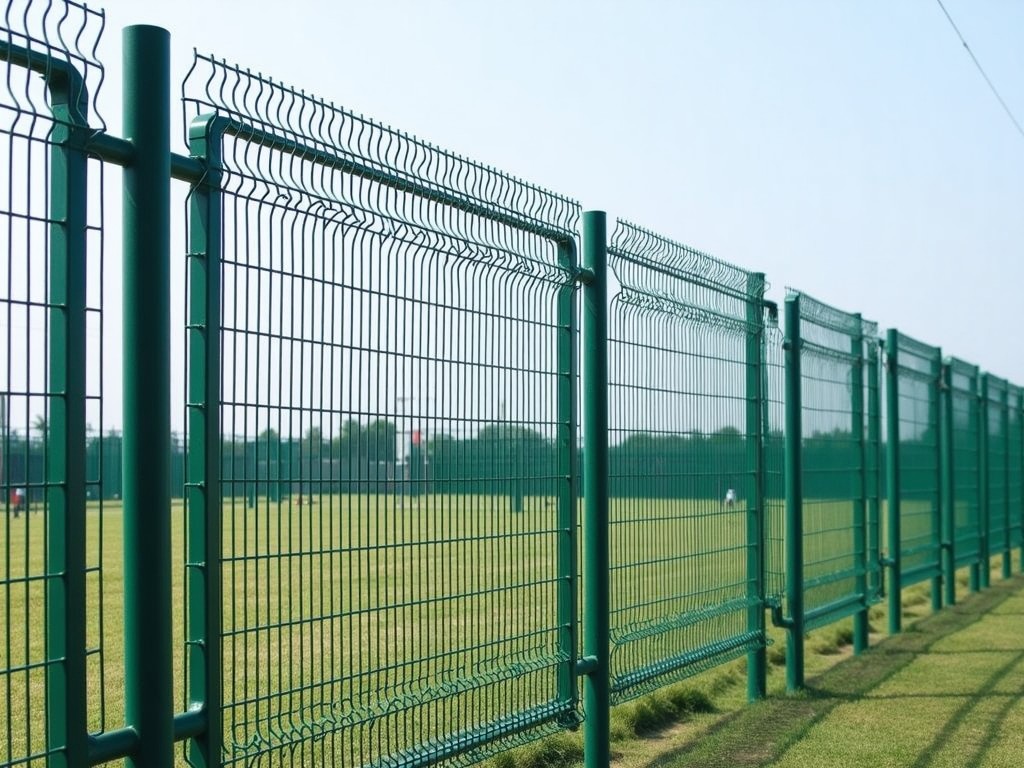
OEM Wire Mesh Fence Manufacturers
Wire mesh fencing systems are engineered barriers designed for industrial perimeter security, animal containment, and site demarcation. Unlike standard retail fencing, OEM wire mesh fence manufacturers produce custom configurations based on client specifications for wire diameter, aperture size, panel dimensions, coating type, and structural reinforcement. These products serve applications where off-the-shelf solutions fail to meet load requirements, environmental exposure limits, or integration needs with automated gates and surveillance systems. The manufacturing process involves precision welding or weaving of steel wires followed by surface treatment to ensure long-term performance under specific environmental stressors.
Material Selection and Corrosion Protection
Base materials typically include low-carbon steel wire (ASTM A641) or stainless steel grades (304, 316) selected based on tensile strength requirements and environmental conditions. For outdoor industrial sites, zinc coating via hot-dip galvanization (ASTM A123) provides sacrificial protection, with coating weights ranging from 60 to 300 g/m² depending on exposure severity. In marine or chemical processing environments, polymer coatings such as PVC or PE are applied over galvanized substrates to create a dual-barrier system, reducing chloride penetration and extending service life beyond 25 years in aggressive conditions.
Wire Diameter and Aperture Configuration
Wire diameter directly influences structural rigidity and impact resistance, with common ranges from 2.0 mm for light-duty partitioning to 5.0 mm or higher for high-security perimeters. Aperture size—defined as the clear opening between wires—affects both visibility and climb resistance; smaller apertures (e.g., 50x50 mm) deter hand-and-foot holds, while larger openings (100x100 mm or more) reduce wind load and material cost. Manufacturers adjust these parameters based on risk assessment: correctional facilities often specify 2.5–3.0 mm wire with 50x75 mm apertures, whereas agricultural enclosures may use 2.0 mm wire with 100x150 mm apertures to balance cost and livestock containment.
Panel Dimensions and Structural Integration
Standard panel heights range from 1.2 m to 3.0 m, with widths typically between 2.0 m and 2.5 m to facilitate handling and installation. For uneven terrain or curved perimeters, manufacturers produce tapered or curved panels using incremental width adjustments along the length. Structural integration points—such as post attachment brackets, tension wire loops, and grounding lugs—are designed during the CAD phase to match client-specified post types (e.g., H-beam, circular tube, or concrete-embedded anchors). Custom flange patterns or pre-drilled holes eliminate field drilling, reducing installation time and ensuring alignment accuracy.
Surface Treatment Options and Lifecycle Performance
Beyond basic galvanization, surface treatments include thermal diffusion galvanizing (providing uniform coating on complex geometries), aluminizing for high-temperature stability, and epoxy/polyester powder coating for color-coded zones or UV resistance. Performance validation often involves salt spray testing (ASTM B117) for 1,000+ hours to verify coating adhesion and creep resistance. Manufacturers may also conduct accelerated weathering (QUV or Xenon arc) to assess polymer coating degradation under UV exposure, ensuring color retention and flexibility remain within spec over the intended service life.
Quality Control and Testing Protocols
Incoming wire undergoes tensile and elongation testing to confirm compliance with specified mechanical properties. During production, weld shear strength is verified through destructive testing of sample joints, with typical requirements exceeding 90% of the parent wire’s tensile strength. Coating thickness is measured via magnetic induction or coulometric methods at multiple points per panel, with non-conforming sections rejected before packaging. Final inspection includes dimensional verification (aperture, wire alignment, squareness) and visual assessment for defects such as missed welds, coating pinholes, or deformation.
Applications Across Industrial Sectors
In power generation facilities, wire mesh fences secure transformer yards and switchgear enclosures where electromagnetic interference must be minimized—non-magnetic stainless steel or aluminum-coated variants are preferred. Transportation infrastructure uses these systems for right-of-way protection along railways and highways, where resistance to wind-induced vibration and debris impact is critical. Wastewater treatment plants specify chlorine-resistant coatings to withstand off-gas exposure, while data centers integrate grounded mesh panels into perimeter security to attenuate RF interference. Each application drives specific material and geometric choices rather than generic specifications.
Customization Workflow and Engineering Support
OEM manufacturers begin with a technical consultation to gather site-specific data: wind load maps, soil resistivity reports, threat assessments, and integration requirements with access control systems. CAD models are generated to simulate panel deflection under load and coating performance under environmental stressors. Prototypes may be produced for destructive testing or installation trials before full-scale production. Documentation includes material test certificates, coating compliance reports, and installation guides tailored to the project’s sequencing and crew expertise.
Packaging and Logistics for Industrial Delivery
Panels are typically bundled in groups of 5–10 units using steel straps and corner protectors to prevent bending during transit. For overseas shipments, waterproof wrapping and vapor-corrosion inhibitors (VCI) are added inside the packaging to mitigate moisture exposure during container transport. Each bundle includes a packing list referencing the purchase order, heat number, and coating batch for traceability. Manufacturers may also provide CNC-cut base plates or pre-assembled post kits to reduce on-site labor, particularly for remote or time-sensitive installations.
Comparison of Common Specifications
| Parameter | Light-Duty Partitioning | Standard Industrial Perimeter | High-Security Enclosure |
|---|---|---|---|
| Wire Diameter | 2.0–2.5 mm | 2.5–3.5 mm | 3.5–5.0 mm |
| Aperture Size | 75x75 mm or 100x100 mm | 50x100 mm or 75x75 mm | 50x50 mm or 50x75 mm |
| Coating Type | Electro-galvanized | Hot-dip galvanized | Hot-dip galvanized + PVC |
| Typical Height | 1.2–1.8 m | 1.8–2.4 m | 2.4–3.0 m |
Selecting an OEM wire mesh fence manufacturer requires evaluating their ability to translate operational requirements into engineered specifications rather than simply catalog products. Buyers should request documentation of material traceability, process control records, and past performance in similar environments. A manufacturer’s willingness to engage in joint engineering reviews—covering load calculations, coating life prediction, and installation methodology—indicates a partnership approach that reduces long-term risk. The final decision hinges on technical alignment, not price alone, as premature failure due to underspecified materials or poor coating adhesion incurs far greater lifecycle costs than initial investment.
Product Categories


Send Inquiry
If you are interested in our products, leave your information here and we will be in touch shortly.