Outdoor Portable Fence With Gate
An outdoor portable fence with gate is a modular barrier system designed for temporary or semi-permanent enclosure in variable environments. It combines rigid panel construction with integrated
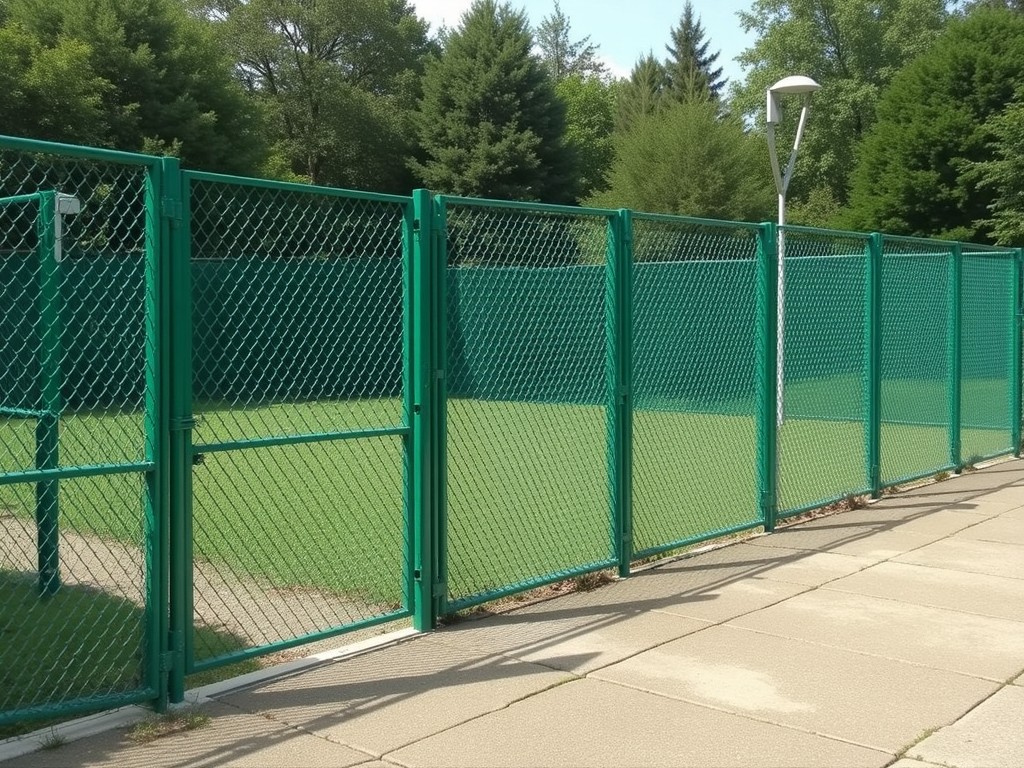
Outdoor Portable Fence with Gate
An outdoor portable fence with gate is a modular barrier system designed for temporary or semi-permanent enclosure in variable environments. It combines rigid panel construction with integrated gating to allow controlled pedestrian or equipment access while maintaining perimeter integrity. Unlike fixed installations, these systems prioritize rapid deployment, reconfigurability, and transportability without sacrificing structural stability under expected loads.
Core components include interconnecting fence panels, a self-contained gate unit, ground anchoring mechanisms, and locking hardware. Panels typically feature tubular steel or aluminum frames with infill options such as welded wire mesh, perforated metal, or polycarbonate sheets. The gate mirrors panel construction but incorporates hinges, a latch system, and often a drop rod or floor socket for secure closure. Design emphasis is placed on weight distribution, corner stability, and gate alignment under repeated use cycles.
Portability is achieved through lightweight materials, standardized connection interfaces (e.g., pin-and-collar, clamp, or bolt-through systems), and optional wheel kits or fold-flat configurations. Systems are engineered to withstand wind loads per local codes (e.g., ASCE 7) and resist accidental impact from equipment or personnel. Surface treatments include hot-dip galvanizing, powder coating, or anodizing to mitigate corrosion in outdoor exposure.
Key Technical Characteristics
Panel dimensions commonly range from 1.0 m to 2.5 m in width and 1.0 m to 2.4 m in height, balancing coverage area with manual handling limits. Frame tubes typically use 38 mm to 50 mm diameter steel (e.g., Q235) or 6063-T5 aluminum with wall thicknesses between 1.2 mm and 2.0 mm. Infill mesh openings are often 50 mm x 50 mm or 75 mm x 50 mm to prevent climbing while maintaining visibility and airflow.
Gate leaf width usually matches panel width (e.g., 1.0 m or 1.2 m) for seamless integration, with height matching adjacent panels. Hinges are heavy-duty butt or pivot types rated for 10,000+ cycles, often incorporating self-lubricating bushings. Latch mechanisms include gravity drop bolts, slide bolts, or lockable hasps compatible with padlocks or integrated cylinder locks. Ground clearance beneath the gate is typically 50 mm to 100 mm to accommodate uneven terrain.
Connection systems vary by model: pin-and-collar allows tool-free assembly in <30 seconds per joint; clamp systems use over-center levers for preload adjustment; bolt-through flanges provide highest shear resistance for semi-permanent setups. Corner stability is enhanced via diagonal bracing kits or weighted base plates (e.g., 20 kg cast iron) when ground penetration is impractical.
Material Options and Performance Implications
Frame material selection directly impacts weight, corrosion resistance, and lifecycle cost. Steel frames offer higher tensile strength (350–550 MPa) and lower material cost but require protective coatings to prevent rust in humid or saline environments. Aluminum frames (density ~2.7 g/cm³ vs steel’s 7.8 g/cm³) reduce system weight by 40–60%, improving portability and reducing ground bearing pressure, though they exhibit lower modulus of elasticity (~69 GPa vs 200 GPa for steel), increasing deflection under lateral loads.
Infill options serve distinct functional priorities. Welded wire mesh (e.g., 3.0 mm diameter wire) provides high visibility, low wind drag, and cost efficiency but limited aesthetic screening. Perforated metal panels (e.g., 1.0 mm thick steel with 6 mm holes staggered at 10 mm) offer moderate privacy and improved impact resistance while maintaining airflow. Solid polycarbonate or acrylic sheets (typically 3–6 mm thick) provide visual blocking and UV resistance but increase wind load and require careful edge sealing to prevent moisture ingress.
Surface treatments are specified per environmental exposure. Hot-dip galvanizing (Zn coating >55 µm) provides sacrificial protection for steel in C3–C4 atmospheres. Powder coating (epoxy or polyester, 60–80 µm thickness) adds UV stability and color options over galvanized substrates. Anodized aluminum (15–25 µm oxide layer) resists fading and chalking in prolonged UV exposure. All coatings undergo adhesion and salt spray testing (ASTM B117) per batch.
Typical Applications and Suitability
Construction sites use these systems to delineate hazardous zones, secure material storage, or control site access points where permanent fencing is impractical due to phased work or lease restrictions. The ability to reposition gates as workflows change reduces reconfiguration time compared to relocating fixed posts and chains. Panels withstand incidental contact from excavators or delivery trucks when properly ballasted or staked.
Event management relies on portable fencing with gates for crowd control, VIP area separation, and back-of-house access at festivals, sports tournaments, and public gatherings. Quick-release connections allow installation in <2 hours per 100 linear meters by two technicians. Gate units integrate with ticket scanning or credential verification systems, and their low visual profile maintains sightlines while preventing unauthorized crossover.
Agricultural and livestock operations deploy these fences for rotational grazing, temporary penning during veterinary procedures, or protecting newly seeded areas. Corrosion-resistant coatings (e.g., hot-dip galvanized steel) withstand ammonia, moisture, and UV exposure. Gate widths accommodate livestock passage (e.g., 1.2 m for cattle) while preventing escape through ground clearance optimization and secure latching under animal pressure.
Customization and Configuration Logic
Panel length is often customized to match site-specific run dimensions, reducing the number of joints and potential weak points. Standard increments are 250 mm or 500 mm, limited by material handling and transportation constraints (e.g., max 2.4 m length for pallet shipping). Height adjustments are achieved via modular frame extensions or variable infill cutting, though taller panels (>2.4 m) may require intermediate posts or guy wires for wind stability.
Gate configuration adapts to access requirements: single-leaf for pedestrian flow, double-leaf for wide equipment passage (e.g., 2.4 m total opening), or sliding variants where swing space is limited. Latch height is typically set between 900 mm and 1100 mm from ground for ergonomic operation, adjustable via striker plate placement. Lock compatibility is specified during design—common options include hasp-and-staple for padlocks, euro-cylinder mortise locks, or electronic access control integration.
Additional features include integrated leveling feet for uneven terrain, wheel kits with lockable casters for frequent repositioning, and solar-powered lighting kits mounted on gate posts for low-light visibility. Custom infill patterns (e.g., laser-cut logos or signage areas) are available upon request, though they may affect structural integrity and require engineering review.
| Parameter | Typical Range | Notes |
|---|---|---|
| Panel Width | 1.0 m – 2.5 m | Limited by manual handling and transport |
| Panel Height | 1.0 m – 2.4 m | Taller heights require bracing |
| Frame Tube Diameter | 38 mm – 50 mm | Steel or aluminum |
| Frame Wall Thickness | 1.2 mm – 2.0 mm | Affects weight and rigidity |
| Gate Leaf Width | 0.8 m – 1.5 m | Matches panel width typically |
| Gate Height | 1.0 m – 2.4 m | Aligns with adjacent panels |
| Infill Mesh Opening | 50 mm x 50 mm | Standard anti-climb |
| Coating Thickness (Zn) | >55 µm | Hot-dip galvanized steel |
| Wind Load Resistance | Up to 100 km/h | Depends on anchoring and height |
Quality Control and Manufacturing Considerations
Dimensional accuracy is critical for interchangeable panels and gate alignment. Frame cutting tolerances are held to ±1.0 mm, hole placement for pins or bolts to ±0.5 mm, and overall panel squareness verified via diagonal measurement (<5 mm deviation). Welded joints (if used) undergo 100% visual inspection and periodic tensile testing per AWS D1.1 standards. Powder coating thickness is measured with magnetic gauges at multiple points per panel to ensure uniformity.
Gate assemblies undergo functional cycling tests—typically 5,000 open/close sequences—to validate latch engagement, hinge wear, and drop bolt operation under load. Corner connections are proof-tested for shear and tensile strength using calibrated jacks, with results compared against FEA predictions. Material certificates (e.g., EN 10204 3.1) are retained for structural steel and aluminum extrusions, and coating batches are logged for traceability.
Packaging is designed to prevent damage during transit: panels are stacked with protective spacers between surfaces, gate hardware is bagged and labeled, and anchoring components are segregated. Palletized loads are secured with stretch wrap and corner boards. For export, ISPM 15-compliant wood or alternative materials (e.g., plastic, metal) are used for pallets, and moisture barriers are included in humid climates.
For technical inquiries, customization requests, or quotation details regarding outdoor portable fence with gate systems, please contact our engineering team.
Contact Us
Product Categories


Send Inquiry
If you are interested in our products, leave your information here and we will be in touch shortly.