Peak Fencing Hexagonal Wire Netting
Peak fencing hexagonal wire netting is a specialized form of woven wire mesh characterized by its uniform hexagonal openings, typically formed from galvanized steel wire. Unlike square or rectangular
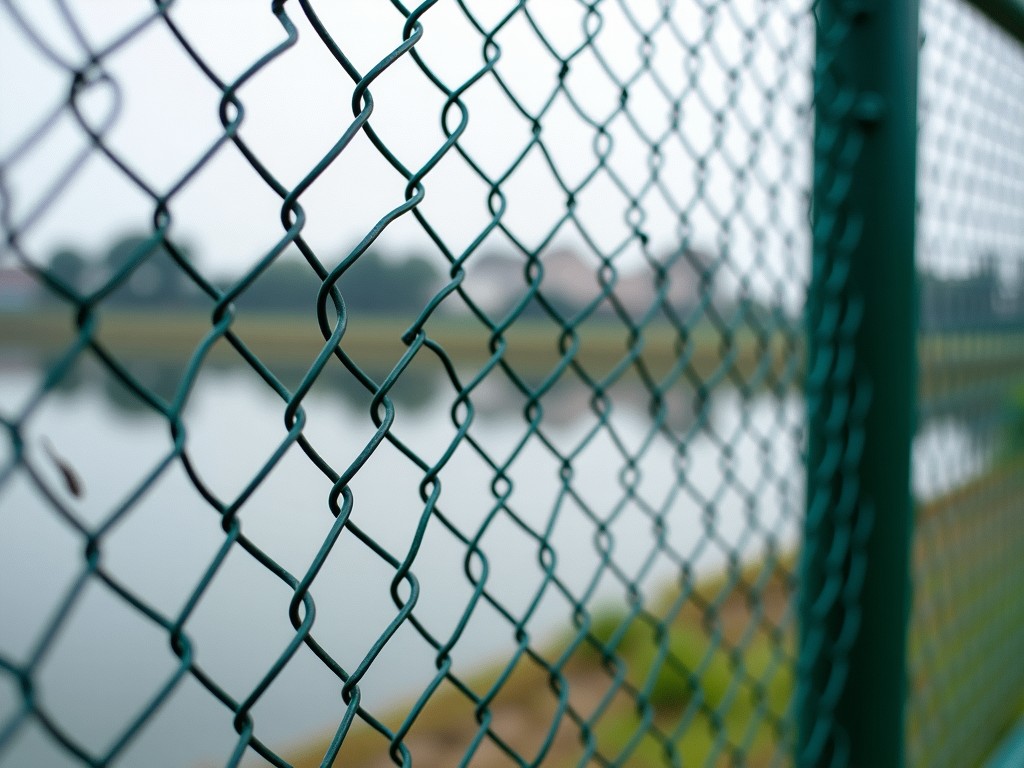
Peak Fencing Hexagonal Wire Netting
Peak fencing hexagonal wire netting is a specialized form of woven wire mesh characterized by its uniform hexagonal openings, typically formed from galvanized steel wire. Unlike square or rectangular mesh patterns, the hexagonal geometry provides isotropic strength distribution, meaning load is evenly dispersed in all directions across the mesh plane. This structural property makes it particularly effective for applications requiring resistance to multidirectional forces, such as soil retention, erosion control, and lightweight containment systems. The wire diameter and mesh aperture are engineered to balance flexibility with tensile integrity, allowing the netting to conform to irregular terrain while maintaining structural continuity under stress.
Material Composition and Corrosion Protection
The base material is typically low-carbon steel wire, selected for its ductility and weldability during the weaving process. To ensure longevity in outdoor environments, the wire undergoes hot-dip galvanization, where a zinc coating is metallurgically bonded to the steel surface. Standard coating weights range from 60 to 275 g/m² (measured as total zinc on both sides), with heavier coatings specified for aggressive environments such as coastal zones or industrial atmospheres. Alternative coatings include Galfan (zinc-5% aluminum-mischmetal alloy) for enhanced corrosion resistance in high-chloride or acidic conditions, and PVC extrusion over galvanized wire for applications requiring color coding or additional barrier protection against abrasion and chemical exposure.
Mesh Geometry and Mechanical Properties
Hexagonal aperture sizes commonly range from 13 mm to 100 mm, measured as the distance between parallel sides of the hexagon. Wire diameters typically vary from 0.8 mm to 3.0 mm, depending on the required tensile strength and flexibility. The tensile strength of the galvanized wire itself usually falls between 350 and 550 MPa, while the woven netting exhibits a burst strength proportional to wire diameter and inversely related to aperture size. For example, a 25 mm aperture with 2.0 mm wire demonstrates significantly higher resistance to localized puncture than a 50 mm aperture with the same wire size. These relationships allow engineers to specify mesh parameters based on anticipated loads, such as wind pressure on debris barriers or soil thrust in retaining applications.
Manufacturing Process and Quality Control
The weaving process involves forming a continuous helix from galvanized wire, which is then interlinked with adjacent helices to create the hexagonal pattern. This method ensures uniform tension across the mesh and eliminates weak points associated with spot welding or mechanical fastening. Quality control includes inline monitoring of wire diameter, coating thickness, aperture consistency, and roll tension. Finished rolls are inspected for uniform width, absence of skipped weaves, and edge integrity. Tensile sampling is conducted per batch to verify wire strength, and coating adhesion is tested using bend or impact methods to confirm resistance to cracking during handling and installation.
Applications in Industrial and Civil Engineering
Peak fencing hexagonal wire netting serves as a flexible reinforcement layer in geotechnical systems, where it is combined with soil or aggregate to create stabilized slopes and embankments. In erosion control, it retains soil particles while allowing vegetative growth through the openings, functioning as a permanent turf reinforcement mat when combined with biodegradable backing. In industrial settings, it is used as debris netting beneath elevated work platforms to contain falling tools or materials, relying on its energy-absorbing deformation to reduce impact forces. It also functions as a barrier mesh in wildlife exclusion systems, where the small aperture prevents entry of rodents or small mammals while maintaining visibility and airflow.
Comparison with Alternative Mesh Types
Compared to square mesh netting of equivalent wire diameter, hexagonal wire netting offers approximately 15–20% greater flexural rigidity due to the triangular load paths inherent in the geometry, reducing sag under self-weight or lateral loads. Unlike welded mesh, which relies on localized fusion points that can be corrosion initiation sites, the woven structure has no heat-affected zones, preserving uniform coating integrity. When contrasted with extruded plastic netting, hexagonal steel wire provides superior UV stability, higher temperature tolerance (up to 300°C for galvanized steel), and resistance to rodent gnawing, making it more suitable for permanent or semi-permanent installations in harsh environments.
Customization Options
Beyond standard galvanized finishes, hexagonal wire netting can be customized to meet specific project requirements. Available options include:
- Wire diameters from 0.8 mm to 4.0 mm
- Aperture sizes from 10 mm to 150 mm
- Roll widths from 0.5 m to 4.0 m
- Lengths up to 50 m per roll (dependent on wire diameter and aperture)
- Coating types: hot-dip galvanized, Galfan, PVC-coated, or stainless steel (grades 304/316)
- Edge treatments: selvaged, knuckled, or twisted for safety and handling
- Color options for PVC-coated variants: green, black, brown, or custom RAL matches
Custom specifications are evaluated based on mechanical performance needs, environmental exposure, and installation constraints. Engineers should provide aperture size, wire diameter, coating requirement, and roll dimensions to initiate a technical quotation.
Packaging and Handling
Rolls are wound onto rigid cardboard or plastic cores with inner diameter matching standard lifting equipment. Outer protection consists of UV-stabilized polyethylene film to prevent moisture ingress and coating damage during transit. Rolls are secured with biodegradable strapping and labeled with product code, dimensions, weight, and coating specification. For international shipments, fumigation-compliant packaging is available upon request. Typical roll weights range from 15 kg for light-duty specifications to over 100 kg for heavy-gauge, wide-width configurations, necessitating mechanical handling for most industrial sizes.
Installation Considerations
Proper installation ensures long-term performance. The netting should be unrolled smoothly to avoid kinks or twists that could induce stress concentrations. Overlaps between adjacent rolls should be a minimum of 150 mm and secured using hog rings, staples, or tie wire at 300 mm intervals along the seam. In slope applications, the mesh is typically anchored at the crest and toe using steel pins or embedded in a concrete beam. Tensioning is applied incrementally to achieve uniform contact with the substrate without overstressing the wire. Cutting is best performed with bolt cutters or aviation snips to avoid fraying ends, which can compromise coating integrity.
Environmental and Lifecycle Factors
Hexagonal wire netting contributes to sustainable engineering solutions by enabling vegetated slope stabilization, reducing the need for concrete or masonry structures. At end of life, the steel component is fully recyclable through standard scrap channels. PVC-coated variants require separation of the polymer layer prior to recycling, though mechanical separation processes are well established. The long service life—often exceeding 20 years in moderate climates with proper coating—reduces replacement frequency and associated resource consumption. Life cycle assessments frequently favor galvanized steel netting over synthetic alternatives in permanent civil works due to lower embodied energy over time and absence of microplastic shedding.
For technical inquiries, custom specifications, or project consultation, please contact our engineering team. Provide your project’s aperture size, wire diameter, coating requirement, roll dimensions, and intended application to receive a detailed quotation and lead time estimate.
Request Technical Consultation
Product Categories


Send Inquiry
If you are interested in our products, leave your information here and we will be in touch shortly.