Plastic Coated Chain Link Fencing
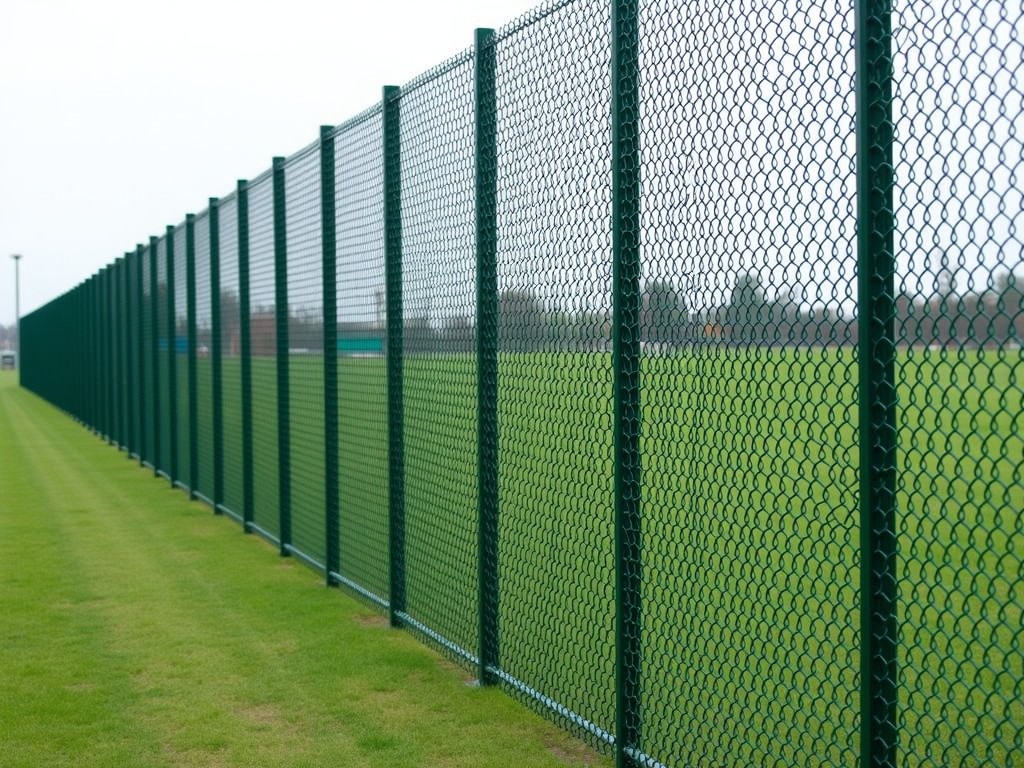
Plastic coated chain link fencing consists of a galvanized steel wire core extruded with a polymeric coating, typically polyvinyl chloride (PVC) or polyethylene (PE), to enhance corrosion resistance
Plastic Coated Chain Link Fencing
Plastic coated chain link fencing consists of a galvanized steel wire core extruded with a polymeric coating, typically polyvinyl chloride (PVC) or polyethylene (PE), to enhance corrosion resistance and extend service life in exposed environments. The coating thickness and polymer formulation directly influence UV stability, impact strength, and chemical resistance, making material selection critical for long-term performance.
Coating Material Options and Performance Characteristics
Two primary coating systems dominate industrial applications: PVC and PE. PVC coatings, each offering distinct advantages based on environmental exposure and mechanical demands. PVC coatings provide excellent chemical resistance and are commonly specified for wastewater treatment plants, chemical storage facilities, and marine atmospheres where exposure to chlorides, acids, or alkalis is prevalent. PE coatings, particularly low-density polyethylene (LDPE) or linear low-density polyethylene (LLDPE), offer superior flexibility at low temperatures and higher impact resistance, making them suitable for regions with freeze-thaw cycles or areas prone to mechanical impact from equipment or vegetation.
| Property | PVC Coating | PE Coating |
|---|---|---|
| Typical Coating Thickness | 0.35–0.50 mm | 0.30–0.45 mm |
| Low-Temperature Flexibility | Brittle below -10°C | Flexible down to -40°C |
| UV Stabilization Requirement | Requires UV absorbers | Inherent UV resistance |
| Chemical Resistance | Excellent against acids, alkalis, salts | Good; limited against hydrocarbons |
| Impact Resistance (Izod) | 200–300 J/m | 400–600 J/m |
Core Wire Specifications and Galvanization Standards
The underlying steel wire must meet minimum tensile strength and elongation requirements to ensure structural integrity after coating application. Core wires are typically manufactured from low-carbon steel (e.g., SAE 1008/1010) and hot-dip galvanized per ASTM A123 or EN 10244-2, with zinc coating masses ranging from 60 to 275 g/m² depending on the environmental corrosivity category (C1 to C5 per ISO 9223). The coating process must ensure uniform adhesion between the zinc layer and polymer overlay to prevent delamination under thermal cycling or mechanical stress.
Wire diameter selections—commonly 2.0 mm, 2.5 mm, or 3.0 mm nominal—directly affect the fence’s resistance to sagging under wind load and its ability to withstand impact without permanent deformation. Larger diameters increase stiffness but reduce flexibility during installation, requiring corresponding adjustments in post spacing and tensioning hardware. The final coated diameter (core + coating) must be verified during quality control to ensure compatibility with standard fittings, tension bands, and gate frames.
Mesh Design and Opening Configurations
Chain link mesh is defined by its wire gauge, mesh opening size, and selvage finish, all of which influence security, visibility, and installation efficiency. Standard mesh openings range from 50 mm × 50 mm to 100 mm × 100 mm, with smaller apertures providing greater resistance to climb and intrusion while maintaining adequate airflow and light transmission. Knuckled selvages are preferred in public access areas to eliminate sharp edges, whereas twisted selvages offer higher tensile retention and are commonly used in high-security or industrial perimeter applications where ease of fabrication is secondary to structural performance.
The mesh is typically supplied in rolls of 15 m, 25 m, or 50 m length, with width options ranging from 0.9 m to 3.0 m to accommodate varying site heights without splicing. For heights exceeding 3.0 m, multiple rolls are joined using vertical tension wires and tie wires, with overlap lengths governed by local fencing codes or project specifications. Proper roll width selection minimizes field splicing, reducing potential weak points and installation time.
Post and Fitting Compatibility Requirements
Structural posts—typically round or square steel tubing—must be compatible with the fence system’s tensioning and bracing requirements to prevent lateral deflection under load. Line posts are commonly spaced at 2.5 m to 3.0 m intervals, with corner and terminal posts requiring increased embedment depth and concrete footing size to resist overturning moments. Post diameters and wall thicknesses are selected based on fence height, wind exposure, and soil conditions, following guidelines from ASTM F567 or equivalent local standards.
Fittings such as tension bars, bands, ties, and gate hardware must be constructed from materials with compatible corrosion resistance—either stainless steel, hot-dip galvanized steel, or nylon-coated components—to avoid galvanic coupling and premature failure. Nylon-coated fittings are often specified in conjunction with PVC or PE coated fabric to maintain a uniform appearance and eliminate metal-to-metal contact points that could accelerate coating degradation at contact zones.
Installation Considerations and Field Performance
Proper installation begins with accurate site grading and post alignment to ensure uniform tension across the fabric, as uneven loading can lead to localized coating abrasion or wire fatigue. Tensioning should be applied gradually using come-alongs or hydraulic tensioners, with final tension typically set between 800 and 1200 N depending on wire diameter and coating type, measured via tensiometer or torque-controlled tools. Over-tensioning risks stretching the polymer coating beyond its elastic limit, causing microcracks that compromise barrier properties over time.
Post-installation inspections should verify coating continuity at stress points—particularly at ties, bends, and contact zones with posts—and confirm that no bare steel is exposed due to handling damage. Field touch-up using compatible polymer repair kits is permissible for minor defects, but large areas of coating loss require fabric replacement to maintain corrosion protection integrity. Documentation of installation parameters, including post depth, tension values, and coating inspection results, supports long-term maintenance planning and warranty validation.
Typical Industrial Applications and Environmental Suitability
Plastic coated chain link fencing is widely selected in environments where uncoated or galvanized-only systems would suffer premature corrosion, such as coastal installations, chemical processing plants, and wastewater treatment facilities. In coastal zones with chloride exposure exceeding 500 mg/m²/day (C4-C5 per ISO 9223), PE-coated systems demonstrate superior longevity due to their resistance to stress cracking and salt absorption, while PVC coatings are favored in secondary containment areas where resistance to sodium hypochlorite or sulfuric acid vapors is required.
Transportation infrastructure—including highway right-of-ways, rail corridors, and airport perimeters—utilizes these systems for their combination of durability, low maintenance, and clear visibility. The coating’s color stability (commonly black, green, or brown) reduces visual impact in landscaped or residential-adjacent areas, while the open mesh design minimizes wind loading compared to solid barriers, decreasing foundation requirements. In correctional or high-security facilities, the coating prevents inmates or detainees from using the fence as a ligature point, addressing safety concerns inherent in bare metal systems.
Quality Control and Testing Protocols
Manufacturing quality control begins with incoming wire inspection, verifying zinc coating mass, tensile strength, and elongation before extrusion. The coating process is monitored for melt temperature, extrusion pressure, and line speed to ensure uniform thickness and adhesion, with inline spark testing detecting pinholes or thin spots in the polymer layer. Finished product sampling includes coating thickness measurement via magnetic or eddy current gauges, adhesion testing per ASTM D4541 (pull-off strength), and flexibility testing via mandrel bend at specified temperatures.
Accelerated weathering tests—such as UV exposure (ASTM G154), salt spray (ASTM B117), and humidity cycling—are conducted to predict long-term performance, with results used to validate formulation adjustments rather than as absolute service life guarantees. Batch traceability is maintained from raw material to final roll, enabling root cause analysis in the event of field failure. Customers may request mill test reports (MTRs) detailing coating thickness, zinc mass, and mechanical properties for each production lot.
Customization Options and Ordering Requirements
Customization is available for wire diameter, coating type and color, mesh opening, roll dimensions, and selvage finish to match project-specific engineering specifications. Color options extend beyond standard black, green, and brown to include custom RAL or Pantone matches upon request, though pigment concentration may affect UV stability and require formulation adjustments. Coating thickness can be increased beyond standard ranges for high-abrasion environments, such as mining or material handling facilities, though this impacts flexibility and requires corresponding adjustments in installation tension protocols.
To obtain an accurate quotation, suppliers require the following technical details: fence height, post spacing, wire diameter, coating material preference (PVC or PE), desired color, mesh opening size, selvage type, and total linear footage. Environmental data—such as proximity to saltwater, industrial emissions, or temperature extremes—helps recommend the optimal coating system. Lead times typically range from 3 to 6 weeks for standard configurations, with custom colors or coatings extending delivery based on material availability and changeover time.
Product Categories


Send Inquiry
If you are interested in our products, leave your information here and we will be in touch shortly.