Semi Automatic Chain Link Fencing Machine Price
The price of a semi automatic chain link fencing machine depends on its configuration, production capacity, and integration capabilities rather than a single fixed value. Understanding the technical
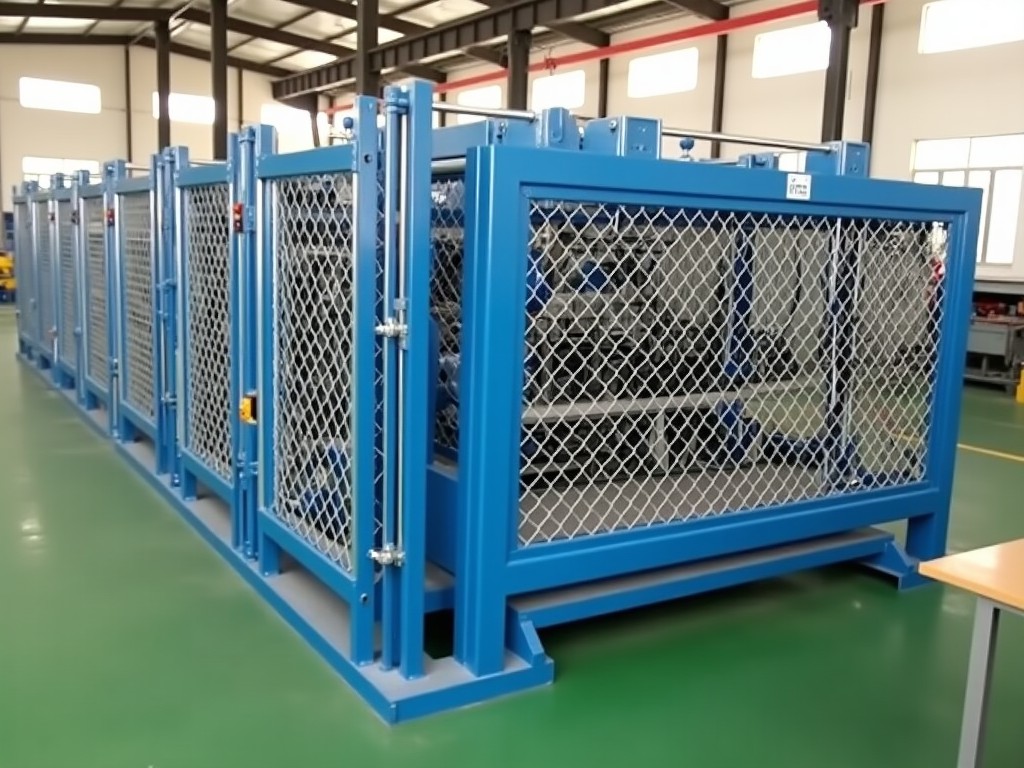
Semi Automatic Chain Link Fencing Machine Price: Technical Specifications and Cost Factors
The price of a semi automatic chain link fencing machine depends on its configuration, production capacity, and integration capabilities rather than a single fixed value. Understanding the technical parameters that influence cost enables procurement engineers to evaluate total ownership value accurately.
Machines in this category typically process galvanized steel wire ranging from 1.6mm to 4.0mm diameter, producing mesh openings from 50mm to 100mm. The semi automatic designation indicates manual wire feeding and mesh retrieval, while automated functions include weaving, cutting, and tension control.
Key cost drivers include frame rigidity, drive system precision, control panel sophistication, and safety interlock design. Machines built with welded steel frames and precision-ground shafts exhibit longer service life under continuous operation compared to bolted assemblies.
Core Technical Specifications Influencing Price
Production speed directly affects machine cost, with higher output rates requiring more robust drive systems and faster cycle controls. Typical speeds range from 15 to 30 meters per minute for standard galvanized wire, adjustable via frequency inverters.
Wire diameter capability determines the required motor torque and roller pressure settings. Machines accommodating 4.0mm wire need substantially stronger geared motors and hardened weaving components than those limited to 2.0mm maximum.
Mesh width flexibility impacts frame design and roller alignment complexity. Adjustable width mechanisms (e.g., 1.0m to 2.4m) increase initial cost but reduce the need for multiple dedicated machines across varying project requirements.
Configuration Options and Associated Cost Variations
Control system selection represents a significant price variable. Basic models use relay-logic controls with manual dials, while upgraded versions incorporate PLCs with touchscreen interfaces for recipe storage, fault diagnostics, and production logging.
Safety features add measurable cost but reduce operational risk. Essential additions include emergency stop circuits, guarded moving parts with interlocks, and overload protection—each contributing to compliance with industrial safety standards.
Optional accessories such as wire straighteners, spool holders, and mesh winders increase throughput consistency. These are not always included in base pricing but are critical for maintaining quality in continuous production environments.
Typical Price Ranges by Technical Tier
| Technical Tier | Wire Diameter Range | Max Width | Speed Range (m/min) | Typical Price Indicators |
|---|---|---|---|---|
| Entry Level | 1.6–2.5mm | 1.2m | 10–20 | Lower volume, basic controls |
| Mid Range | 2.0–3.2mm | 1.8m | 15–25 | PLC control, adjustable width |
| High Capacity | 2.5–4.0mm | 2.4m | 20–30 | Reinforced frame, safety interlocks |
Price indicators reflect relative cost positioning; actual quotations require detailed technical specification review.
Application-Driven Cost Justification
For perimeter security installations requiring consistent mesh tension and uniform aperture size, the precision of the weaving mechanism directly impacts installation speed and long-term fence integrity. Machines with closed-loop tension control reduce post-installation sagging.
In high-volume agricultural fencing operations, minimizing wire breakage during weaving is critical. Machines equipped with precision-ground rollers and adjustable pay-off tension reduce scrap rates, lowering effective cost per meter of produced fence.
Temporary site fencing for construction projects benefits from machines capable of rapid reconfiguration between different mesh sizes. Quick-change roller systems reduce downtime when switching between, for example, 50mm aperture for site barriers and 75mm for crowd control barriers.
Quality Control Considerations Affecting Long-Term Value
Frame alignment accuracy influences roller parallelism and weaving consistency. Machines assembled on precision-ground bases with dowel-pin locators maintain tolerances better than those relying solely on bolted flange mounts.
Wear components such as weaving hooks, guide tubes, and cutter blades should be manufactured from tool steel or carbide-tipped materials. Hardness specifications (typically HRC 58–62 for hooks) directly affect replacement frequency and maintenance scheduling.
Electrical enclosure ratings (IP54 minimum) protect controls from dust and moisture in outdoor or semi-outdoor fabrication environments. Proper sealing reduces downtime from contamination-related faults.
For detailed quotation based on specific wire diameter, production width, and automation requirements, contact our technical team to discuss your project specifications.
Request Technical Quotation
Product Categories


Send Inquiry
If you are interested in our products, leave your information here and we will be in touch shortly.