Semi Permanent Electric Fence With Gate
Semi-permanent electric fencing systems with integrated gates provide reliable livestock containment and predator exclusion for agricultural and wildlife management applications. Unlike temporary or
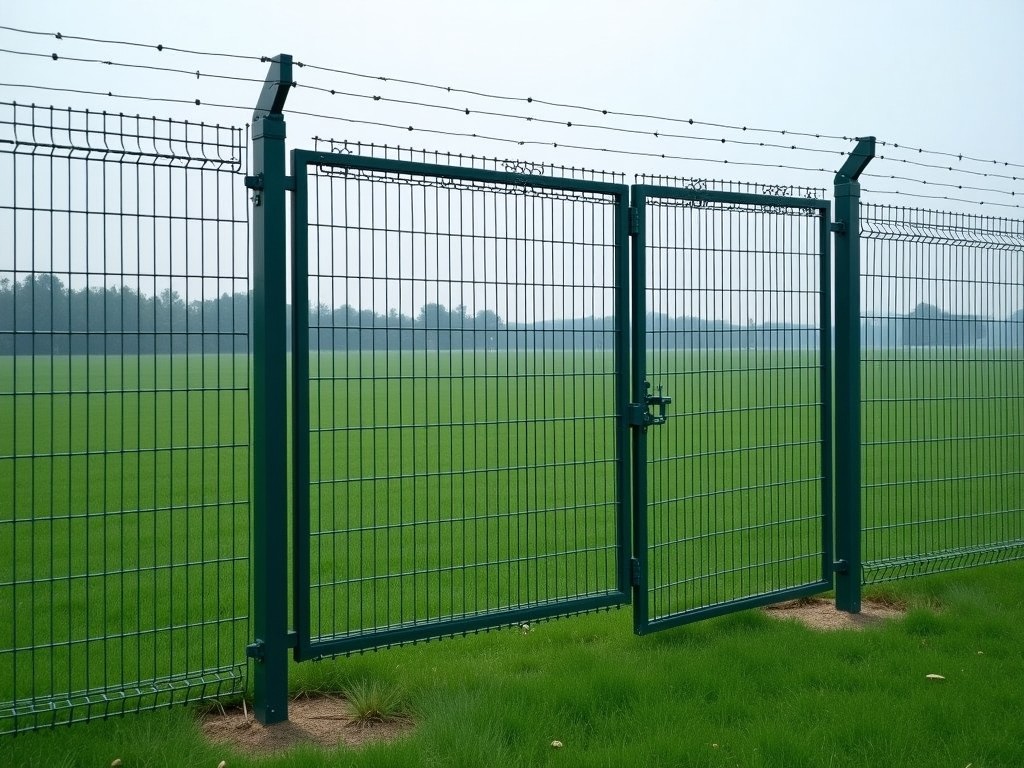
Semi-Permanent Electric Fence with Integrated Gate
Semi-permanent electric fencing systems with integrated gates provide reliable livestock containment and predator exclusion for agricultural and wildlife management applications. Unlike temporary or permanent installations, these systems balance durability with configurability, allowing for seasonal adjustments or field rotation without requiring complete dismantling. The gate component maintains electrical continuity while enabling controlled access for personnel, vehicles, or equipment. This page details the technical specifications, material considerations, and installation principles that inform effective system design.
Core System Components and Electrical Principles
The system comprises three essential subsystems: the energizer, the conductive barrier (fence line), and the gate assembly. The energizer delivers high-voltage, low-current pulses (typically 5,000–9,000 volts at <100 milliamps) through the fence line to create a psychological barrier. Conductive elements—usually steel wire, polytape, or polyrope—carry the pulse along the perimeter. Insulators prevent grounding by isolating conductors from posts. The gate assembly includes a conductive handle or gate kit that maintains circuit integrity when opened or closed, preventing voltage drop at the access point.
Voltage consistency along the fence line depends on conductor resistance, grounding quality, and vegetation contact. Semi-permanent systems often use galvanized steel wire (0.20–0.25 mm diameter) for lower resistance compared to poly-based alternatives, reducing voltage drop over distances exceeding 500 meters. Proper grounding—typically three 1.8-meter ground rods spaced 3 meters apart in conductive soil—ensures effective shock delivery. Vegetation management remains critical; even light contact can drain 200–500 volts per point of contact.
Gate Assembly Design and Electrical Continuity
The gate assembly must maintain electrical continuity without creating a hazard or mechanical failure point. Standard designs use a spring-loaded gate handle with an internal conductive path (usually stainless steel or brass) connected to both sides of the fence line via insulated cables. When the gate is open, the handle bridges the gap; when closed, mechanical pressure ensures consistent contact. Some designs incorporate a buried undergate wire to maintain continuity without exposing conductors to traffic wear.
Gate width typically ranges from 3.0 to 4.5 meters to accommodate tractors, ATVs, or livestock handling equipment. The handle is rated for UV resistance (ASTM G154 cycle exposure) and mechanical endurance (minimum 10,000 open/close cycles). Insulation materials—often UV-stabilized polypropylene or nylon—prevent leakage to ground posts. Hardware includes galvanized or stainless steel hinges and latches to resist corrosion in outdoor environments.
Material Selection for Longevity and Performance
Conductor choice directly impacts system efficiency and lifespan. Galvanized steel wire offers tensile strength of 450–550 MPa and corrosion resistance suitable for 5–7 years in moderate climates. Stainless steel wire (grade 304) increases lifespan to 10+ years but raises resistance by approximately 40%, requiring higher energizer output for long runs. Polytape and polyrope combine UV-stabilized polyethylene with stainless steel conductors; while easier to handle and more visible, they exhibit higher resistance (15–50 ohms/km vs. 5–10 ohms/km for steel) and are prone to sagging over time.
Posts for semi-permanent use are commonly driven steel T-posts (1.65–2.0 kg/m) or fiberglass rods. T-posts provide superior anchoring in soft soils but require insulators to prevent grounding. Fiberglass posts are inherently insulating and lightweight but may fracture under impact. Wood posts (pressure-treated, ACQ-treated) offer familiarity but require regular inspection for rot at ground level and are less suitable for high-tension applications.
Installation Best Practices for System Effectiveness
Proper installation begins with contour following—aligning the fence line with terrain to avoid excessive tension or slack. Corner and end posts require bracing (typically H-brace or diagonal brace) to withstand lateral tension. Line posts are spaced 8–12 meters apart for steel wire; closer spacing (6–8 meters) is recommended for poly-based conductors to minimize sag. Conductor height varies by target species: 50–70 cm for small livestock, 90–110 cm for cattle, and multiple strands (e.g., 30, 60, 90 cm) for deer or predator exclusion.
The gate should be installed on level ground with adequate drainage to prevent water pooling around ground rods. The handle height must match the adjacent fence strands. Tensioning devices—such as ratchet tensioners or inline strainers—are used on the fence line to maintain 150–250 N of tension, reducing sag and minimizing vegetation contact. All connections (wire to insulator, wire to gate cable) must use proper crimps or clamps to avoid high-resistance joints.
Typical Configuration Table
| Parameter | Typical Value | Notes |
|---|---|---|
| Energizer Output Voltage | 6,000–8,000 V | Peak open-circuit voltage; varies by model and load |
| Conductor Resistance (Steel Wire) | 6–10 Ω/km | Galvanized steel, 2.0 mm diameter |
| Conductor Resistance (Polytape) | 20–50 Ω/km | Dependent on stainless strand count and gauge |
| Ground Rod Length | 1.8 m | Copper-bonded or galvanized steel |
| Number of Ground Rods | 3 | Spaced 3 m apart in conductive soil |
| Gate Width Range | 3.0–4.5 m | Accommodates most farm vehicles and equipment |
| Gate Handle Rating | 10,000+ cycles | Mechanical endurance under load |
| Post Spacing (Steel Wire) | 8–12 m | Depends on terrain and tension |
| Conductor Height (Cattle) | 90–110 cm | Single strand; adjust for breed and temperament |
Applications in Agricultural and Wildlife Management
Semi-permanent electric fencing with gate is widely used in rotational grazing systems, where pasture sections are allocated for limited periods to promote forage recovery. The ability to quickly reconfigure fence lines supports adaptive management based on seasonal growth patterns or livestock density. In wildlife management, these systems exclude deer from crops or orchards while allowing controlled access for monitoring or harvesting. The gate enables entry for maintenance vehicles without compromising the barrier’s integrity.
In predator control, multi-strand configurations deter coyotes, foxes, or raccoons from accessing poultry or lambing areas. The psychological barrier effect reduces reliance on lethal methods. For equine operations, the fence provides visible containment that minimizes injury risk compared to barbed wire. Temporary use during events—such as livestock shows or auctions—benefits from rapid deployment and removal, with the gate facilitating orderly traffic flow.
Customization and System Scaling
System parameters are tailored to site-specific conditions. Energizer selection depends on fence length, vegetation load, and target animal species—low-impedance models are preferred for weed-prone areas. Conductor type and diameter are chosen based on expected lifespan, visibility requirements, and mechanical stress. Gate width and handle design are adapted to access needs; options include pedestrian-only gates, vehicle-rated gates, or double-gate systems for wider passage.
Additional customization includes lightning protection (divertors and surge protectors), remote monitoring (voltage sensors with GSM alerts), and solar-powered energizers for off-grid locations. Post type and coating (e.g., powder-coated T-posts) can be specified for aesthetic or environmental compliance. All configurations maintain electrical continuity and safety standards under IEC 60335-2-76 or equivalent regional norms.
For technical consultation, system design support, or quotation requests, please contact our engineering team to discuss your specific containment requirements.
Product Categories


Send Inquiry
If you are interested in our products, leave your information here and we will be in touch shortly.