Stainless Steel Chain Link Mesh Fence
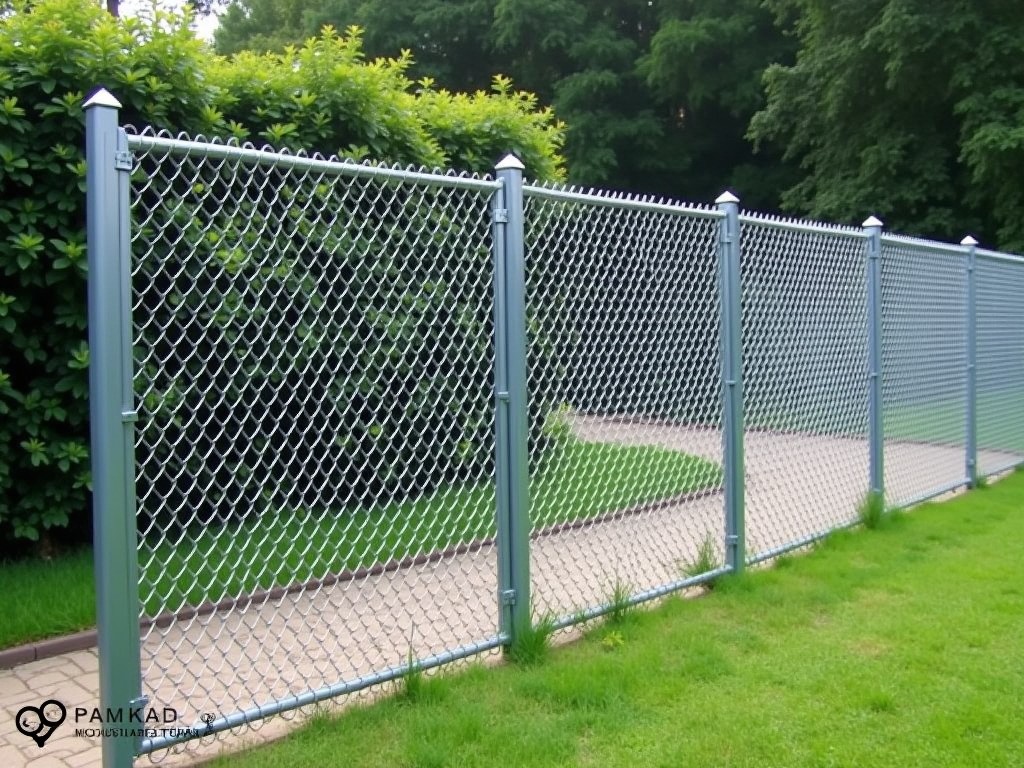
Stainless steel chain link mesh fence is a woven barrier system formed by interlacing galvanized or corrosion-resistant steel wires into a uniform diamond or square pattern, then securing the mesh to
Stainless Steel Chain Link Mesh Fence
Stainless steel chain link mesh fence is a woven barrier system formed by interlacing galvanized or corrosion-resistant steel wires into a uniform diamond or square pattern, then securing the mesh to structural posts via tension bands, braces, and top rails. Unlike standard carbon steel alternatives, this variant utilizes austenitic or ferritic stainless steel grades to resist environmental degradation in chemically aggressive, high-moisture, or coastal environments where chloride exposure or industrial pollutants accelerate corrosion. The inherent passivation layer on stainless steel surfaces provides long-term protection without relying on coatings that may chip, peel, or require recoating over time, making it suitable for installations where maintenance access is limited or lifecycle cost optimization is critical.
Material Composition and Grade Selection
The performance of stainless steel chain link mesh depends directly on the alloy composition of the base wire. Commonly used grades include 304 (18% chromium, 8% nickel) for general industrial and municipal applications, and 316 (16–18% chromium, 10–14% nickel, 2–3% molybdenum) for environments with elevated chloride exposure such as marine decks, chemical processing perimeters, or wastewater treatment facilities. Ferritic grades like 430 may be considered for lower-cost, mildly corrosive settings but lack the nickel content needed for sustained resistance to pitting and stress corrosion cracking. Wire diameter typically ranges from 2.0 mm to 4.0 mm, selected based on required tensile strength, impact resistance, and deflection limits under dynamic loads such as wind pressure or animal impact.
Mesh Configuration and Structural Design
Chain link mesh is defined by two primary parameters: aperture size (the clear opening between parallel wires) and wire gauge. Standard aperture dimensions range from 50 mm × 50 mm to 100 mm × 100 mm, with smaller openings providing greater resistance to intrusion or small animal passage while increasing wind load exposure. The mesh is fabricated through a continuous weaving process where each wire is helically interlocked with its neighbors, creating a flexible yet tension-stable fabric. This structure allows the fence to absorb impact energy through localized deformation without permanent failure, a key advantage over rigid panel systems in seismic zones or high-traffic areas. Post spacing, typically 2.5 to 3.5 meters, is engineered to balance material efficiency with resistance to sag under tensile load, calculated using catenary principles and wind pressure coefficients per ASCE 7.
Surface Treatment and Corrosion Resistance Mechanisms
Unlike galvanized steel, which relies on a sacrificial zinc coating, stainless steel derives its corrosion resistance from a chromium-rich passive oxide layer (Cr₂O₃) that forms spontaneously upon exposure to oxygen. This layer self-repairs when damaged, provided the environment contains sufficient oxygen and chloride levels remain below the critical threshold for the specific grade. In 316 stainless steel, the addition of molybdenum enhances resistance to pitting caused by chlorides, making it suitable for splash zones near seawater or deicing agent runoff. Surface finishes are typically supplied in the mill condition (2B or BA), though electropolishing may be specified for applications requiring ultra-smooth surfaces to minimize particulate adhesion or facilitate cleaning in food or pharmaceutical zones.
Load Capacity and Environmental Performance
Tensile strength of the wire ranges from 550 MPa to 850 MPa depending on grade and cold work level, translating to a typical mesh break strength of 1.8 kN to 4.2 kN per vertical wire under ASTM A392 testing protocols. The system’s flexibility allows it to withstand cyclic wind loads without fatigue failure, with natural frequencies typically between 1.5 Hz and 3.0 Hz for standard post spacings. In coastal environments, 316-grade mesh demonstrates negligible weight loss over 10+ years in salt spray testing (ASTM B117), whereas equivalent galvanized systems may show significant rust accumulation within 3–5 years. Thermal expansion coefficients (~16 × 10⁻⁶/°C) are similar to carbon steel, allowing compatibility with standard post materials without inducing excessive stress at connection points.
Customization Options and Installation Considerations
Customization extends beyond material and aperture to include height (commonly 1.2 m to 3.0 m), top selvage finish (knuckle or twisted), bottom tension wire integration, and post type (round, square, or I-beam in stainless or coated steel). For applications requiring electromagnetic transparency—such as sensor perimeters or radar installations—non-magnetic austenitic grades (e.g., 304L, 316L) are specified to minimize interference. Installation follows standard tensioning procedures: corner and terminal posts are set in concrete with appropriate embedment depth, line posts are spaced and aligned, then the mesh is unrolled, attached via tension bands, and progressively tightened using a come-along or ratchet device to achieve uniform tension (typically 800–1200 N at mid-span). Gates are fabricated using the same mesh and frame materials to maintain galvanic compatibility.
Quality Control and Manufacturing Standards
Production adheres to wire drawing tolerances per ASTM A228 or EN 10218-2, with in-process monitoring of diameter, tensile strength, and surface finish. Mesh aperture uniformity is verified using optical gauges or laser scanning to ensure consistency across rolls, typically maintained within ±5% of nominal size. Post-welding or weaving, visual inspection checks for skipped wires, misweaves, or surface contaminants. Batch traceability is maintained from raw material coil to finished roll, with mill test reports available upon request confirming chemical composition and mechanical properties. While no single global standard governs stainless steel chain link mesh specifically, compliance is often referenced to ASTM A392 (for zinc-coated) with material substitution, or ISO 1461 for galvanizing equivalence where applicable, supplemented by client-specific procurement specifications.
Typical Applications Across Industries
In wastewater treatment plants, 316-grade mesh is used for perimeter security and tank enclosures where hydrogen sulfide and chloride vapors degrade conventional fencing. Marine facilities employ it for dockside barriers and shipyard perimeters due to resistance to salt spray and tidal splash. Food processing plants select electropolished 304L for washdown zones where crevice corrosion must be avoided and cleaning agents are aggressive. Transportation infrastructure uses it for highway right-of-way fencing in coastal bridges where deicing salts accumulate. Data centers and utility substations benefit from its non-magnetic properties when installed near sensitive equipment. Unlike temporary or decorative fencing, this system is selected when a 20+ year service life with minimal intervention is a project requirement, particularly in remote or hard-to-access locations where lifecycle cost outweighs initial expenditure.
| Parameter | Typical Range / Option | Notes |
|---|---|---|
| Stainless Steel Grade | 304, 304L, 316, 316L | 316 preferred for chloride exposure; L variants for welding |
| Wire Diameter | 2.0 mm – 4.0 mm | Selected based on load and deflection requirements |
| Mesh Aperture | 50×50 mm – 100×100 mm | Smaller apertures increase wind load; larger reduce material cost |
| Fence Height | 1.2 m – 3.0 m | Custom heights available; post length adjusted accordingly |
| Post Spacing | 2.5 m – 3.5 m | Optimized for wind load and tensile sag limits |
| Tensile Strength (Wire) | 550 – 850 MPa | Dependent on grade and cold work level |
| Expected Service Life | 20+ years | In compliant environments with proper installation |
Frequently Asked Questions
Can the mesh aperture and wire diameter be customized for specific security or load requirements?
Yes, aperture size and wire diameter are fully customizable based on project specifications. Smaller apertures (e.g., 38 mm) are available for high-security or small animal exclusion, while larger wires (up to 5.0 mm) can be specified for high-impact zones such as prison perimeters or industrial boundaries subject to vehicular impact. Customization requires consultation to ensure compatibility with standard rolling widths and tensioning equipment.
What information is required to receive an accurate quotation?
To generate a precise quote, we require: total fence length, desired height, mesh aperture size, wire diameter, stainless steel grade (304/316), post type and spacing, gate quantity and dimensions, top selvage preference (knuckle/twist), and environmental conditions (e.g., proximity to saltwater, chemical exposure). Providing a site plan or sketch significantly improves accuracy and reduces lead time.
How is quality verified before shipment?
Quality verification includes dimensional checks (wire diameter, aperture, roll width), visual inspection for weave integrity, and material certification review. Upon request, we can provide mill test reports for chemical composition and mechanical properties, or conduct third-party testing for tensile strength and corrosion resistance per ASTM standards. All rolls are labeled with batch numbers for traceability.
Product Categories


Send Inquiry
If you are interested in our products, leave your information here and we will be in touch shortly.