Temporary Fence For Above Ground Pool
Selecting a temporary fence for an above ground pool involves balancing safety compliance, ease of installation, and adaptability to site-specific conditions. Industrial buyers prioritize solutions
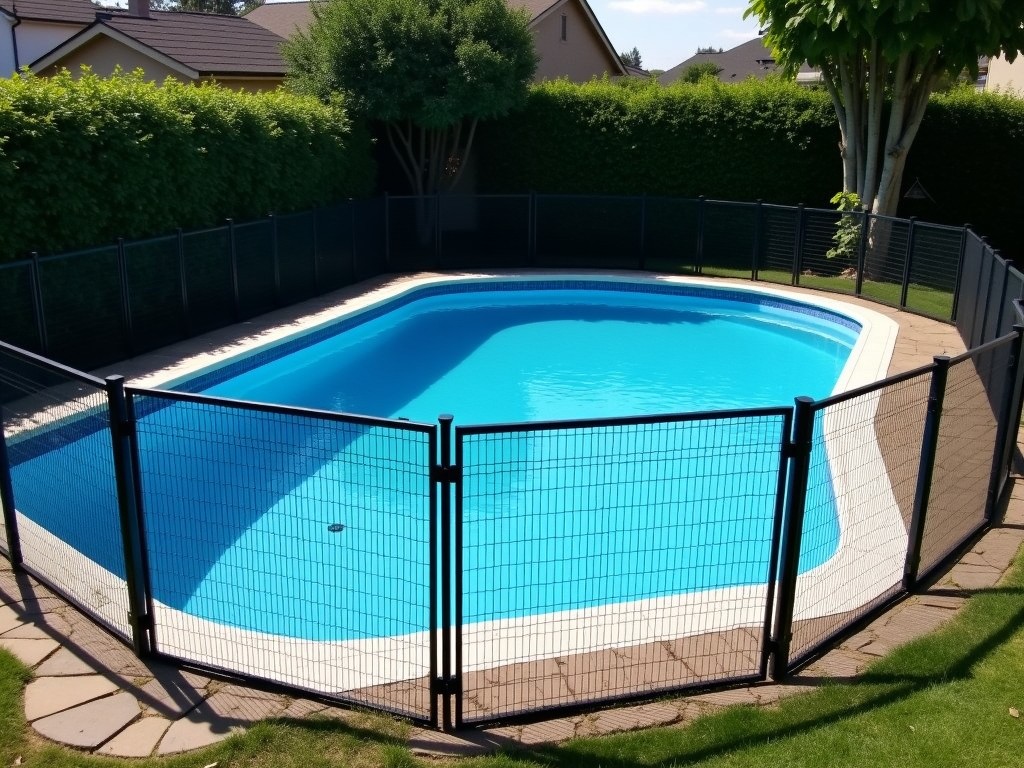
Temporary Fence for Above Ground Pool
Selecting a temporary fence for an above ground pool involves balancing safety compliance, ease of installation, and adaptability to site-specific conditions. Industrial buyers prioritize solutions that meet local barrier regulations while minimizing labor and site disruption during setup and removal.
Core Design Parameters
Temporary pool fences are engineered to meet minimum height requirements—typically 48 inches (1220 mm)—to deter unsupervised access by children. The vertical clearance between the bottom rail and ground is limited to 4 inches (100 mm) or less to prevent crawling underneath. These dimensions are derived from residential pool safety standards such as ASTM F2286 and local municipal codes.
Panel width commonly ranges from 4 to 6 feet (1220–1830 mm), allowing flexibility in configuring around irregular pool shapes or obstacles like ladders and filtration units. Posts are spaced to match panel width, ensuring structural rigidity without sagging under wind load or accidental impact. The system relies on interlocking mechanisms or clamp-based connections that do not require drilling into decks or patios.
Materials are selected for corrosion resistance and UV stability. Aluminum alloys (e.g., 6063-T5) are frequently used for posts and rails due to their strength-to-weight ratio and resistance to poolside moisture and chlorine exposure. Infill options include mesh fabric (polyethylene or polypropylene) or vertical pickets spaced to prevent sphere passage of 4 inches (100 mm) diameter, compliant with entrapment prevention guidelines.
Installation and Removal Process
Installation typically requires no tools beyond a rubber mallet for seating post bases into ground sleeves or weighted stands. Ground sleeves are driven into soil or sand to a depth of 6–8 inches (150–200 mm), providing lateral stability. On hard surfaces like concrete or decking, weighted bases filled with sand or water counteract overturning moments from wind or impact.
Panels slide into post channels or snap into locking brackets, enabling one-person assembly. The modular design allows reconfiguration if pool accessories are relocated. Removal follows the reverse sequence: panels are detached, posts extracted, and ground sleeves cleaned or capped. All components stack flat for storage, minimizing warehouse footprint.
Setup time averages 15–30 minutes for a standard 24-foot round pool, depending on terrain and installer familiarity. No permits or structural modifications are needed, preserving the temporary nature of the installation. This contrasts with permanent fencing, which requires excavation, concrete footings, and often professional labor.
Material and Finish Options
Frame components are available in mill-finish aluminum, powder-coated white, beige, or black. Powder coating adds a protective layer that enhances UV resistance and allows color coordination with pool liners or decking. Coating thickness typically ranges from 60 to 80 microns, meeting AAMA 2603 standards for exterior durability.
Infill mesh is manufactured from 11–14 denier polyethylene tape, woven into a diamond or square pattern with tensile strength exceeding 50 lbf/in (8.8 N/mm). Mesh openings are strictly controlled to prevent finger entrapment while maintaining visibility for supervision. Alternative vertical picket infills use extruded aluminum or PVC, spaced at 3.5 inches (89 mm) on center.
All hardware—including brackets, pins, and tension straps—is made from stainless steel (Grade 304) or UV-stabilized nylon to prevent degradation in chlorinated environments. These material choices ensure a service life of 3–5 seasons under typical residential use, even with frequent assembly and disassembly cycles.
Typical Configuration Values
| Parameter | Typical Value | Adjustable Range |
|---|---|---|
| Fence Height | 48 in (1220 mm) | 42–54 in (1065–1370 mm) |
| Bottom Clearance | ≤4 in (≤100 mm) | Fixed by design |
| Panel Width | 60 in (1524 mm) | 48–72 in (1220–1830 mm) |
| Post Spacing | Matches panel width | ±2 in (±50 mm) |
| Mesh Opening | ≤1.75 in (≤44 mm) | Customizable |
| Wind Load Rating | 30 mph (48 km/h) | Depends on base type |
Applications Beyond Pools
While designed for above ground pool safety, the modular nature of this fencing system supports temporary access control in other residential and light commercial contexts. It is commonly deployed to restrict pond access, secure construction zones during landscaping projects, or delineate event spaces where permanent barriers are impractical.
The absence of ground penetration makes it suitable for use on septic fields, geothermal loops, or other buried utilities where digging is prohibited. Event organizers use similar systems to manage crowd flow at festivals or markets, leveraging the same quick-setup, tool-free interface. This cross-application versatility improves return on investment for rental companies and municipal departments.
Landscape contractors specify these fences to protect newly seeded lawns or irrigation systems from foot traffic during establishment periods. The visual transparency of mesh infill preserves sightlines while providing a psychological barrier. Unlike solid barriers, it does not create wind tunnels or trap heat, maintaining microclimate integrity in sensitive areas.
Quality Control and Validation
Manufacturing begins with material verification: aluminum extrusions are checked for alloy composition and temper using portable spectrometers; mesh rolls are inspected for denier consistency and tensile strength via grab test machines. Dimensional accuracy of posts and brackets is validated on CNC fixtures to ensure proper panel engagement.
Finished units undergo assembly simulation to confirm interlocking function under load. Cycle testing—repeated installation and removal—assesses wear on connection points and coating adhesion. UV exposure chambers simulate seasonal sunlight to evaluate colorfastness and embrittlement resistance in polymers.
Final inspection includes gap probing with a 4-inch (100 mm) sphere to verify entrapment prevention, height measurement at multiple points, and stability testing with lateral force application. Documentation includes material certificates, test reports, and compliance declarations aligned with jurisdictional requirements. These records support due diligence for liability risk management.
Product Categories


Send Inquiry
If you are interested in our products, leave your information here and we will be in touch shortly.