Temporary Fence Gate Ideas Factory Price
When securing construction zones, event venues, or industrial perimeters, temporary fence gates must balance rapid deployment with structural integrity under variable loads. This page explains key
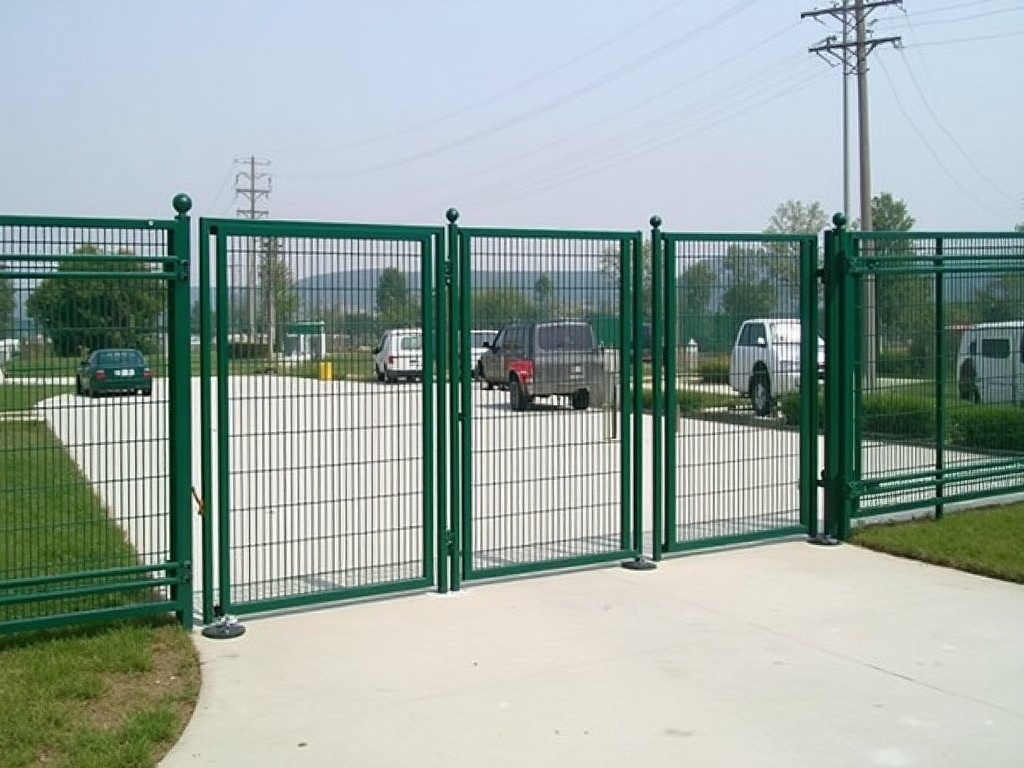
Temporary Fence Gate Ideas: Factory Price Solutions for Industrial Sites
When securing construction zones, event venues, or industrial perimeters, temporary fence gates must balance rapid deployment with structural integrity under variable loads. This page explains key design considerations, material behaviors, and cost factors that influence factory pricing for temporary gate systems, helping procurement teams evaluate options beyond surface-level specifications.
Core Design Principles for Temporary Fence Gates
Effective temporary gates prioritize modularity, load distribution, and corrosion resistance without sacrificing setup speed. Unlike permanent barriers, they must withstand repeated assembly cycles while maintaining alignment under wind loads or accidental impacts. Key engineering factors include hinge durability, latch mechanism reliability, and frame stiffness-to-weight ratio.
Gate width directly affects sag and hinge stress; spans exceeding 3 meters typically require intermediate support or reinforced framing to prevent deformation. Vertical posts should embed at least 600mm into weighted bases or ground sleeves to resist overturning moments from lateral forces. Proper gate height—usually 2.1m for pedestrian control or 2.4m for vehicle access—must align with adjacent fencing to avoid weak points.
Material Selection and Performance Characteristics
Steel remains the dominant material for temporary gate frames due to its yield strength and fatigue resistance. Hot-dip galvanized steel (Z275 coating) provides consistent corrosion protection in outdoor environments, with typical service life exceeding 5 years under moderate exposure. For lighter applications, aluminum alloys (6061-T6) offer 1/3 the weight of steel with adequate stiffness for spans under 2.5m, though they exhibit lower impact resistance.
Infill options influence both cost and functionality. Chain-link mesh (50mm aperture, 3.0mm wire diameter) provides visibility and wind permeability, reducing lateral load on posts. Welded mesh panels (50x50mm opening, 4.0mm wire) increase rigidity but add 15-20% weight. Solid panel infills (PVC-coated steel or HDPE) block visibility and wind but require stronger posts and deeper foundations to handle increased sail area.
Factory Price Drivers for Temporary Gate Systems
Factory pricing reflects material throughput, tooling amortization, and labor efficiency rather than arbitrary markup. Galvanization cost scales with surface area; a standard 2.4m x 1.2m gate uses approximately 8.6m² of steel, making coating a significant variable. Prefabricated hinge and latch assemblies reduce welding time by 40% compared to custom-fabricated units, directly lowering unit cost at volume.
Order quantity affects pricing non-linearly. FirstArticle setup costs (jig creation, weld program validation) are amortized over the production run; orders below 50 units often see higher per-unit prices due to fixed overhead. Surface preparation consistency—critical for coating adhesion—adds labor but prevents premature rust, which impacts long-term value more than initial price.
Customization Options and Their Cost Implications
Standard gate dimensions (2.4m wide x 2.1m high) utilize existing tooling, minimizing price deviation. Custom widths require new cutting programs and may necessitate intermediate verticals for spans over 3.0m, adding 10-18% to base cost. Powder coating over galvanization increases corrosion resistance in harsh environments but adds 22-28% due to extra processing steps and material loss.
Latch mechanism choice influences both cost and operational safety. Gravity latches (no moving parts) cost least but require manual alignment. Spring-loaded latches add 15-20% cost but ensure self-engagement. Lockable drop rods with weatherproof housings increase price by 30-40% but prevent unauthorized opening—essential for high-security zones. All customizations should specify load cycles and environmental exposure for accurate quoting.
Quality Control Considerations for Bulk Orders
Dimensional tolerance directly affects gate alignment in multi-panel systems. Post hole spacing should maintain ±3mm accuracy to prevent binding; cumulative error over 10 gates can exceed 30mm, causing installation delays. Weld penetration on load-bearing joints must exceed 0.8mm thickness to withstand cyclic stress—verified via spot testing on first articles.
Coating thickness uniformity is non-negotiable for outdoor use. Zinc coating below 55µm risks premature rust at cut edges; acceptable range is 55-85µm measured via magnetic induction. For powder-coated gates, adhesion testing (ASTM D3359) ensures film integrity after impact. Suppliers should provide mill certificates and batch test reports upon request—never assume compliance without documentation.
Applications Where Temporary Gate Design Matters
In high-wind environments (coastal sites, open plains), gate permeability becomes critical. Solid infills act as sails, increasing post overturning moment by up to 200% compared to mesh. Using wind-load rated hinges (tested to 150Pa) and deeper bases (≥800mm embedment) mitigates failure risk. For vehicle access points, gates must withstand intermittent impact from slow-moving equipment; energy-absorbing hinges or sacrificial brackets reduce frame damage.
Event venues prioritize rapid setup and visual presentation. Gates with tool-free coupling pins (no bolts) reduce assembly time by 60% compared to bolted frames. Powder-coated finishes in corporate colors improve aesthetics without compromising durability when properly cured. For public safety zones, anti-climb designs (small mesh apertures, curved top rails) deter scaling while maintaining visibility for security personnel.
Comparison of Common Temporary Gate Configurations
| Configuration | Typical Use Case | Material Thickness (mm) | Relative Cost Factor | Setup Time (min) |
|---|---|---|---|---|
| 2.4m x 2.1m, chain-link infill | General site perimeter | Frame: 2.0, Mesh: 3.0 | 1.0x | 8-12 |
| 3.0m x 2.4m, reinforced frame | Vehicle access, high wind | Frame: 2.5, Mesh: 3.5 | 1.7x | 15-20 |
| 2.4m x 2.1m, solid panel | Privacy, wind blocking | Frame: 2.5, Panel: 1.2 | 1.4x | 10-14 |
| Aluminum, 2.4m x 2.1m | Lightweight, corrosion-sensitive | Frame: 2.5, Mesh: 3.0 | 1.3x | 6-10 |
Note: Cost factors are relative to base chain-link gate; actual pricing depends on volume, coating, and hardware specifications. Setup time assumes two-person crew with standard tools.
Requesting Accurate Quotations for Temporary Gate Systems
To receive factory pricing that reflects true production costs, provide these technical details: gate dimensions (width x height), infill type (mesh aperture/wire diameter or panel material), required coating (galvanization only or powder-coated color), latch mechanism preference, and estimated annual quantity. Specify environmental exposure (inland, coastal, industrial) and expected load cycles per gate to ensure appropriate material selection.
Avoid vague requests like “standard temporary gate” as they trigger assumptions that may not match site needs. Instead, reference the configuration table above or submit a sketch with load notes. Manufacturers can then optimize material usage and tooling, reducing waste and delivering a price that reflects actual production efficiency—not inflated estimates based on unknown variables.
Product Categories


Send Inquiry
If you are interested in our products, leave your information here and we will be in touch shortly.