Temporary Fencing Green Mesh Source Factory
Temporary fencing green mesh is engineered for short-to-medium term site containment where visibility, airflow, and rapid deployment are critical. Unlike solid barriers, the open-weave structure
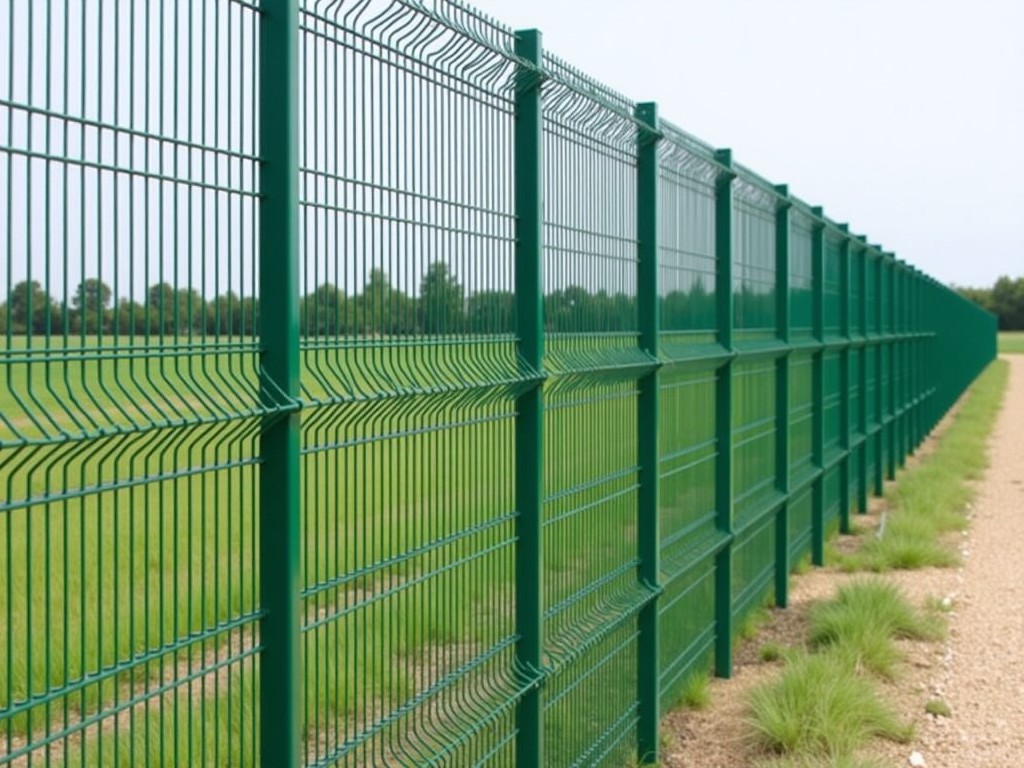
Temporary Fencing Green Mesh – Source Factory Direct Supply
Temporary fencing green mesh is engineered for short-to-medium term site containment where visibility, airflow, and rapid deployment are critical. Unlike solid barriers, the open-weave structure reduces wind load while maintaining effective visual screening and dust suppression. This product is manufactured from stabilized high-density polyethylene (HDPE) with UV inhibitors, specifically formulated for prolonged outdoor exposure in construction, event management, and agricultural settings.
The green color is not merely aesthetic; it is selected based on reflectance properties that minimize visual intrusion in natural environments while meeting common municipal and contractor site safety guidelines. Mesh aperture size is standardized to balance particle retention with air permeability, typically ranging from 20mm to 40mm square openings depending on the intended application. Roll widths are produced in 1.0m, 1.5m, and 2.0m increments to align with standard post spacing and reduce cutting waste on-site.
Material Composition and Performance Characteristics
The base resin is virgin HDPE with a melt flow index (MFI) between 0.2 and 0.4 g/10min, ensuring sufficient tensile strength for extrusion and adequate flexibility for handling. UV stabilization is achieved through hindered amine light stabilizers (HALS) at concentrations calibrated for 12–24 months of outdoor service life under mid-latitude solar exposure. Additives are strictly limited to non-migrating, RoHS-compliant formulations to prevent soil or water contamination during use or disposal.
Tensile strength is measured per ASTM D638, with typical values exceeding 18 MPa in the machine direction and 15 MPa in the transverse direction, providing resistance to tearing under wind stress or accidental impact. Elongation at break averages 400–600%, allowing the mesh to conform to uneven terrain without cracking. The specific gravity of the compound is approximately 0.94–0.96 g/cm³, contributing to lightweight handling while maintaining structural integrity.
Manufacturing Process and Quality Control
Production begins with precise resin blending in a gravimetric feeder system to ensure consistent additive distribution across batches. The molten polymer is extruded through a circular die and expanded via air pressure to form a tubular film, which is then collapsed, flattened, and slit to width before being wound onto cores. The mesh structure is created through a directional stretching process (tenter frame) that orients the polymer chains to enhance strength and dimensional stability.
In-line monitoring includes laser-based width and thickness gauges, with feedback loops adjusting die gap and haul-off speed in real time. Visual inspection occurs at 10m intervals under controlled lighting to detect defects such as gels, inclusions, or uneven stretching. Every 1000 linear meters, a sample is cut for tensile and elongation testing, with results logged against batch-specific control charts. Final roll inspection verifies length accuracy within ±1% and confirms end sealing to prevent unraveling during transit.
Technical Specifications Table
| Property | Typical Value | Test Method / Standard |
|---|---|---|
| Base Material | Virgin HDPE | ASTM D1248 |
| UV Stabilizer Type | Hindered Amine Light Stabilizer (HALS) | Internal Formulation |
| Mesh Aperture | 20mm × 20mm to 40mm × 40mm | Caliper Measurement |
| Roll Widths | 1.0m, 1.5m, 2.0m | Customizable per project |
| Tensile Strength (MD/TD) | ≥18 MPa / ≥15 MPa | ASTM D638 |
| Elongation at Break | 400–600% | ASTM D638 |
| UV Resistance (Quartz) | 12–24 months outdoor exposure | ASTM G154 Cycle 1 |
| Specific Gravity | 0.94–0.96 g/cm³ | ASTM D792 |
| Roll Length | 50m standard (customizable) | Measured with counter wheel |
Applications and Site Suitability
The open mesh design reduces wind pressure by up to 40% compared to solid panels of equivalent height, making it suitable for exposed locations such as highway medians, coastal construction zones, and high-rise building sites where gust loads can destabilize rigid barriers. This characteristic decreases the required foundation depth or ballast weight, lowering installation labor and material costs. In urban environments, the green color helps the fencing blend with landscaped areas, reducing visual impact during public infrastructure projects.
For dust and debris containment, the mesh captures particles down to approximately 500 microns while allowing sufficient airflow to prevent heat buildup behind the barrier — a critical factor in hot climates or when used near heat-generating equipment. Agricultural applications include temporary livestock exclusion and crop protection, where the non-toxic material poses no risk to soil or groundwater. Event organizers specify this product for crowd control at festivals and sports venues due to its lightweight nature, enabling rapid deployment and removal by small crews.
Customization Options and Ordering Information
Roll width, length, and aperture size can be adjusted to match specific site requirements, with minimum order quantities typically starting at 500 linear meters per specification. Custom color matching is available upon request, though standard green (RAL 6005 equivalent) is stocked for immediate shipment. Edge reinforcement options include heat-sealed borders or integrated polypropylene webbing for increased tear resistance at attachment points. Core inner diameters are standard 76mm but can be modified to suit specific handling equipment.
Packaging is optimized for containerized shipping: rolls are wrapped in UV-stabilized polyethylene film, placed on pallets with corner protectors, and secured with polyester strapping. Each pallet is labeled with batch number, dimensions, and net weight for traceability. Lead time for stock items is 7–10 business days after order confirmation; custom specifications require 15–25 days depending on tooling and raw material availability. Samples are provided free of charge for evaluation, with freight collected by the recipient.
To request a quotation or technical datasheet, provide the required dimensions, quantity, delivery destination, and any specific performance criteria (e.g., minimum wind load rating, fire retardancy needs). Our engineering team will review the inputs and return a formal specification sheet and pricing within 24 hours. All products are manufactured under ISO 9001:2015 quality management principles, with full traceability from resin lot to finished roll.
Product Categories


Send Inquiry
If you are interested in our products, leave your information here and we will be in touch shortly.