Temporary Pool Fence Gate Source Factory
Temporary pool fence gates serve as controlled access points within removable barrier systems designed for seasonal or short-term pool enclosures. Unlike permanent installations, these gates are
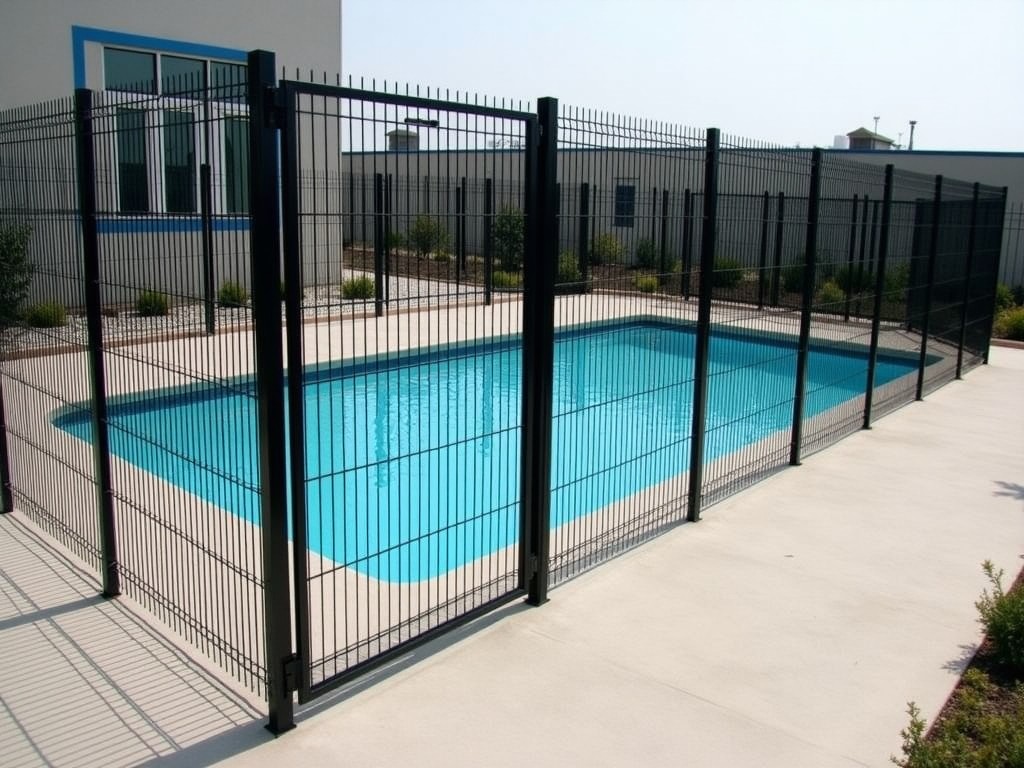
Temporary Pool Fence Gate – Source Factory Direct
Temporary pool fence gates serve as controlled access points within removable barrier systems designed for seasonal or short-term pool enclosures. Unlike permanent installations, these gates are engineered for repeated assembly, disassembly, and relocation without compromising structural integrity or latch reliability. As a source factory, we manufacture these components to meet the specific dimensional, material, and hardware requirements of contractors, event organizers, and municipal agencies deploying temporary safety barriers.
Engineered for Repeated Use and Quick Deployment
Each gate is built around a tubular frame with reinforced corner joints to resist racking during frequent handling. The frame uses galvanized steel tubing with a minimum wall thickness of 1.2 mm, providing sufficient rigidity to maintain gate alignment after multiple setup cycles. Hinge and latch assemblies are selected for corrosion resistance and mechanical endurance, tested to withstand a minimum of 5,000 open/close cycles without functional degradation. This cycle rating ensures longevity in high-turnover applications such as public events or construction site pools.
The gate width is standardized to match common temporary fence panel intervals, typically 1.0 m or 1.2 m clear opening, allowing seamless integration into modular panel systems. Height options align with standard pool fence regulations, commonly 1.2 m or 1.5 m, measured from the bottom rail to the top of the gate frame. Custom heights are available upon request to meet local jurisdictional requirements, with adjustments made to frame length and latch positioning accordingly.
Material Selection and Corrosion Protection
Frame material is hot-dip galvanized steel compliant with ASTM A123/A123M, offering a zinc coating weight of approximately 275 g/m². This level of protection provides adequate resistance to moisture and chlorine exposure during seasonal pool use. For environments with higher chemical exposure or extended outdoor storage, optional powder coating over galvanized substrate is available, adding a polymer layer that improves UV resistance and scratch tolerance. The coating thickness typically ranges from 60 to 80 microns, measured via magnetic induction.
Latch mechanisms are constructed from stainless steel grade 304, chosen for its resistance to pitting and crevice corrosion in chlorinated environments. The latch tongue and strike plate are designed with self-aligning features to accommodate minor frame misalignment during reinstallation. Hardware includes tamper-resistant fasteners where required by local safety codes, using one-way or pin-in-hex drive screws to deter unauthorized removal.
Latch Mechanism and Safety Compliance
The self-closing latch operates via a spring-loaded pivot mechanism calibrated to generate a closing force of 15–20 N, sufficient to overcome friction and ensure the gate returns to the closed position after passage. This force range is measured using a digital force gauge at the latch handle, with adjustments made during assembly to meet local barrier code requirements for self-closure speed and reliability. The latch engages automatically when the gate swings within 5° of the closed position, reducing reliance on user action.
Gate design prevents climbability by maintaining a maximum vertical clearance of 100 mm between the bottom rail and the ground, and ensuring no horizontal protrusions exceed 10 mm on the exterior face. These dimensions are verified during final inspection using calibrated gauges. The latch release mechanism is positioned at least 1.5 m above the ground to prevent access by young children, complying with common pool barrier standards such as AS 1926.1 or equivalent regional regulations.
Customization and Integration Options
Gates can be manufactured to match specific fence panel systems, including variations in post diameter, rail configuration, and connection hardware. Common interface types include bolt-through flanges, clamp-on brackets, or socket-and-pin designs, each engineered to maintain alignment and load transfer under lateral force. Customization extends to latch type—options include magnetic self-latching, gravity-fed drop bolts, or key-lockable mechanisms for supervised access control.
For projects requiring branding or site identification, the gate frame can accommodate adhesive-backed panels or engraved plates on the top rail or vertical stiles. These additions are designed to add minimal weight (<0.2 kg) and avoid interference with latch operation. Powder coating colors are available upon request to match corporate or event themes, with standard options including white, black, and safety yellow for high visibility.
Quality Control and Factory Testing
Every gate undergoes dimensional verification at three critical points: frame width, height, and latch strike alignment. Measurements are taken using calibrated calipers and micrometers, with tolerance limits of ±2 mm for width and height, and ±1 mm for latch engagement depth. Visual inspection checks for coating uniformity, weld integrity, and hardware tightness under 10x magnification. Any deviation triggers rework or rejection before packaging.
Functional testing includes latch cycle endurance, self-closing speed measurement, and lateral load resistance. The gate is subjected to a 150 N lateral force applied at the latch edge to simulate wind or impact exposure, with deflection measured to ensure it remains within elastic limits (<5 mm). Post-test, the latch is re-evaluated for alignment and retention strength. These tests are documented per batch and available for review upon request.
Packaging and Logistics
Gates are packaged individually in polyethylene bags to prevent surface abrasion during transit, then placed in stackable cardboard cartons with edge protectors. Each carton includes a desiccant pack to mitigate moisture ingress during long-term storage. Standard pack size is 10 units per carton, optimized for palletization and container loading. Carton dimensions are printed on the exterior label, including gross weight and handling instructions.
For export shipments, cartons are secured to ISPM-15 compliant pallets using poly strapping and corner boards. The packaging system is designed to withstand forklift handling, stacking loads up to 2,000 kg, and vertical drops of 76 cm per ISTA 3A standards. All packaging materials are recyclable where local facilities accept them, supporting end-of-life recovery efforts.
Applications in Temporary Pool Safety Systems
These gates are commonly deployed in municipal splash pads during seasonal opening periods, where permanent fencing is impractical due to underground utilities or landscaping constraints. The ability to quickly install and remove the barrier system allows facilities to comply with health codes during operating months while restoring public access during off-seasons. Contractors report average installation times of 8–12 minutes per gate when using pre-assembled panels and standard tools.
In construction environments, temporary pool gates provide controlled access to dewatered pools or training facilities used during large-scale events. The latch mechanism prevents unauthorized entry while allowing workers and inspectors to pass freely. After project completion, the gates are disassembled, inspected, and returned to inventory for reuse, reducing lifecycle costs compared to single-use alternatives. Maintenance involves periodic lubrication of hinge points and visual inspection of latch components every 20–30 cycles.
| Parameter | Typical Value | Customization Notes |
|---|---|---|
| Frame Material | Hot-dip galvanized steel (ASTM A123) | Optional powder coating over galvanized |
| Tube Wall Thickness | 1.2 mm minimum | Increased to 1.5 mm for high-wind zones |
| Clear Opening Width | 1.0 m or 1.2 m | Custom widths available (0.8–1.5 m) |
| Gate Height | 1.2 m or 1.5 m | Adjustable to meet local codes (1.0–1.8 m) |
| Latch Material | Stainless steel 304 | Grade 316 available for marine environments |
| Self-Closing Force | 15–20 N | Adjustable spring tension |
| Cycle Rating | 5,000 open/close cycles | Higher ratings available upon request |
| Coating Thickness (Powder) | 60–80 microns | Color and texture options available |
For technical drawings, material certifications, or to discuss specific project requirements including regional compliance, latch preferences, or packaging configurations, contact our engineering team directly. We provide prompt responses to quotation requests and can arrange sample evaluation upon verification of end-use application.
Request Technical Specification or Quote
Product Categories


Send Inquiry
If you are interested in our products, leave your information here and we will be in touch shortly.