Temporary Pool Fencing During Construction
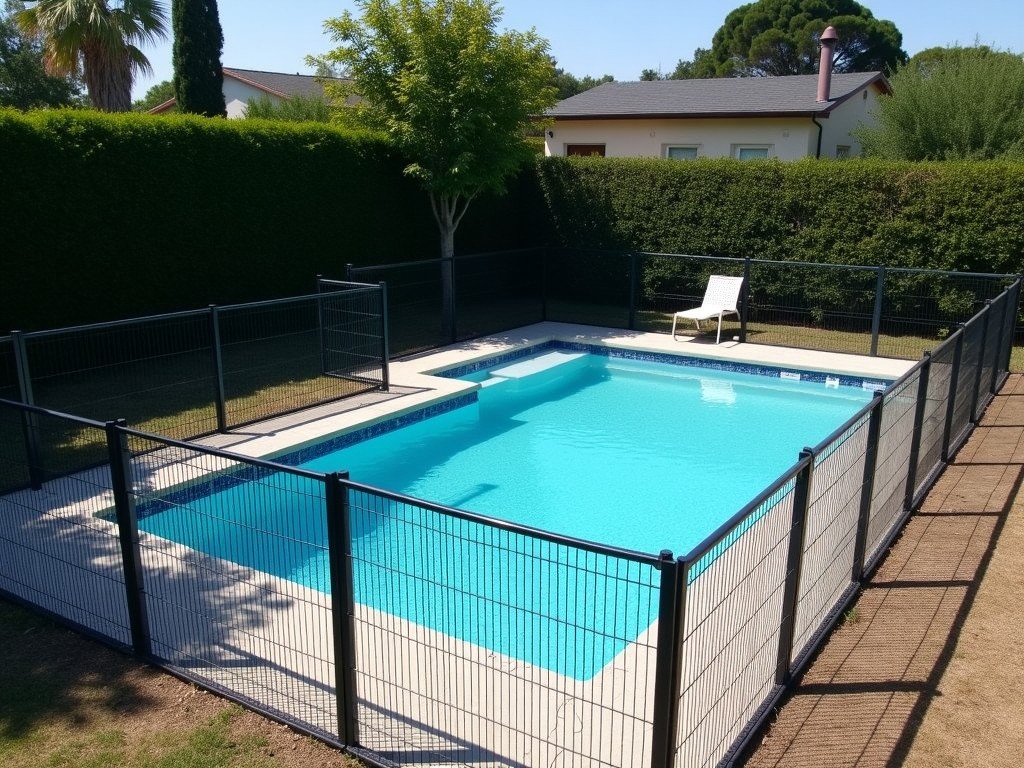
Temporary pool fencing during construction provides a critical safety barrier to prevent unauthorized access to in-ground or above-ground pools while excavation, plumbing, electrical work, or finish
Temporary Pool Fencing During Construction
Temporary pool fencing during construction provides a critical safety barrier to prevent unauthorized access to in-ground or above-ground pools while excavation, plumbing, electrical work, or finish installation is underway. It is designed for rapid deployment, repeated repositioning, and compliance with local jurisdictional requirements for construction site safety. Unlike permanent pool barriers, temporary systems prioritize modularity, ease of installation without permanent anchors, and resistance to wind uplift and impact from light equipment.
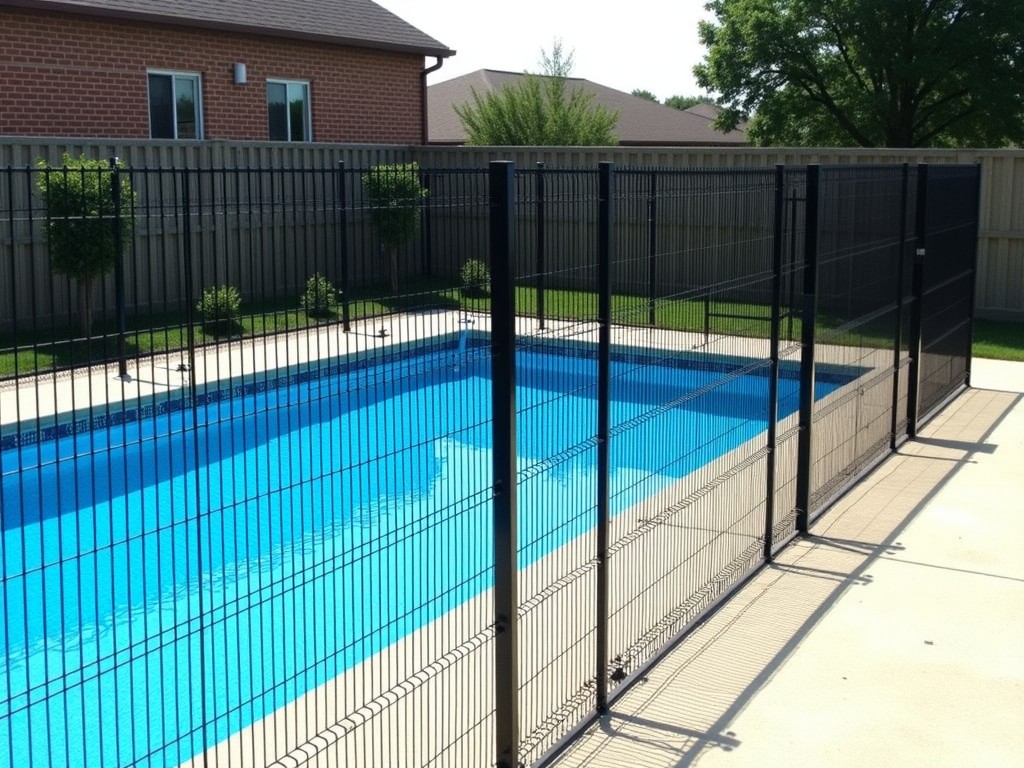
The system typically consists of interlocking panels made from high-density polyethylene (HDPE) or galvanized steel tubing with powder-coated finish, connected via non-corrosive polymer or stainless steel couplers. Panel heights range from 1.0 to 1.2 meters to meet most municipal codes for pool barrier requirements, with vertical picket spacing not exceeding 100 mm to prevent child passage. Base plates are weighted or sand-bagged to resist lateral forces, eliminating the need for ground penetration that could damage underground utilities or landscaping.
Key Design Characteristics
Panel structural integrity is determined by material yield strength and connection design. HDPE panels typically exhibit a flexural modulus of 800–1200 MPa and impact resistance sufficient to withstand accidental contact from landscaping tools or light construction equipment without cracking. Steel variants use 1.2 mm wall thickness tubing with a minimum yield strength of 250 MPa, providing higher resistance to deformation under lateral load.
Connection mechanisms are engineered for tool-free assembly while maintaining shear resistance. Interlocking tabs and lugs are molded with draft angles for easy engagement and disengagement, rated for over 500 cycles without wear-induced loosening. Steel coupler systems use spring-loaded pins with nylon retention washers to prevent vibration loss. All connections are designed to resist a minimum lateral load of 150 N per joint before slippage occurs.
Base stability is achieved through either integrated ballast pockets (for HDPE) or separate steel base plates with sandbag receptacles. Each linear meter of fencing requires approximately 15–20 kg of ballast to resist overturning moments from wind gusts up to 40 km/h or accidental impact. Drainage holes in base plates prevent water accumulation that could freeze and compromise stability in colder climates.
Material Options and Performance
HDPE panels are UV-stabilized with carbon black or hindered amine light stabilizers (HALS) to maintain tensile strength and color stability after 1,000 hours of ASTM G154 accelerated weathering. The material resists chlorinated water splash, mild acids, and alkalis commonly found on construction sites. Weight averages 8–10 kg per panel, enabling manual handling by two workers without mechanical aids.
Galvanized steel panels undergo hot-dip galvanization to a minimum zinc coating of 55 µm, providing corrosion resistance in C3 environments per ISO 12944. Powder coating adds a secondary barrier with adhesion strength exceeding 5B per ASTM D3359. Steel panels weigh 12–15 kg each but offer higher tensile strength and resistance to permanent deformation under sustained load.
Both material types are non-conductive when properly coated, reducing electrical hazard risks near temporary power installations. Recyclability is inherent: HDPE is #2 recyclable, and steel components achieve >90% recovery rates in standard scrap streams. Neither material releases VOCs during service life.
Typical Applications on Construction Sites
Temporary pool fencing is deployed immediately after pool excavation and before any water filling or equipment installation begins. It creates a defined exclusion zone that satisfies OSHA 1926.502(b) requirements for fall protection barriers in residential construction contexts, even though pools are not classified as roofs or floors. Local building departments often require proof of barrier installation prior to rough-in inspections for plumbing or electrical work.
The system accommodates irregular pool geometries through adjustable panel angles. Corner couplers allow 15°–30° deflection per joint, enabling radii as tight as 1.2 meters without gaps. Straight runs use standard couplers with built-in tolerance for ±5 mm misalignment to accommodate uneven ground. Gate panels, typically 1.0–1.2 m wide, use self-closing hinges and magnetic latches to maintain barrier integrity when access is needed for material delivery or worker movement.
Beyond pool projects, the same fencing is frequently repurposed for trench protection, equipment storage zones, or pedestrian walkway separation on mixed-use construction sites. Its reusability across multiple project phases reduces lifecycle cost compared to single-use wood or plastic barrier systems.
Installation and Maintenance Considerations
Installation requires no specialized tools. Workers connect panels by aligning lugs and applying downward pressure until an audible click confirms engagement. Base plates are positioned at 2–3 meter intervals and weighted with sandbags (typically 25 kg bags) or water-filled bladders. A two-person crew can install 50 linear meters per hour on level ground with minimal training.
Inspection protocols focus on connection integrity and base stability. Daily checks verify that all couplers are fully engaged and no panels exhibit >5 mm lateral movement when pushed at mid-height. Ballast levels are checked after wind events or heavy rain. Panels showing UV-induced chalking (surface powdering) or stress whitening should be rotated to shaded positions or replaced if structural integrity is compromised.
Cleaning involves low-pressure water rinse and mild detergent; solvent-based cleaners are avoided to prevent polymer degradation or coating damage. Storage between projects should be vertical or flat-stacked with weight distribution to prevent warping. HDPE panels nest efficiently, reducing storage volume by 60% compared to loose stacking.
| Parameter | HDPE Panel | Galvanized Steel Panel |
|---|---|---|
| Typical Height | 1.0–1.2 m | 1.0–1.2 m |
| Weight per Linear Meter | 8–10 kg | 12–15 kg |
| Wind Load Resistance (No Ballast) | Up to 25 km/h | Up to 30 km/h |
| Required Ballast per Meter | 15–20 kg | 10–15 kg |
| UV Stability (Hours to 50% Property Retention) | 1,000+ (stabilized) | N/A (coating dependent) |
| Reusability Cycles | >500 | >300 |
Customization and Project Adaptation
Panel length is commonly available in 1.0 m and 1.5 m modular units to optimize handling and reduce transport volume. Custom lengths up to 2.0 m are feasible for long straight runs but increase weight and require mechanical handling aids. Height customization beyond 1.2 m is possible for sites with elevated fall hazards but necessitates engineering review of base stability and wind loading.
Color options include safety orange (RAL 2009) for high visibility, white for aesthetic compatibility with residential surroundings, and dark gray for reduced visual impact. Custom colors require minimum order quantities and may affect UV stabilizer loading. Reflective strips (Class 1 per EN 13356) can be applied to vertical rails for low-light visibility without compromising coating adhesion.
Gate configurations include single-swing, double-swing, and sliding variants. Self-closing mechanisms use torsion springs rated for 10,000 cycles, and latches incorporate magnetic or gravity-operated designs that fail-safe to the locked position. Access control integrations, such as hasp loops for padlocks or compatibility with temporary site fencing systems, are available upon request.
Quality Control and Compliance
Dimensional tolerances are maintained within ±2 mm for panel length and ±1 mm for coupler engagement depth during manufacturing. Injection-molded HDPE components undergo melt flow index testing to ensure consistent polymer grade, while steel tubing is verified for wall thickness via ultrasonic sampling. Final assembly includes functional testing of gate self-closure speed (target: 1.5–3.0 seconds) and latch retention under 50 N lateral pull.
While temporary construction fencing is not subject to the same certification as permanent pool barriers (e.g., ASTM F2286), reputable manufacturers align designs with the intent of ICC/ANSI A117.1 and local pool barrier codes. Documentation typically includes material safety data sheets (MSDS), UV stability test summaries, and load test reports available upon request. No formaldehyde, heavy metals, or phthalates are intentionally added to HDPE formulations.
Traceability is maintained via batch molding dates and material lot numbers. Packaging includes QR codes linking to digital installation guides and inspection checklists. Export shipments use ISPM-15 compliant pallets with corner bracing and stretch film to prevent shifting during transit.
For project-specific technical data, load calculation support, or sample requests, contact our engineering team to discuss your site requirements, local code interpretations, and installation timelines.
Request Technical Consultation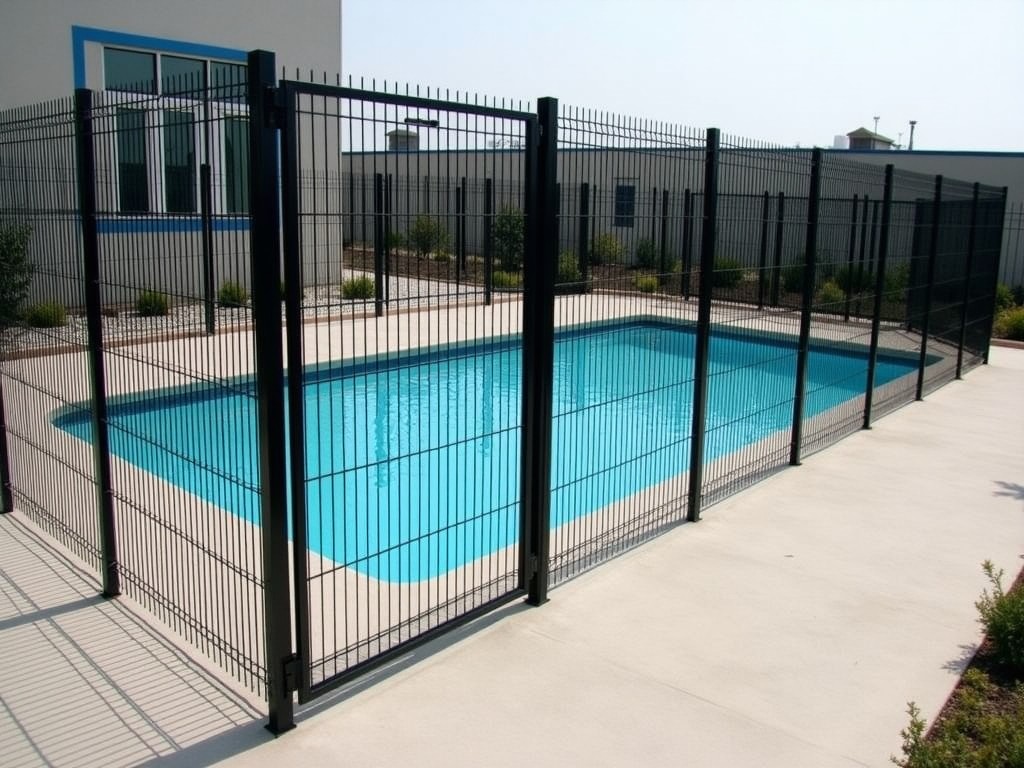
Product Categories


Send Inquiry
If you are interested in our products, leave your information here and we will be in touch shortly.