Types Of Razor Wire Fencing Source Factory
Razor wire fencing serves as a high-security perimeter barrier designed to deter and delay unauthorized access through a combination of physical obstruction and psychological deterrence. Unlike
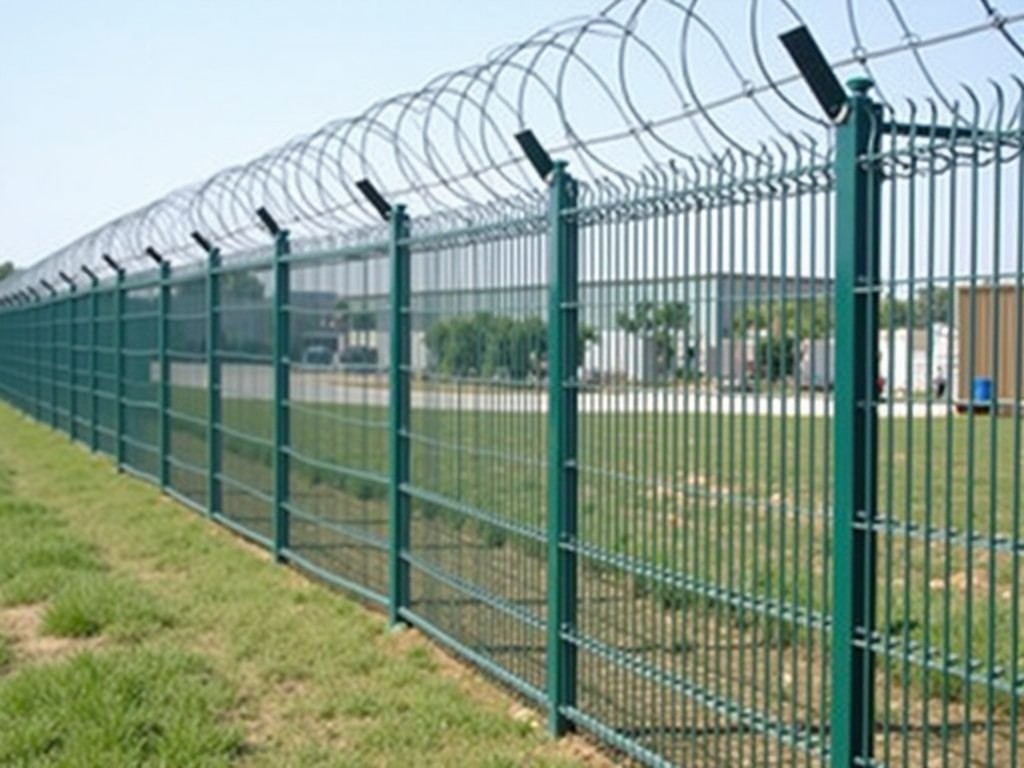
Types of Razor Wire Fencing – Source Factory Specifications
Razor wire fencing serves as a high-security perimeter barrier designed to deter and delay unauthorized access through a combination of physical obstruction and psychological deterrence. Unlike conventional barbed wire, razor wire features sharp-edged steel tape or wire formed into coils or linear strands with a consistent profile that maximizes cutting efficiency while maintaining tensile strength under load. Industrial buyers specify razor wire based on threat level, environmental exposure, installation constraints, and required service life, making technical differentiation between types essential for risk-appropriate selection.
Core Classification by Form Factor
Razor wire is primarily classified into three structural configurations: concertina coil, linear strand, and flat wrap. Each form factor influences deployment method, coverage density, and suitability for specific substrate types such as chain-link fencing, welded mesh, or concrete walls. The choice affects not only initial installation labor but also long-term maintenance accessibility and re-tensioning requirements over time.
| Type | Form Factor | Typical Core Diameter (mm) | Deployment Method |
|---|---|---|---|
| Concertina Coil | Helically wound coils with alternating loops | 450–900 (expanded) | Stretched and secured between posts; self-supporting in loops |
| Linear Strand | Straight wire with barbs along length | 2.5–3.0 (wire core) | Stapled or clipped to existing fence top; requires continuous tensioning |
| Flat Wrap | Coiled flat against surface; low profile | 20–25 (when coiled) | Adhered or fastened directly to wall/top of barrier; minimal visual footprint |
Blade Geometry and Material Composition
The effectiveness of razor wire depends on blade thickness, angle, and spacing along the core, which determine penetration resistance and fatigue life. Blades are typically stamped from cold-rolled steel tape with thicknesses ranging from 0.5 mm to 1.0 mm, with angles between 15° and 30° relative to the core axis optimizing both cutting action and resistance to straight-pull extraction. Material selection balances corrosion resistance with formability during manufacturing.
- Galvanized Steel: Zinc-coated (typically 20–50 g/m²) for standard outdoor use; provides 5–10 years of service in temperate climates before red rust appears; lowest cost option for temporary or semi-permanent installations.
- Stainless Steel (304/316): Chromium-nickel alloy for marine, industrial, or high-humidity environments; resists pitting and chloride-induced corrosion; maintains mechanical properties over 15+ years with minimal maintenance; higher initial cost but lower lifecycle expense in corrosive settings.
- PVC-Coated: Galvanized or stainless steel core encapsulated in UV-stabilized polyvinyl chloride; available in black, green, or brown for aesthetic integration; coating adds 0.3–0.5 mm to blade thickness, slightly reducing cutting efficiency but significantly extending life in aggressive atmospheres.
Performance Metrics and Testing Considerations
Industrial specifications reference tensile strength, blade retention force, and environmental endurance rather than subjective claims. Typical core wire tensile strength ranges from 1,700 to 2,300 MPa for high-carbon steel, ensuring resistance to sagging under snow load or wind-induced vibration. Blade retention — measured as the force required to dislodge a blade from the core — typically exceeds 150 N per blade in galvanized variants and 200 N in stainless steel due to superior metallurgical bonding.
Accelerated weathering tests (per ISO 9227 salt spray or ISO 12944) are used to validate coating integrity, with acceptable performance defined as less than 5% red rust after 500 hours for galvanized and no base metal exposure after 1,000 hours for stainless steel. Buyers should request test reports specific to the alloy and coating thickness rather than relying on generic certifications.
Application-Driven Selection Logic
Matching razor wire type to threat environment prevents over-specification or under-protection. Low-risk perimeters (e.g., storage yards, substations) often use galvanized concertina coils at 450 mm diameter for cost-effective deterrence. High-security zones (correctional facilities, military borders) require stainless steel linear strands with reduced pitch (blade spacing <25 mm) to increase blade density and frustrate cutting tools. Flat wrap is preferred atop precast concrete walls in urban installations where visual impact and legal liability from protruding coils are concerns.
Coastal or chemical plant environments necessitate PVC-coated or 316 stainless steel to prevent premature failure from salt fog or acid vapors. In contrast, arid inland sites may use standard galvanized wire with UV-stabilized additives to mitigate brittleness from thermal cycling. Installation height, overhang angle, and integration with motion sensors or lighting further define the effective barrier system, making razor wire selection one component of a layered security approach.
Manufacturing Tolerances and Quality Control
Consistency in blade geometry and coil tension directly impacts field performance. Manufacturing tolerances for blade length are typically ±0.5 mm, with angular deviation held to ±2° to ensure uniform penetration characteristics. Coil expansion diameter is controlled via mandatory tensile testing during winding, with concertina coils required to maintain 90% of specified diameter under 50 N lateral load to prevent telescoping or gap formation during deployment.
In-line inspection includes optical measurement of blade spacing, magnetic testing for core wire continuity, and pull-off adhesion tests for coated variants. Batch traceability is maintained via laser etching or tagging on inner cores, linking each production run to material certificates and test logs. Buyers should verify whether the supplier conducts 100% visual inspection or statistical sampling, as blade defects compromise the entire strand’s integrity.
Customization Parameters
Razor wire specifications are frequently adapted to project-specific constraints beyond standard catalog offerings. Key customizable parameters include core wire diameter (1.8–3.2 mm), blade length (10–22 mm), coil pitch (for concertina: 25–100 mm), and overall coil diameter (300–1,200 mm). Surface treatment can be adjusted for dual-layer protection (e.g., galvanized base with PVC topcoat) or specialized colors for camouflage or regulatory compliance.
Packaging options affect handling and site logistics: concertina coils are commonly bundled in packs of 5–10 units with plastic spacers to prevent deformation, while linear strands are supplied on spools or in coiled reels to minimize tangling during installation. Labeling includes batch number, material grade, tensile strength, and applicable standards (e.g., ASTM F1664, EN 10223-3). For export shipments, VCI-treated inner wrapping and moisture-barrier outer cartons are standard to prevent corrosion during transit.

Product Categories


Send Inquiry
If you are interested in our products, leave your information here and we will be in touch shortly.