Types Of Wire Mesh Fence Source Factory
Industrial wire mesh fencing serves critical functions in security, containment, and environmental separation across manufacturing, logistics, and infrastructure sectors. Selecting the appropriate
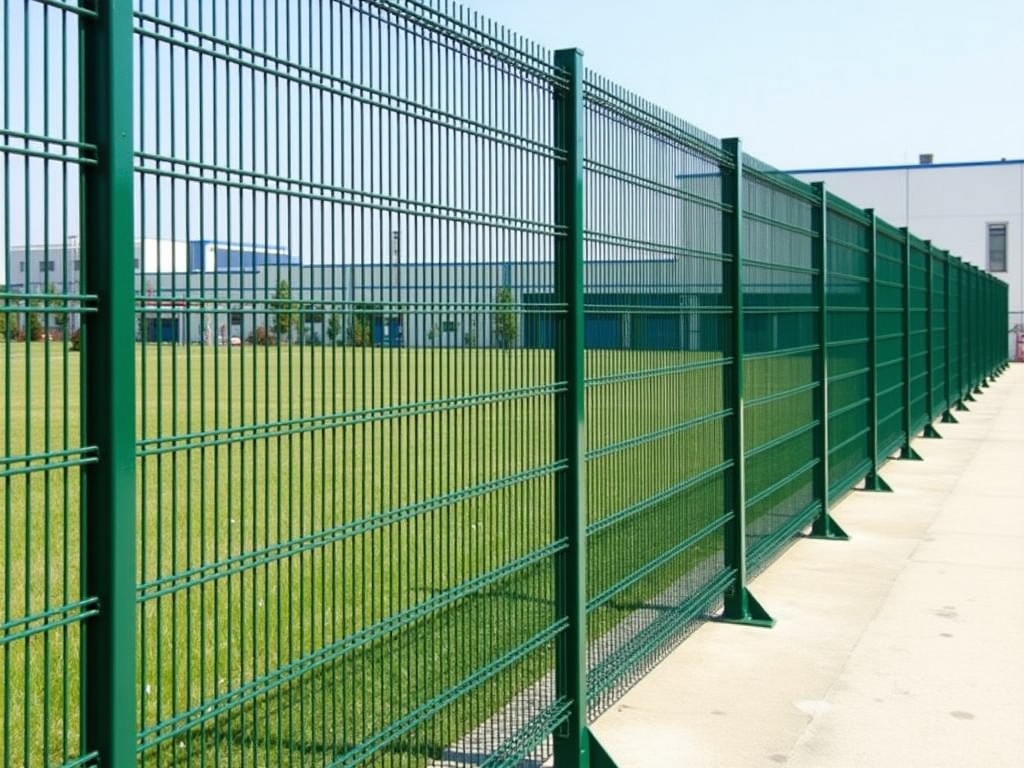
Types of Wire Mesh Fence: Source Factory Specifications
Industrial wire mesh fencing serves critical functions in security, containment, and environmental separation across manufacturing, logistics, and infrastructure sectors. Selecting the appropriate type requires understanding material properties, mesh geometry, and structural performance under specific load and corrosion conditions. This page outlines the primary classifications of wire mesh fence produced by source factories, focusing on technical attributes that influence long-term value and operational risk.
Material-Based Classification
The base material determines corrosion resistance, tensile strength, and suitability for indoor or outdoor environments. Common options include low-carbon steel, galvanized steel, stainless steel (grades 304 and 316), and PVC-coated variants. Low-carbon steel offers high strength but requires protective coating in humid or chemically exposed settings. Hot-dip galvanization applies a zinc layer typically 55–85 µm thick, providing sacrificial protection for 10–15 years in moderate climates. Stainless steel resists oxidation without coating; grade 304 suits general industrial use while 316 adds molybdenum for chloride resistance in coastal or chemical processing zones. PVC coating adds a 0.3–0.5 mm polymer layer over galvanized or stainless steel, improving impact resistance and enabling color coding for safety zones.
Mesh Geometry and Opening Types
Mesh design affects visibility, climb resistance, small-particle containment, and wind load. Square mesh is the most common, defined by wire diameter and aperture size (e.g., 50×50 mm with 3.0 mm wire). Rectangular mesh offers higher tensile strength in the longitudinal direction, useful for perimeter fencing where horizontal loads dominate. Diamond mesh (chain-link) forms through interlocking helices, providing flexibility and energy absorption—ideal for high-impact areas like sports facilities or machine guards. Micro-mesh variants (apertures <10 mm) prevent ingress of small rodents or debris in food processing or cleanroom adjacent zones. Wire diameter typically ranges from 2.0 mm to 6.0 mm, directly influencing panel rigidity and resistance to deformation under tension or impact.
Panel Frame and Attachment Systems
Structural integrity depends on how the mesh is secured to the frame. Welded mesh panels fuse wires at every intersection, creating a rigid grid that resists sagging and maintains aperture consistency over time—suitable for high-security enclosures or rodent barriers. Woven mesh (including chain-link) relies on helical twisting, allowing some movement that dissipates energy but may require periodic tension checks. Frames are typically made from rolled steel channels (C-profile) or square tubes (40×40×2.0 mm), welded or bolted to the mesh. Clamping methods include U-bands, weld-on brackets, or proprietary snap-lock systems. Post-installation, panels are attached to steel or concrete posts via brackets, allowing for thermal expansion and ease of replacement.
Surface Treatment and Longevity Factors
Beyond base material, surface treatments significantly affect service life. Powder coating applies a thermoset polymer (epoxy or polyester) cured at 180–200°C, offering UV resistance and color retention for 5–8 years outdoors. Zinc-aluminum alloy coating (Zn-Al 95/5) provides superior barrier protection compared to pure zinc, extending lifespan in industrial atmospheres. For harsh chemical environments, some factories apply dual-layer systems: hot-dip galvanization followed by epoxy primer and polyurethane topcoat. Accelerated testing (e.g., 1000-hour salt spray per ASTM B117) is commonly used to validate coating performance, though real-world duration depends on microclimate, maintenance, and mechanical wear.
Customization Parameters for Industrial Projects
Source factories adjust specifications based on site-specific engineering requirements. Key variables include panel height (typically 1.2–3.0 m, with custom extensions via post splicing), wire diameter (2.0–6.0 mm), aperture size (10×10 mm to 100×100 mm), and frame profile dimensions. Posts are spaced 2.5–3.5 m apart for standard panels, reduced to 2.0 m in high-wind or high-load zones. Ground clearance is often set at 50–100 mm to prevent moisture trapping and facilitate cleaning. For sloped terrain, panels can be fabricated with stepped or raked edges to maintain consistent base alignment. All dimensions are subject to tolerance standards (±2.5 mm for aperture, ±3.0 mm for wire diameter) unless otherwise agreed.
Comparison of Common Wire Mesh Fence Types
| Type | Typical Wire Diameter | Common Aperture | Frame Material | Best For |
|---|---|---|---|---|
| Welded Square Mesh | 2.5–4.0 mm | 40×40 mm to 75×75 mm | C-channel or square tube | High-security enclosures, rodent barriers, machine guards |
| Chain-Link (Diamond Mesh) | 2.0–3.5 mm | 50×50 mm to 75×75 mm | Round or square post with tension wire | Perimeter fencing, sports fields, temporary site barriers |
| Woven Rectangular Mesh | 3.0–5.0 mm | 50×100 mm to 75×150 mm | Structural steel frame | Industrial partitions, windbreaks, bulk material containment |
| PVC-Coated Mesh | 2.5–4.0 mm (steel core) | 40×40 mm to 50×50 mm | Galvanized steel frame | Color-coded zones, playgrounds, aesthetic perimeter screening |
Quality Control and Testing Protocols
Reliable performance begins with consistent manufacturing. Wire diameter is verified using micrometers at multiple points per coil. Tensile strength is tested per ASTM A370, with values typically ranging from 350–550 MPa for low-carbon steel and 500–700 MPa for stainless steel. Mesh flatness is assessed by measuring deviation from a plane over a 1 m span—acceptable tolerance is usually ≤5 mm. Coating thickness is measured via magnetic or eddy current probes, with galvanized layers checked per ASTM A90. Visual inspection checks for weld integrity (in welded mesh), uniform weaving, and absence of sharp edges or burrs. Packaging includes moisture barriers and edge protection to prevent deformation during transit.
Engineers and procurement teams benefit from direct engagement with source factories that provide material test reports, dimensional drawings, and coating documentation upon request. Clear specifications reduce the risk of field failures, rework, or premature corrosion. When evaluating options, consider not only initial cost but also expected maintenance intervals, environmental exposure, and required service life. Technical alignment between design intent and manufactured output ensures the fence performs as intended throughout its lifecycle.
Product Categories


Send Inquiry
If you are interested in our products, leave your information here and we will be in touch shortly.