Wholesale Temporary Gate For Driveway
Temporary driveway gates provide controlled access during construction, events, or site preparation without permanent installation. They balance security needs with rapid deployment and removal,
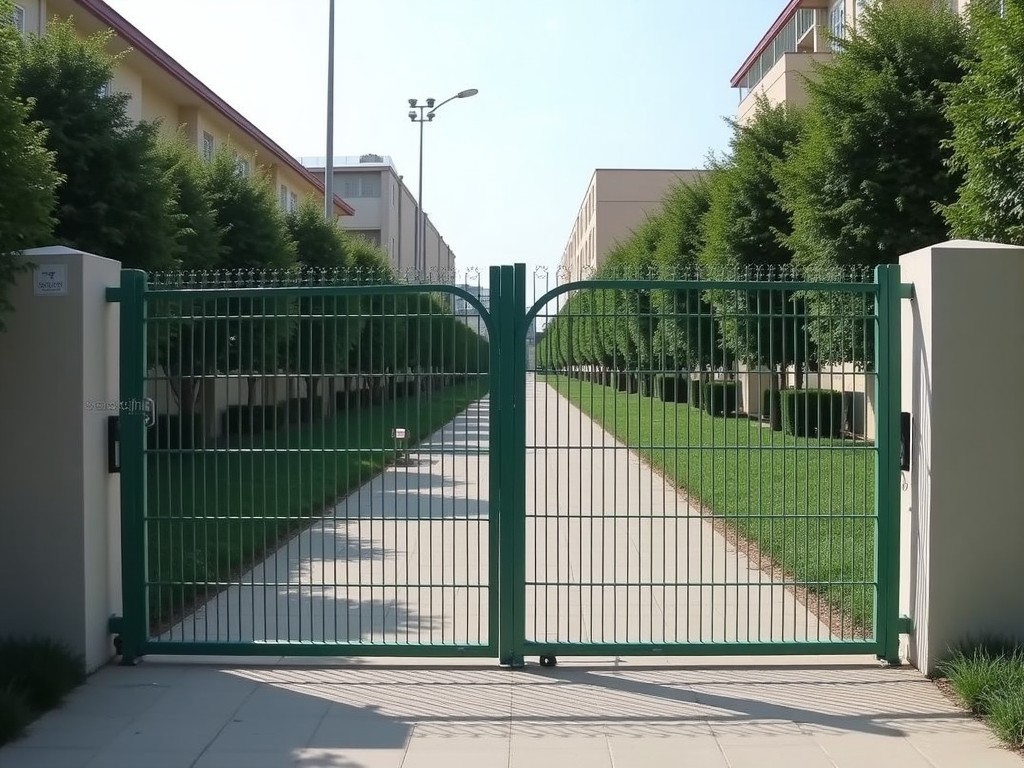
Wholesale Temporary Gate for Driveway
Temporary driveway gates provide controlled access during construction, events, or site preparation without permanent installation. They balance security needs with rapid deployment and removal, reducing site disruption while maintaining perimeter integrity. Selecting the right system requires evaluating load conditions, frequency of use, and environmental exposure to ensure operational reliability throughout the project lifecycle.
Structural Configuration and Load Performance
The gate frame uses hot-dip galvanized steel tubing with a minimum yield strength of 350 MPa, forming a rectangular portal that resists lateral deflection under wind loads up to 120 km/h. Vertical posts are anchored via weighted base plates or ground spikes depending on substrate conditions, transferring overturning moments to the foundation through a moment-resisting connection. The gate leaf incorporates diagonal bracing to maintain alignment under repeated cycling, limiting vertical sag to less than 5 mm over a 3-meter span after 1,000 load cycles.
Load testing confirms the system withstands dynamic impact forces equivalent to a 15 kg object striking at 5 m/s without permanent deformation, suitable for accidental vehicle contact during low-speed maneuvering. The latch mechanism engages with a 12 mm diameter steel bolt, providing a shear capacity of 25 kN to resist forced entry attempts. All connection points use Grade 8.8 bolts with nylon-insert lock nuts to maintain preload under vibration.
Material Selection and Corrosion Resistance
Primary structural components undergo hot-dip galvanization per ISO 1461, achieving a minimum zinc coating thickness of 85 μm for extended service life in outdoor environments. This coating provides sacrificial protection, delaying red rust formation for 5–7 years in temperate climates with moderate pollution. Alternative finishes include powder-coated galvanized steel for aesthetic requirements or stainless steel (Grade 304) for chloride-exposed locations such as coastal sites.
Non-structural elements like wheel guides and latch housings use UV-stabilized polypropylene, maintaining impact strength down to -20°C and resisting embrittlement from prolonged sun exposure. The gate leaf infill options—welded mesh, perforated steel, or timber slats—are selected based on visibility, wind porosity, and project-specific durability needs. Mesh infill uses 2.5 mm diameter wire at 50×50 mm apertures, offering 68% open area to reduce wind loading while preventing hand access.
Operational Mechanisms and Access Control
The gate operates as a single-leaf swing design with self-closing hinges incorporating a torsion spring rated for 50,000 cycles. Adjustable closing speed is achieved via a hydraulic damper, allowing tuning between 3 and 8 seconds for a 90-degree swing to match site traffic flow. Hinges are sealed units with marine-grade grease, eliminating routine lubrication needs in dusty or wet conditions.
Access control integrates with standard padlock hasps (8 mm shackle diameter) or accommodates electronic strike plates for temporary access systems. The latch receiver includes a floating tolerance of ±3 mm to compensate for ground settlement or frame misalignment during use. For bidirectional traffic, a double-leaf configuration is available, where each leaf closes independently to prevent wind-induced racking.
Installation Adaptability and Site Requirements
Installation requires a level surface within 5 mm tolerance over the gate width to ensure proper latch engagement. Base plates distribute loads over a 300×300 mm area, suitable for compacted gravel, asphalt, or concrete surfaces with a minimum bearing capacity of 100 kPa. On softer substrates, ground spikes penetrate 400 mm to achieve anchorage through soil shear resistance, verified via pull-out testing to 1.8 kN in clay-loam conditions.
No ground penetration is needed for reusable ballast bases, which use stackable steel weights totaling 180 kg per post to resist uplift and sliding. The system accommodates slopes up to 5 degrees through adjustable base shims, maintaining vertical alignment of the gate leaf. Clearance requirements include 100 mm lateral space for swing and 50 mm overhead for hardware, with total height options ranging from 1.2 m to 2.4 m in 200 mm increments.
Typical Applications and Project Suitability
Construction sites use these gates to manage delivery vehicles and worker access during phases where permanent fencing is impractical or delayed. The rapid setup—typically under 30 minutes per unit by two personnel—supports dynamic site logistics as work zones shift. Event venues deploy them for temporary traffic control during festivals or markets, where aesthetic integration with temporary structures is valued.
Utility projects benefit from the non-permanent nature when working in public right-of-ways, allowing quick restoration of normal access after work completion. Municipal contractors select them for road maintenance zones where long-term barriers would impede emergency vehicle movement. The wholesale procurement model supports phased deployment across multiple sites, reducing per-unit cost through consolidated shipping and standardized inventory.
Customization Options and Scaling Considerations
Standard widths range from 2.4 m to 4.8 m in 400 mm increments, accommodating single-lane and dual-lane driveway configurations. Height customization allows matching existing perimeter fencing or meeting specific security clearances. Infill panels can be swapped between mesh, solid steel, or wood-composite materials without altering the frame, enabling reuse across projects with different visual or functional requirements.
Branding options include powder-coated finishes in RAL colors or removable vinyl panels for contractor identification. For high-frequency use, reinforced hinges with upgraded bearings increase cycle life to 100,000 operations. Scaling to multiple gates is facilitated by interchangeable components, simplifying spare parts management and reducing training complexity for site crews.
| Parameter | Typical Range | Notes |
|---|---|---|
| Clear Opening Width | 2.4 m – 4.8 m | Custom widths available |
| Gate Height | 1.2 m – 2.4 m | 200 mm increments |
| Frame Material | Hot-dip galvanized steel | Optional: 304 stainless steel |
| Infill Type | Welded mesh, perforated steel, timber slats | Mesh: 50×50 mm, 2.5 mm wire |
| Base Anchoring | Weighted plates, ground spikes, ballast | Substrate dependent |
| Wind Load Resistance | Up to 120 km/h | Depends on height and infill porosity |
| Cycle Life (Hinges) | 50,000 – 100,000 | Standard vs. reinforced |
| Latch Shear Capacity | 25 kN | 12 mm diameter bolt |
Quality Assurance and Manufacturing Consistency
Dimensional verification occurs at key stages: post-weld frame squareness is checked via diagonal measurement (tolerance ±3 mm), and hinge alignment is confirmed using a laser level to ensure vertical plane consistency. Coating thickness is measured magnetically on production samples, with adhesion tested per ISO 2409 (cross-hatch method) to ensure minimum rating of 1B. Infill panels undergo pull-off testing to confirm weld or fastener integrity under 1.5 kN load.
Load validation includes cyclic testing of the latch mechanism at 100% rated shear force for 5,000 cycles without deformation or failure to engage. Final assembly checks include operational swing tests under simulated wind load (using fan arrays) to confirm latching reliability. Documentation includes material certificates, galvanization compliance reports, and a declaration of conformity to relevant temporary works guidelines.
Packaging uses corrosion-inhibiting film and edge protectors, with units stacked horizontally in palletized frames to prevent bending during transit. Each pallet includes a packing list detailing gate dimensions, hardware kit contents, and installation quick-reference guide. Wholesale orders benefit from consolidated palletization, reducing handling damage and simplifying receiving procedures at distribution points.
Procurement and Technical Support
Wholesale pricing applies to order quantities of 10 units or more, with volume discounts structured at 5%, 12%, and 20% for 10–24, 25–49, and 50+ units respectively. Lead times average 3–4 weeks for standard configurations, extending to 5–6 weeks for custom finishes or non-standard infill materials. Quotations require project details including gate width, height, expected usage frequency, and site substrate type to recommend appropriate anchoring and hardware specifications.
Technical support includes providing CAD models (STEP and DWG formats) for site planning, load calculation templates for wind and impact scenarios, and installation videos demonstrating base plate leveling and latch adjustment. Samples are available upon request for qualifying wholesale inquiries, typically shipped within 5 business days. After-sales assistance covers spare parts identification and warranty claims related to manufacturing defects in structural components or coating adhesion.
Product Categories


Send Inquiry
If you are interested in our products, leave your information here and we will be in touch shortly.