B2B Mild Steel Walkway Mesh
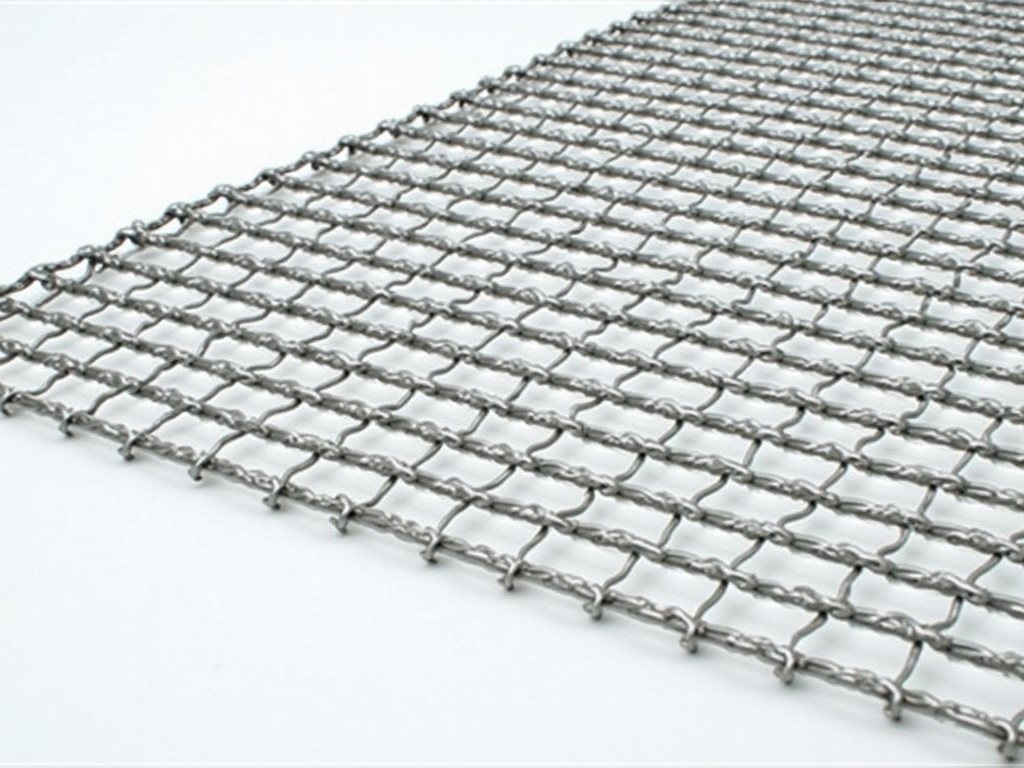
Mild steel walkway mesh is a structural grating solution fabricated from low-carbon steel, designed for safe pedestrian and light vehicular traffic in industrial environments. It provides
B2B Mild Steel Walkway Mesh
Mild steel walkway mesh is a structural grating solution fabricated from low-carbon steel, designed for safe pedestrian and light vehicular traffic in industrial environments. It provides slip-resistant surfaces, load distribution, and corrosion resistance when treated appropriately. This product is commonly specified where cost-effectiveness, ease of installation, and mechanical strength are prioritized over premium alloy alternatives.
Material Composition and Mechanical Properties
The base material is typically ASTM A36 or equivalent mild steel, containing approximately 0.05–0.25% carbon by weight, which balances weldability, formability, and tensile strength. Standard grades exhibit a minimum yield strength of 250 MPa and tensile strength ranging from 400–550 MPa. These properties allow the mesh to support uniform distributed loads of up to 5 kPa under normal service conditions, depending on bar thickness and spacing.
Cross rods and bearing bars are electrically resistance-welded at intersection points, creating a monolithic joint without additives or fillers. This welding method ensures consistent shear transfer and prevents relative movement under cyclic loading. The resulting structure maintains dimensional stability even after prolonged exposure to vibration and thermal cycling.
Surface Treatment Options for Environmental Resistance
Untreated mild steel is susceptible to oxidation in humid or chemically aggressive environments. To extend service life, surface treatments are applied based on exposure conditions. Hot-dip galvanizing per ISO 1461 provides a zinc coating thickness of 55–85 µm, offering sacrificial protection for 15–25 years in rural and suburban atmospheres.
In marine or industrial zones with high chloride or sulfur dioxide levels, epoxy powder coating (typically 60–100 µm dry film thickness) may be specified as a barrier system. For internal dry environments, a simple primer coat suffices for temporary corrosion inhibition during storage and installation. Treatment selection directly impacts maintenance frequency and lifecycle cost.
Standard and Customizable Dimensions
Walkway mesh is manufactured to meet common industrial module sizes, facilitating integration into existing support frameworks. Standard bearing bar pitches are 30 mm or 40 mm, with cross rod spacing typically set at 100 mm. These configurations optimize open area for drainage and debris passage while maintaining adequate stiffness.
Bar thickness ranges from 3 mm to 6 mm, and height from 20 mm to 50 mm, allowing engineers to match deflection limits to project-specific span requirements. Custom lengths, widths, and end finishes (such as notched, punched, or banded edges) are available upon request to accommodate irregular openings or transitions to adjacent flooring systems.
Load-Bearing Capacity and Deflection Characteristics
Structural performance is governed by the moment of inertia of the bearing bars and the spacing between supports. For a 30 mm bearing bar pitch with 5 mm thick x 25 mm high bars simply supported over a 600 mm span, the calculated deflection under a 3 kPa uniform load is approximately 4 mm — within typical serviceability limits for pedestrian walkways (L/200).
Increased bar height or reduced spacing significantly improves stiffness; doubling the bar height increases moment of inertia by a factor of eight, greatly reducing deflection. Engineers should verify load tables based on actual bar dimensions, support conditions, and load combinations (including impact factors) before final specification.
Slip Resistance and Surface Safety Features
The protruding edges of resistance-welded bars create a micro-textured surface that enhances traction, particularly when contaminated with water, oil, or dust. Slip resistance is quantified using the pendulum test method; untreated mild steel mesh typically achieves a Wet Pendulum Test Value (PTV) of 35–45, classifying it as low slip risk under dry conditions and moderate under wet conditions.
For environments requiring higher traction — such as food processing, chemical plants, or outdoor ramps — serrated or dimpled bearing bars can be specified to increase surface roughness. These modifications raise PTV values to 55+ without compromising structural integrity or significantly increasing manufacturing complexity.
Manufacturing Process and Quality Assurance
Production begins with slit coil or cut-to-length bar stock, which is precisely aligned in automated welding jigs. Electrical resistance welding fuses cross rods to bearing bars at precise intervals, with parameters controlled to ensure penetration depth of at least 60% of bar thickness. Post-welding, the mesh undergoes dimensional inspection to verify squareness, flatness, and bar alignment within ±2 mm tolerance.
Surface-treated units are tested for coating adhesion (cross-hatch test per ASTM D3359) and thickness uniformity (magnetic or eddy current gauges). Visual inspection checks for weld spatter, undercut, or incomplete fusion. Traceability is maintained through batch numbers linking raw material certificates to final inspection reports, available upon request.
Typical Industrial Applications
Mild steel walkway mesh is selected in applications where the combination of strength, affordability, and ease of maintenance justifies its use over stainless steel or fiberglass alternatives. It is commonly installed in power generation facilities for turbine access platforms, where periodic inspection requires reliable footing without excessive structural weight.
In water treatment plants, it serves as grating for clarifier walks and sludge dewatering areas, resisting mild chemical splash and allowing drainage of effluent. Manufacturing plants use it for conveyor line walkways and maintenance aisles, benefiting from its compatibility with existing carbon steel structures and ease of welding or bolting to support frames.
Warehouse mezzanines and loading docks frequently incorporate this product due to its ability to handle pallet jack loads and pedestrian traffic while permitting light, dust, and debris to fall through — reducing accumulation and simplifying cleaning routines.
Comparison with Alternative Grating Materials
Compared to stainless steel walkway mesh, mild steel offers approximately 60–70% lower material cost but requires protective coating in corrosive environments. Stainless steel (e.g., Grade 304) inherently resists oxidation and is preferred in food processing or pharmaceutical zones where hygiene and washdown frequency are high, despite its higher initial expense.
Fiberglass-reinforced polymer (FRP) grating provides superior corrosion resistance and non-conductivity but exhibits lower stiffness and higher thermal expansion, limiting its use in long-span or high-temperature applications. Mild steel mesh remains advantageous where structural rigidity, impact resistance, and ease of field modification (cutting, welding) are critical.
| Property | Mild Steel (Galvanized) | Stainless Steel (304) | FRP Grating |
|---|---|---|---|
| Relative Cost | 1.0x | 2.5–3.0x | 1.8–2.2x |
| Corrosion Resistance | Moderate (with coating) | High | Very High |
| Tensile Strength | 400–550 MPa | 500–700 MPa | 100–200 MPa |
| Modulus of Elasticity | 200 GPa | 193 GPa | 10–20 GPa |
| Fire Resistance | Non-combustible | Non-combustible | Combustible (requires additives) |
Customization and Project-Specific Engineering
While standard configurations cover many routine needs, projects often require tailored solutions to match unique loading, geometric, or environmental conditions. Engineers can specify variations in bar profile (flat, serrated, or I-shaped), spacing patterns, and panel shapes to accommodate curved walkways, obstructions, or variable support grids.
End treatments such as welded edge bands, bolt-hole patterns, or notched corners facilitate integration with stair treads, handrail systems, or adjacent flooring. For areas requiring frequent removal — such as access covers over valves or inspection ports — lift-off frames with locking mechanisms can be designed as part of the mesh panel.
Manufacturers typically request load diagrams, span layouts, and environmental exposure data during quotation to recommend optimal bar dimensions and surface treatment. Providing this information early reduces revision cycles and ensures the final product meets both safety and service-life expectations.
Packaging, Handling, and Installation Considerations
Finished mesh panels are stacked flat and secured with steel straps or plastic banding to prevent shifting during transit. Corner protectors and waterproof wraps are applied for export shipments to guard against edge damage and moisture ingress. Standard panel weights range from 15 to 40 kg per square meter, depending on bar thickness and height, influencing handling equipment selection.
Installation typically involves bolted or welded connections to supporting steel frames. Slotted holes in the mesh ends allow for tolerance adjustment and thermal expansion accommodation. Anti-vibration nuts or lock washers are recommended in dynamic environments to prevent loosening of fasteners over time. Clearance of at least 10 mm between panel ends and adjacent structures is advised to prevent binding during thermal cycling.
Field touch-up of coating damage — such as from cutting or drilling — is performed using zinc-rich primers or compatible touch-up kits to maintain corrosion protection. Routine inspection should verify fastener tightness, weld integrity, and absence of significant deformation or corrosion buildup.
Quality Control and Documentation
Each production batch undergoes systematic verification to ensure conformance with specified dimensions, mechanical properties, and surface finish. Dimensional checks are performed on randomly selected panels using calibrated gauges and coordinate measuring machines where applicable. Weld quality is assessed via visual inspection per ISO 5817, with sampling rates based on batch size.
Material test certificates (MTCs) for the base steel are retained and made available to customers. For coated products, coating thickness reports and adhesion test results are included in the documentation package. Upon request, manufacturers can provide third-party inspection reports or witness reports for critical projects.
Traceability extends from raw material lot numbers to final shipping labels, enabling full traceback in the event of a non-conformance. This level of documentation supports audit readiness for industries subject to regulatory oversight, such as oil & gas, power generation, or infrastructure development.
Sustainability and Lifecycle Considerations
Mild steel is one of the most recycled materials globally, with recovery rates exceeding 85% in industrial scrap streams. At end-of-life, walkway mesh can be collected, remelted, and reused in new steel production without degradation of properties. This closed-loop potential reduces virgin resource demand and lowers embodied carbon compared to non-recyclable alternatives.
The long service life achievable through proper coating selection further enhances sustainability by reducing replacement frequency. Designing for disassembly — such as using mechanical fasteners instead of permanent welds — facilitates component reuse in future projects. Manufacturers increasingly offer take-back programs or recycling guidance to support circular economy principles in industrial procurement.
Product Categories


Send Inquiry
If you are interested in our products, leave your information here and we will be in touch shortly.