Buy 1 2 Inch Stainless Steel Wire Mesh
When specifying stainless steel wire mesh for industrial applications, understanding the relationship between wire diameter, opening size, and material grade is essential for performance and
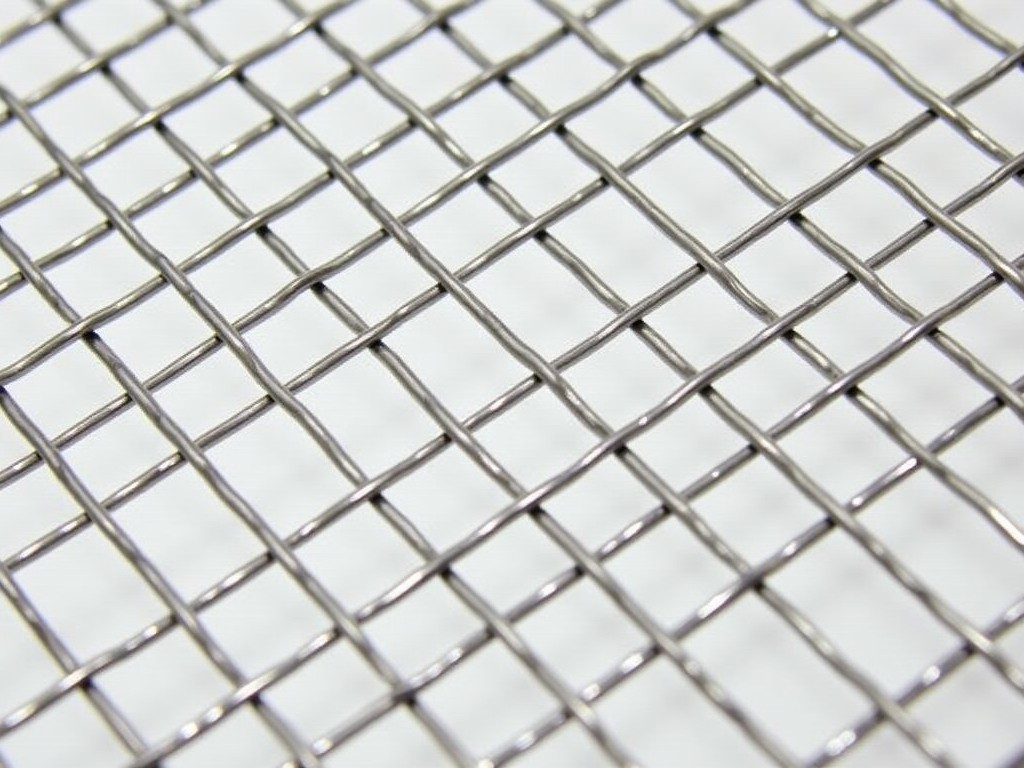
Buy 1/2 Inch Stainless Steel Wire Mesh
When specifying stainless steel wire mesh for industrial applications, understanding the relationship between wire diameter, opening size, and material grade is essential for performance and longevity. The term "1/2 inch" most commonly refers to the nominal opening size—the clear distance between parallel wires—not the wire thickness itself. This distinction affects flow characteristics, particle retention, and structural integrity in filtration, screening, and protective barriers.
For example, a mesh labeled as 1/2 inch opening with a wire diameter of 0.047 inches (12 gauge) delivers approximately 40% open area, suitable for medium-duty screening where both throughput and particle retention matter. Selecting the correct combination ensures the mesh performs as intended under load, corrosion exposure, or cyclic stress without premature deformation or failure.
Material Specifications and Grade Selection
Stainless steel wire mesh derives its corrosion resistance from chromium and nickel content, with grade selection directly impacting suitability for specific environments. Type 304 stainless steel, containing 18% chromium and 8% nickel, provides adequate resistance to atmospheric oxidation, mild chemicals, and freshwater exposure, making it common in food processing, HVAC, and general industrial enclosures.
In environments with chlorides, acids, or elevated temperatures—such as marine hardware, chemical processing, or outdoor architectural facades—Type 316 stainless steel is preferred due to its 2-3% molybdenum addition, which significantly improves resistance to pitting and crevice corrosion. Wire mesh made from Type 316 maintains structural integrity longer under these conditions, reducing maintenance frequency and replacement risk.
Weave Types and Structural Performance
The weave pattern influences load distribution, flexibility, and surface smoothness, which are critical in dynamic or high-wear applications. Plain weave, where each warp wire alternates over and under each weft wire, offers balanced tensile strength in both directions and is ideal for static screening, machine guarding, or architectural infill where uniform stress is expected.
Twill weave, characterized by wires passing over two then under two, provides greater flexibility and tighter locking action, making it suitable for vibratory screens or applications requiring resistance to lateral displacement. Dutch weave, with finer weft wires and coarser warp wires, achieves high filtration efficiency despite larger nominal openings and is often used in precision fluid filtration where standard meshes would clog or deform.
Typical Specifications for 1/2 Inch Opening Mesh
| Parameter | Typical Value | Notes |
|---|---|---|
| Nominal Opening | 12.7 mm (0.5 in) | Center-to-center minus wire diameter |
| Wire Diameter Range | 0.035–0.063 in (0.9–1.6 mm) | Affects open area and rigidity |
| Open Area (%) | 36–64% | Depends on wire diameter and weave |
| Available Grades | 304, 316, 316L | 316L for welding applications |
| Standard Weaves | Plain, Twill, Dutch | Custom weaves available |
Industrial Applications and Functional Rationale
In aggregate processing, 1/2 inch stainless steel wire mesh functions as a scalping screen to remove oversized material before crushing, protecting downstream equipment from damage. The corrosion resistance of stainless steel prevents blinding and rust-related degradation in wet or abrasive conditions, maintaining consistent throughput over extended shifts.
For machine guarding in manufacturing facilities, this mesh size provides adequate visibility and airflow while meeting OSHA 1910.212 requirements for point-of-operation protection. The small opening prevents finger or tool intrusion, and the stainless construction withstands cleaning agents, coolants, and occasional impact without degradation.
In architectural applications such as balcony infill or façade panels, 1/2 inch mesh offers a balance of transparency, wind load resistance, and aesthetic durability. When framed in stainless steel or aluminum, it resists UV degradation, salt spray, and urban pollutants, maintaining appearance and structural performance for decades with minimal maintenance.
Customization and Ordering Considerations
Industrial buyers often require specific dimensions, edge treatments, or fabrication readiness beyond standard roll goods. Custom width slitting to exact measurements eliminates field trimming and ensures seamless integration into frames or housings. Available edge options include raw cut, folded hem, or welded border for added safety and structural reinforcement.
For applications requiring precise tensioning or mounting, mesh can be supplied with pre-installed grommets, bolt holes, or peripheral framing channels. These modifications reduce installation time and improve alignment accuracy, particularly in large-scale screening systems or modular architectural panels where repeatability is critical.
Surface finishes such as electropolishing or passivation are available upon request to enhance corrosion resistance in hygienic or highly corrosive environments. These treatments remove surface contaminants and promote a stable passive oxide layer, extending service life in pharmaceutical, semiconductor, or marine installations.
Quality Assurance and Inspection Protocols
Dimensional accuracy is verified using calibrated optical comparators or laser scanning systems to confirm wire diameter, opening size, and roll width within specified tolerances—typically ±0.002 inches for wire and ±1.5% for opening dimensions. These checks ensure consistency across batches and compatibility with precision mating components.
Material validation includes mill test reports (MTRs) for each heat lot, confirming chemical composition and mechanical properties. Surface inspection under bright lighting identifies defects such as weld marks, pits, or drawing scratches that could compromise corrosion resistance or create stress concentration points under load.
Tensile testing of wire samples confirms yield and ultimate strength align with grade specifications, ensuring the mesh will perform as expected under static or cyclic loading. All inspection data is retained for traceability, supporting audit readiness and quality claims.
To discuss your specific requirements for 1/2 inch stainless steel wire mesh—including custom dimensions, material grade, weave type, or edge finishing—provide your application details for a technical review. Our engineering team will assess compatibility, performance expectations, and fabrication options to ensure the solution meets your operational and environmental demands.
Share your project specifications via the contact form to begin the evaluation process.
Product Categories


Send Inquiry
If you are interested in our products, leave your information here and we will be in touch shortly.